PDIS: People Doing Interesting Stuff

PDIS: People Doing Interesting Stuff

Dr. Samuel Kelton Roberts

Overview
Episodes

Details

People Doing Interesting Stuff (PDIS) is about just that. Host Dr. Samuel Kelton Roberts talks and thinks out loud with special guests, including activists and organizers, writers, artists, social entrepreneurs, public figures, and others about what they do, and how, why, and where they do it. From the streets to the suites, they're everywhere. We're mostly serious, often humorous, and always interesting. (Adult themes, occasional explicit language)

Recent Episodes

Episode 10: The "Body(.com) and Soul" edition, with Kenyon Farrow, senior editor of TheBody.com and TheBodyPro.com
NOV 2, 2019
Episode 10: The "Body(.com) and Soul" edition, with Kenyon Farrow, senior editor of TheBody.com and TheBodyPro.com

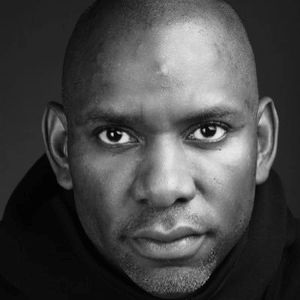
In the "Body(.com) and Soul" edition of PDIS: People Doing Interesting Stuff, Samuel Kelton Roberts sits down and talks with Kenyon Farrow, the senior editor at TheBody.com and TheBodyPro.com. A writer, editor, and strategist, Farrow has worked on campaigns of all sizes on the local, national, and global level and in issues related to criminalization/mass imprisonment, homelessness, LGBT rights, and HIV education and empowerment. With expertise in public health, social policy, and health care, he is a sought-after speaker, facilitator, and strategist.

Prior to joining TheBody.com, Farrow served as U.S. & Global Health Policy director with Treatment Action Group (TAG). He is also known for his work with organizations such as Queers for Economic Justice, Critical Resistance, and FIERCE!

In addition to his political work, Kenyon (twitter: @KenyonFarrow) is a prolific essayist and author. He is the co-editor of the book Letters From Young Activists: Today's Rebels Speak Out. His work has also appeared in many anthologies including Spirited: Affirming the Soul of Black Lesbian and Gay Identity, For Colored Boys Who Have Considered Suicide When The Rainbow Is Still Not Enough, We Have Not Been Moved: Resisting Racism and Militarism in 21st Century America, and Black Gay Genius: Answering Joseph Beam's Call. His work has also appeared on websites and in publications such as The Body.com, POZ, The Atlantic, TheGrio, Colorlines, ReWire News, The American Prospect, and AlterNet.

Kenyon's work has been recognized by many institutions including Out Magazine's "Out 100" and The Advocate magazine's "40 Under 40." He was also named a "Modern Black History Hero" by Black Entertainment Television.

play-circle icon
69 MIN
Episode 07: The "We have ARRIVEd" edition (with Howard Josepher and Joe Turner, of Exponents, Inc.)
DEC 21, 2017
Episode 07: The "We have ARRIVEd" edition (with Howard Josepher and Joe Turner, of Exponents, Inc.)

In the late 1980s, Howard Josepher and Joe Turner met in New York City and began the program now known as Exponents. Their goal was deceptively simple, to establish an outreach and recovery program for people returning home from prison with a substance use problem. But it was actually more complicated than that. Although they had some federal funding to run a limited three-year program, when that money dried up they were left with a program which had promise but few resources. Furthermore, there really weren't that many existing models for this kind of work. Many of their first participants had been recently diagnosed with HIV, and all were at some risk for contracting the virus. Meanwhile, in the late 1980s and early 1990s, neither the formerly incarcerated nor people who used drugs were viewed with much sympathy. Parole programs weren't always that helpful, and addiction programs required drug abstinence above all else in exchange for services. Howie's and Joe's vision of harm reduction-based recovery -- emphasizing stability and wellness first, not abstinence -- was well ahead of its time. So, too, was the program model, which is an 8-week course of classes (three courses a week) on how to begin one's recovery.

They called it ARRIVE, which originally stood for AIDS Risk Reduction for Intravenous Drug Users and Ex-Offenders (that language is a little dated, and the program todays does much mx`ore than the title implies). ARRIVE isn't a "28-day cure," and they don't even require participants to always be sober while they're in the course. Instead, Exponents (self-described as "a client-driven organization rather than program driven") focuses on providing participants the tools to re-build their lives and the network (currently some 10,500 Exponents alumni) of other people in post-incarceration recovery. The theory is that if you welcome everyone and just get them in the door to commit to 24 classes, that constitutes a major first step for individuals who have a long road to travel. 75% of enrollees complete the course and most of those go on to get into recovery, get their health back on track (a major challenge, especially for people with HIV and substance use problems), and to rebuild their lives. Most of the staff are ARRIVE alums, hired under the theory that, as Howie explains, "the person who's been down and out, and just getting out of prison, and may be on his way or her way to getting strung out again, looks at that person and says, 'if they can do it, I can do it, too'."

The ARRIVE program is the nation's oldest harm reduction program, and is Exponents' flagship program. Over the past three decades, however, they also have developed a range programs and services in support and counseling, homeless services, addiction treatment, peer training, HIV testing, HCV services, outreach to sex workers, recovery support services, GED training, and pre-release and re-entry services for returning citizens.

Nearly thirty years after Howie and Joe started their work in the basement of a church, they sat down with me in one of their conference rooms to explain to me how they put the whole thing together.

play-circle icon
76 MIN
Episode 06: The "harm reduction as resistance" edition (with Joyce A. Rivera)
DEC 13, 2017
Episode 06: The "harm reduction as resistance" edition (with Joyce A. Rivera)

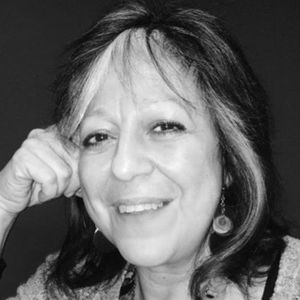
The "harm reduction as resistance" edition (with Joyce A. Rivera). Welcome to PDIS. A week after the Trump election of November 2016, Joyce Rivera, the founder and Executive Director of the St. Ann's Corner of Harm Reduction, joined me and my students at the PDIS studios. This was a few days after the federal election of 2016, which put Donald Trump in office, and Joyce explained to me why she's optimistic about the future. A lot of her optimism for the future stems from her work in the past. Rivera was an early researcher and activist in harm reduction and drug use policy, working in the 1980s and 1990s, a time when we knew little about the lives of people who used drugs, and when most people didn't care to know. In comparison to thirty years ago, Rivera believes, doing harm reduction in Trump's America won't be nearly as difficult. She also talked with me about what it was to do that work in the first decade of HIV, how she got into the work, and her perspective on why so-called "tough love" so often fails as a therapeutic and recovery strategy.

Joyce A. Rivera is the founder and Executive Director of Saint Ann's Corner of Harm Reduction (SACHR), and an adjunct professor at John Jay College of Criminal Justice, teaching a course on drug use and abuse. She has over thirty years of experience in program development and social services delivery, and has worked in harm reduction since 1990. As a consultant and grant writer, her expertise in HIV prevention and harm reduction has made her a local and national leader in the field of AIDS and drugs. She is a founding member of the National Harm Reduction Coalition (HRC), the North American Syringe Exchange Network (NASEN), and the Harm Reduction Care Network of New York (HRCNNY). Joyce frequently presents and conducts training on drug policy, harm reduction, women, communities of color, and social justice. She has chaired the boards of HRCNNY and the Latino Commission on AIDS. Joyce holds a bachelor of science degree in health administration with a specialization in healthcare planning and a master's in comparative political science.

play-circle icon
80 MIN