The WorkWell Podcast™

Jen Fisher

Details

The WorkWell Podcast™ is back and I am so excited about the inspiring guests we have lined up. Wellbeing at work is the issue of our time. This podcast is your lens into what the experts are seeing, thinking, and doing. Hi, I am Jen Fisher, host, bestselling author and influential speaker in the corporate wellbeing movement and the first-ever Chief Wellbeing Officer in the professional services industry. On this show, I sit down with inspiring individuals for wide-ranging conversations on all things wellbeing at work. Wellbeing is the future of work. This podcast will help you as an individual, but also support you in being part of the movement for change in your own organizations and communities. Wellbeing can be the outcome of work well designed. And we all have a role to play in this critical transformation! This podcast provides general information and discussions about health and wellness. The content is not intended to be a substitute for professional medical advice, diagnosis, or treatment. Always seek the advice of your physician or other qualified health provider with any questions you may have regarding a medical condition. Never disregard professional medical advice or delay in seeking it because of something you have heard on this podcast. The podcast owner, producer and any sponsors are not liable for any health-related claims or decisions made based on the information presented or discussed.

Recent Episodes

NOV 13, 2025
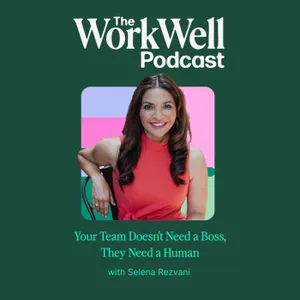
Your Team Doesn't Need a Boss, They Need a Human with Selena Rezvani
Your Team Doesn't Need a Boss, They Need a Human with Selena Rezvani In this episode of The WorkWell Podcast™, Jen Fisher speaks with Selena Rezvani, Wall Street Journal bestselling author and Forbes-named premier expert on standing up for yourself at work. Selena returns to the podcast to discuss her latest book, "Quick Leadership: Build Trust, Navigate Change, and Cultivate Unstoppable Teams." Drawing from her personal experience losing her workaholic father at age 13 and years of coaching leaders behind closed doors, Selena shares practical, actionable strategies for becoming the kind of leader people want to follow—without sacrificing your humanity or health. Episode Highlights: The shocking statistic: Your manager influences your mental health on par with your spouse—more than your doctor or therapist (UKG research) Trust killers in leadership: Why over-promising on small things destroys credibility and what "being impeccable with your word" really means The "Shit Umbrella" concept: How great leaders shield their teams from chaos, unrealistic pressure, and distractions from above Urgency culture: How to recognize when anxiety is being passed like a baton and why marking emails as "urgent" is eroding workplace trust The difference between boss and leader: Why giving away power creates unstoppable teams instead of diminishing your authority "Ask three before you answer": A practical technique to build autonomy and critical thinking in your team members Re-engaging disengaged employees: Why viewing lost spark as temporary (not permanent) changes everything Quotable Moments: "People don't want this stoic pillar of a leader—they want a human." - Selena Rezvani "Your questions are expected, not tolerated." - Selena Rezvani Resources: Book: "Quick Leadership: Build Trust, Navigate Change, and Cultivate Unstoppable Teams" by Selena Rezvani
48 MIN
OCT 30, 2025
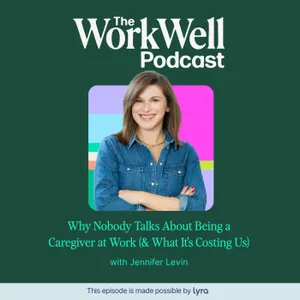
Why Nobody Talks About Being a Caregiver at Work (& What It's Costing Us) with Jennifer Levin
Why Nobody Talks About Being a Caregiver at Work (& What It's Costing Us) with Jennifer Levin In this deeply personal episode of The WorkWell Podcast™, Jen Fisher speaks with Jennifer Levin, television writer, journalist, and founder of Caregiver Collective, about her powerful book "Generation Care: The New Culture of Caregiving." While we're in meetings and hitting deadlines, millions of workers are simultaneously managing something most colleagues know nothing about—caring for aging or chronically ill family members. Jennifer became a caregiver at 32 when her father was diagnosed with a rare degenerative illness, and what she discovered changed everything about how we should think about work, support, and what it means to show up. Episode Highlights: What makes millennial and Gen X caregiving different—and why "you don't have other responsibilities" is a dangerous assumption Why most young caregivers don't identify as caregivers—and what that silence costs them The role reversal nobody prepares you for: becoming your parent's parent Why our culture doesn't value family care as strong social capital—and the discrimination that follows The real cost to companies: employees leaving not because they want to, but because unpaid leave forces impossible choices Signs a team member might be struggling with caregiving (even if they haven't said anything) Ambiguous loss: grieving the person who's still here and the life you thought you'd have Why guilt is the one word every caregiver mentions, no matter what aspect of care they're discussing How to create a culture of care awareness without requiring people to sacrifice their careers The "waiting for the other shoe to drop" reality—and why caregiving emergencies don't follow a schedule Quotable Moments: "People will question your decisions all the time when you're a caregiver. But the person you're caring for wouldn't want you to give up on yourself either." - Jennifer Levin Resources: This episode of The WorkWell Podcast™ is made possible by Lyra Health, a premier global workforce mental health solution. Learn more at Lyrahealth.com/workwell. Jennifer's Book: "Generation Care: The New Culture of Caregiving" by Jennifer Levin Join the Caregiver Collective: A national online support group for caregivers who feel younger than expected in this role
43 MIN
OCT 9, 2025
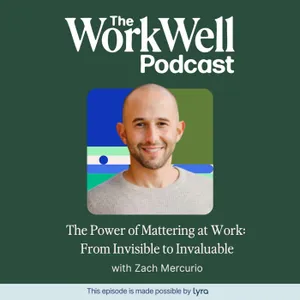
The Power of Mattering: From Invisible to Invaluable with Zach Mercurio
In this episode of The WorkWell Podcast™, Jen Fisher speaks with Zach Mercurio, author of "The Power of Mattering: How Leaders Can Create a Culture of Significance." Despite billions invested in engagement programs and wellbeing initiatives, employees are more disengaged than ever—and the problem isn't what most leaders think. This conversation reveals why mattering can't be addressed through programs and perks, and what leaders must do differently at the interaction level to help people feel truly seen, valued, and significant. Episode Highlights: Why engagement is at its lowest point in a decade despite $2 billion invested in programs The difference between mattering, belonging, and inclusion—and why mattering is what's missing How we've lost the skills to care for each other after 25 years of digital communication The "sprinkler issues" that silently kill motivation and create learned helplessness Why high performers and frontline workers are most at risk of feeling invisible The three practices that help people feel significant: noticing, affirming, and showing they're needed Why you can't give effective feedback to someone who doesn't first feel that they matter to you How showing others they matter actually regenerates your own sense of significance Quotable Moment "You don't show people that they matter in spite of their low performance. You show people that they matter so that you can regenerate their energy and confidence to perform well." - Zach Mercurio Lyra Lens: Sarah Haggerty, Clinical Psychologist and Neuroscientist at Lyra Health, explores the practical skills managers need to notice when someone's struggling and how to check in appropriately. She also breaks down the concept of "10% more depth" in workplace relationships. Resources: This episode of The WorkWell Podcast™ is made possible by Lyra Health, a premier global workforce mental health solution. Learn more at Lyrahealth.com/workwell.
57 MIN
SEP 25, 2025
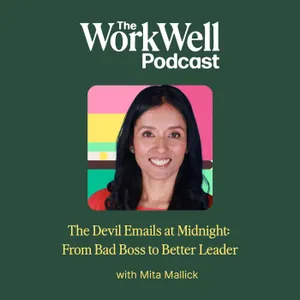
The Devil Emails at Midnight: From Bad Boss to Better Leader with Mita Mallick
In this episode of The WorkWell Podcast™, Jen Fisher speaks with Mita Mallick, leadership expert and author of "The Devil Emails at Midnight: What Good Leaders Can Learn from Bad Bosses." Mita shares powerful stories from her own experiences with toxic leadership and reveals how she learned to recognize—and address—her own bad boss behaviors. Episode Highlights: The origin story behind the provocative title and how a flooded childhood home led to discovering a "burn book" of bad bosses 13 types of toxic bosses including "The Sheriff" who refused to learn her name and renamed her "Mohammed," and "Medusa" who ruled through fear and public humiliation The three moments when bad boss behavior emerges: external marketplace stress, absorbing behaviors from your own bad boss, and personal life catastrophes Why bad bosses aren't born, they're made and how grief, trauma, and unprocessed emotions show up in leadership The midnight email phenomenon and why normalizing around-the-clock work expectations is unsustainable and counterproductive How fear-based leadership drives short-term results but destroys long-term productivity through turnover, disengagement, and organizational damage The shame and power dynamics that keep people trapped in toxic workplace relationships Self-reflection strategies for recognizing your own bad boss behaviors including career journaling and asking for coaching (not feedback) The importance of vulnerability in leadership and creating psychological safety for teams to discuss grief, personal struggles, and workplace challenges Quotable Moments: "Names were given to us by someone who had big hopes and dreams for us. Let that sit in. That's who someone named you. And so think about the promise of what your life is to be. And someone can't respect you by saying your name correctly." - Mita Mallick "Your culture becomes defined by the worst behavior you tolerate." - Mita Mallick Resources: Book: Order "The Devil Emails at Midnight: What Good Leaders Can Learn from Bad Bosses" by Mita Mallick Available at Amazon, Barnes & Noble, and local independent bookstores

46 MIN
SEP 15, 2025
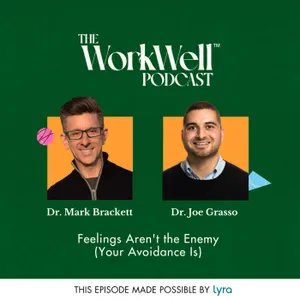
Feelings Aren't the Enemy (Your Avoidance Is) with Dr. Marc Brackett
In this episode of The WorkWell Podcast™, Jen Fisher and special co-host Dr. Joe Grasso from Lyra Health speak with Dr. Marc Brackett, founding director of the Yale Center for Emotional Intelligence and Professor in the Child Study Center at Yale School of Medicine. Dr. Brackett's bestselling book "Permission to Feel" has revolutionized how we think about emotions in schools and workplaces, and his new book "Dealing With Feeling" challenges us to stop running from our emotional lives and start actually living them. Episode Highlights: Why there's no such thing as a "bad emotion" and how all feelings are simply data The difference between being an "emotion scientist" versus an "emotion judge" How toxic masculinity teaches men to disconnect from their emotions, perpetuating cycles of loneliness and isolation Why "being emotional" doesn't mean you're weak—it means you're human The Meta Moment: A four-step process for healthy emotion regulation in high-pressure situations How to have difficult conversations at work without avoiding or attacking Why bringing your whole self to work includes bringing your emotions Practical strategies for managers to create emotionally intelligent team cultures The importance of checking in with your emotions before they leak into unrelated situations Quotable Moments: "Emotional intelligence... is not emotional reactivity. Emotions are on a continuum. There's a little bit of anger, which is annoyance, and there's a lot of anger, which is enraged." - Dr. Marc Brackett "Just because you're feeling strong emotions doesn't mean you're not capable. Doesn't mean you're not strong. Life is about emotions." - Dr. Marc Brackett Resources: Free app: "How We Feel" (available on iOS and Android) - A mood tracking tool developed by Dr. Brackett to help build emotional vocabulary This episode of The WorkWell Podcast™ is made possible by Lyra Health, a premier global workforce mental health solution. Learn more at Lyrahealth.com/workwell.
48 MIN