The Digital Lighthouse

Softwire

Details

The Digital Lighthouse is a podcast for CTOs and other tech leaders looking to navigate their organization through endless disruption and turbulence. Packed full of real life stories and insights, this podcast serves as your guiding light - wherever you are in your journey and whatever challenges you face.

Recent Episodes

OCT 6, 2026
Why proactive leadership means going slow to go fast
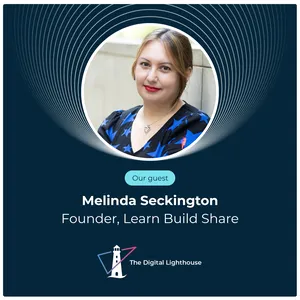
Most leadership advice waits for things to go wrong. What if you could stop them from going wrong in the first place? In this episode of The Digital Lighthouse, Zoe Cunningham is joined by Melinda Seckington, a leadership and engineering team coach. Melinda has been an engineering manager, software engineer, conference speaker, tech event organiser, blogger and startup founder — including a stint as one of the first engineers at FutureLearn, where she helped grow the team from six people to sixty. Together they explore what proactive leadership really means, why the old idea that engineers can't be great communicators is a myth worth retiring, how AI is making communication skills more valuable rather than less, and why slowing down is usually the fastest way to handle growing pressure on your time. You'll hear about: • The three building blocks of proactive leadership: awareness, intent and action • Why being technical and being a great communicator were never mutually exclusive • How AI raises the value of good communicators instead of replacing them • The handful of questions behind every successful case for buy-in • Why new leaders already have more of the right skills than they think • Why “go slow to go fast” beats trying to do everything at once Whether you're stepping into leadership for the first time or rethinking how your team handles growing pressure, this episode is a practical guide to leading before things go wrong, not just after.
22 MIN
JUL 2, 2026
What happens when water companies stop competing on data
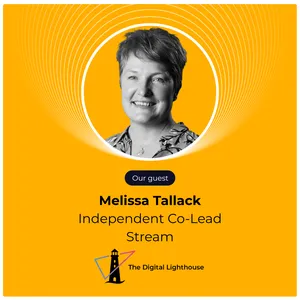
The water sector faces some of the UK’s biggest environmental and infrastructure challenges. But solving them requires more than better technology. It requires better collaboration. In this episode of The Digital Lighthouse, Zoe Cunningham is joined by Melissa Tallack, co-lead of the Stream initiative and former Head of Data and Digital at Anglian Water. Together they explore how water companies are working together to share data, learn from other industries and create more value for customers, society and the environment. Melissa explains why breaking down data silos within organisations is only the first step. The real opportunity comes from sharing knowledge across an industry, and ultimately across sectors. From rail and energy to health and citizen science, she shares why the best ideas rarely stay in one place. Whether you’re leading digital transformation in utilities, government or another regulated industry, this conversation offers practical lessons on open data, collaboration and creating lasting value. In this episode, you’ll learn: Why water companies are collaborating on open data rather than competing. How Stream is creating shared data infrastructure for the sector. Why borrowing ideas from rail, energy and other industries accelerates innovation. How to break down organisational and industry data silos. Why publishing data only matters if it creates measurable value. What other sectors can learn from the water industry’s collaborative approach.
25 MIN
JUN 11, 2026
How insurance is driving the future of autonomous cars
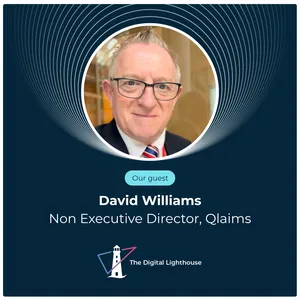
Why are driverless cars taking so long? And what role does insurance play in getting autonomous vehicles safely onto UK roads? In this episode of The Digital Lighthouse, host Zoe Cunningham speaks with David Williams, a senior executive and non-executive director with more than 30 years’ experience in insurance. David previously worked at AXA Insurance UK, where he led work on connected and autonomous vehicles, including involvement in five government-backed consortia. He was also chair of the Association of British Insurers Motor Committee. Zoe and David explore the future and present of driverless vehicles, and the role insurance plays in helping new technology reach the road safely. David explains why many vehicles described as autonomous are still driver assistance systems, why insurance relies so heavily on data, and what happens when a new technology has no historic claims data to draw from. They also discuss the UK’s role in supporting autonomous vehicle development, how data and machine learning have changed insurance, and why driverless cars are designed to avoid accidents rather than make moral judgements about human life. Discover Why driverless cars are closer than many people think What different levels of vehicle autonomy really mean Why insurance is central to autonomous vehicle development How data has transformed risk assessment in insurance Why the UK could be well placed to support autonomous vehicle innovation Why the trolley problem is not the right way to think about driverless cars
24 MIN