Mere Mortals Book Reviews

Kyrin Down & Juan Granados

Details

Hey we are the Mere Mortals and we review books of all genres/styles but with an emphasis on those that have stood the test of time (the 'classics' if you will). Join us on Weekly live episode on Thurs 11am AEST (Thurs 1am UTC+0) plus bonus episodes from my cohost Juan.

Recent Episodes

NOV 4, 2026
Quotes & Life Lessons | 1984 (George Orwell) BOOK REVIEW
1984 is my favourite book of all time. However, it's certainly not fun to read. Orwell's style is rather dry & aside from 'Animal Farm' or 'Homage To Catalonia' most of his other works are so bleak as to be uninspiring. I don't believe the fictional world of 1984 is likely to occur & wouldn't be sustainable even if willed into existence. Despite this it has shaped my worldview more than anything else. Little lessons that add up to how I think, what I believe, who I am, the way I live & act/behave. Below is a selection of quotes & what they have taught me: "Nothing in the world was so bad as physical pain. In the face of pain there are no heroes." - It's ok to dislike pain, yet there will be suffering. Figure out what is avoidable & unavoidable. Examine your suffering & you'll find out most is crafted by your thoughts, not pain. “Doublethink means the power of holding two contradictory beliefs in one’s mind simultaneously, and accepting both of them.” - This is a skill developed by the party, showcased by O'Brien & has a negative connotation. Yet life is inherently paradoxical, one cannot outthink a paradox. Lean into them & develop a humour of the absurd. “Who controls the past controls the future. Who controls the present controls the past.” - You get to decide your destiny. Your interpretation of reality will affect your life quality much more than the actual nature of 'objective' reality. “There was truth and there was untruth, and if you clung to the truth even against the whole world, you were not mad.” - Take heart if you desire the truth, it can be alienating & cruel to realise. This courage also needs to be tempered with proof that you are actually correct. "Perhaps one did not want to be loved so much as to be understood" - Love is the most semantically overloaded word in English. To be loved can mean anything. To be understood you must know yourself to your deepest core & then someone else must know you to an equal level. Eth Tx: 0x8f8448b51dc60a82ba377203d0feeebe23279d08047b2e3daa206903cdf0ad62 If you got value from the podcast please provide support back in any way you best see fit! Timeline: (00:00:00) Intro (00:01:40) Favourite quotes and the lessons behind them (00:03:46) What has changed since his earlier 1984 reviews (00:06:39) A brilliant book, but not an enjoyable read (00:11:45) Physical pain, suffering, and grief (00:14:57) Doublethink, paradox, and living with contradiction (00:19:03) Truth, reality, and rewriting the past (00:25:41) Love versus being truly understood (00:34:20) Why 1984 endures and a blockchain experiment (00:38:00) Final recommendation and closing reflections Connect with Mere Mortals: Website: https://www.meremortalspodcasts.com/ Discord: https://discord.gg/Xs9DjsurFq Twitter/X: https://twitter.com/meremortalspods Instagram: https://www.instagram.com/meremortalspodcasts/ TikTok: https://www.tiktok.com/@meremortalspodcasts Value 4 Value Support: Website: https://www.meremortalspodcasts.com/support Paypal: https://www.paypal.com/paypalme/meremortalspodcast

40 MIN
OCT 28, 2026
Average Investing Advice | Big Mistakes (Michael Batnick) BOOK REVIEW
Average advice will get you average returns. In this episode, I review 'Big Mistakes' by Michael Batnick, a short investing book that profiles famous investors and the bad calls that shaped their careers. I run through the book’s structure, some of the names featured — including Benjamin Graham, Jesse Livermore, Warren Buffett and Charlie Munger — and why I found the core premise more interesting than the execution. While the book tries to distil each investor’s major error into a neat lesson, I came away feeling that many of those conclusions were either too vague or too forced to be genuinely useful. My main takeaway is that this one lands as fairly average advice dressed up with great source material. I dig into why I wasn’t convinced by some of Batnick’s interpretations, especially around whether he properly identified what these investors actually got wrong, and why I’d generally recommend going back to the original books and histories instead. Overall, this was a disappointing read for me and one I couldn’t strongly recommend, finishing with a low rating and a reminder that sometimes the summaries are far less valuable than the source itself. If you got value from the podcast please provide support back in any way you best see fit! Timeline: (00:00:00) Intro (00:02:14) How the book structures investor mistakes (00:03:01) Why the lessons feel vague and inconsistent (00:07:55) Critique of Michael Batnick as the guide (00:13:14) Final verdict and better investing approach (00:17:02) Next reading plans and closing remarks Connect with Mere Mortals: Website: https://www.meremortalspodcasts.com/ Discord: https://discord.gg/Xs9DjsurFq Twitter/X: https://twitter.com/meremortalspods Instagram: https://www.instagram.com/meremortalspodcasts/ TikTok: https://www.tiktok.com/@meremortalspodcasts Value 4 Value Support: Website: https://www.meremortalspodcasts.com/support Paypal: https://www.paypal.com/paypalme/meremortalspodcast

18 MIN
OCT 21, 2026
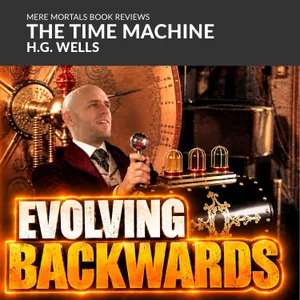
We Are Evolving, Just Backwards! | The Time Machine (H.G. Wells) BOOK REVIEW
Would you rather evolve into an Eloi or a Morlock? In this episode, I dive into H.G. Wells ’The Time Machine', a short but hugely influential classic that may be one of the earliest stories to imagine time travel as a machine-driven journey into the future. I walk through the novel’s framing device, the Time Traveller’s unsettling visit to roughly 800,000 AD, and the split future of humanity into the carefree Eloi and the subterranean Morlocks. From there, I unpack why the book still holds up: its eerie vision of evolution, class division, and social decay, plus the way Wells blends scientific curiosity with imaginative speculation to create a compelling early sci-fi adventure. I also share what stood out to me most as a reader: the novel’s clever structure, its surprisingly gritty tone, and Wells’ deeply pessimistic view of humanity’s future. While I don’t rate it as an all-time personal favourite, I do think it’s well worth reading if you’re interested in the roots of science fiction, time travel stories, or how late-19th-century anxieties about class, progress and civilisation found their way into fiction. It’s a quick read, historically important, and full of ideas that still feel worth discussing today. If you got value from the podcast please provide support back in any way you best see fit! Timeline: (00:00:00) Intro (00:01:15) The Time Traveller sets off and reaches the far future (00:02:44) Eloi paradise and the horror of the Morlocks (00:04:49) Social themes and evolution gone backwards (00:08:30) Science fiction ideas and suspended disbelief (00:11:47) Narrative structure and standout moments (00:14:01) H G Wells and his bleak view of humanity (00:17:23) Final verdict and why the book still matters (00:19:18) Comparisons, Weena and the book's darker edge (00:21:59) What I am reading next Connect with Mere Mortals: Website: https://www.meremortalspodcasts.com/ Discord: https://discord.gg/Xs9DjsurFq Twitter/X: https://twitter.com/meremortalspods Instagram: https://www.instagram.com/meremortalspodcasts/ TikTok: https://www.tiktok.com/@meremortalspodcasts Value 4 Value Support: Website: https://www.meremortalspodcasts.com/support Paypal: https://www.paypal.com/paypalme/meremortalspodcast
22 MIN
OCT 16, 2026
A Clash of Kings Review — Is Bigger Actually Better?
A bigger world. More perspectives. Nearly 900 pages. But is A Clash of Kings actually better than A Game of Thrones? In this Mere Mortals book review, I share my honest thoughts on George R. R. Martin’s second A Song of Ice and Fire novel—as someone reading the books without having watched the television series. I enjoyed the journey, particularly Tyrion’s chapters, Arya’s perspective and Martin’s immersive writing. But the slower build, scattered storylines and unresolved threads left me missing some of the first book’s intensity. 00:00 Is bigger actually better? 00:15 A Clash of Kings: the setup 01:59 My verdict versus A Game of Thrones 04:07 A bigger world, more unfinished stories 06:44 Tyrion shines—but where is Robb? 08:04 Pacing and the Battle of the Blackwater 09:05 Arya, food and immersive detail 10:15 Was it worth the read? 11:09 Your thoughts—and what comes next Connect with Mere Mortals: Website: https://www.meremortalspodcast.com/ Discord: https://discord.gg/jjfq9eGReU Twitter/X: https://twitter.com/meremortalspods Instagram: https://www.instagram.com/meremortalspodcasts/ TikTok: https://www.tiktok.com/@meremortalspodcast Connect with Mere Mortals: Website: https://www.meremortalspodcasts.com/ Discord: https://discord.gg/Xs9DjsurFq Twitter/X: https://twitter.com/meremortalspods Instagram: https://www.instagram.com/meremortalspodcasts/ TikTok: https://www.tiktok.com/@meremortalspodcasts Value 4 Value Support: Website: https://www.meremortalspodcasts.com/support Paypal: https://www.paypal.com/paypalme/meremortalspodcast
11 MIN
OCT 14, 2026
Sexual Tension On An Unexpected Journey | The Wayward Bus (John Steinbeck) BOOK REVIEW
Sure is a lot of hanky panky going on in a sexually repressive time. In this episode, I review John Steinbeck’s The Wayward Bus, a 1947 novel that sits somewhere in his middle period and while not usually counted among his greatest literary achievements is clearly packed with the sort of vivid, messy human character work he does so well. I walk through the book’s loose premise — a stranded bus, a roadside station, and a cast of passengers and workers thrown together — and talk about why the story feels less like a tightly structured plot and more like a vehicle for Steinbeck to explore personality, motive and tension. For me, that’s where the novel really shines: not in grand narrative payoff, but in the way Steinbeck builds believable people and lets their inner thoughts drive their actions. I also dig into what I saw as one of the book’s strongest undercurrents: the sexual tension running through nearly every interaction. Set in a more outwardly modest post-WWII, the novel still reveals how little human nature really changes beneath the surface. I reflect on the ways desire, jealousy, insecurity and attraction shape the characters and how Steinbeck captures those dynamics with an honesty that still feels recognisable today. My overall take: The Wayward Bus is a solid, casual Steinbeck read — not on the level of East of Eden or The Grapes of Wrath, but still an enjoyable novel if you love sharp character observation. I gave it a 6.5/10. If you got value from the podcast please provide support back in any way you best see fit! Timeline: (00:00:00) Intro (00:01:20) The Wayward Bus synopsis and cast of characters (00:04:13) Steinbeck's loose storytelling and postwar setting (00:06:45) Camille, desire and repression on the bus (00:09:58) Can men and women be just friends (00:12:33) Why human nature has not changed much (00:15:15) A real life example of social and sexual tension (00:17:29) Final verdict and where this book fits in Steinbeck (00:19:42) What Kyrin is reading and episode wrap up Connect with Mere Mortals: Website: https://www.meremortalspodcasts.com/ Discord: https://discord.gg/Xs9DjsurFq Twitter/X: https://twitter.com/meremortalspods Instagram: https://www.instagram.com/meremortalspodcasts/ TikTok: https://www.tiktok.com/@meremortalspodcasts Value 4 Value Support: Website: https://www.meremortalspodcasts.com/support Paypal: https://www.paypal.com/paypalme/meremortalspodcast
22 MIN