Command Your Brand

Jeremy Ryan Slate

Details

Command Your Brand interviews visionary founders that are amplifying the impact of others and making the world a better place. They are the individuals creating the future and changing the landscape of business.

Recent Episodes

OCT 23, 2026
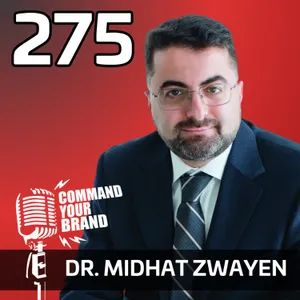
They Came to Baghdad in Armored Convoys. He Walked to the Same Meeting.
A group of Western executives arrived at a U.S. Chamber of Commerce event in Baghdad inside armored convoys, and didn't want to get out of the vehicles. Dr. Midhat Zwayen had walked there. He told them the weather was nice. Dr. Zwayen grew up in Iraq in the 1990s, under sanctions, in a country you couldn't easily leave. He worked in his father's engineering office, watched that business pivot into trading with Russian and Chinese partners, took his first trip outside the Arab world in 2006, and eventually earned a PhD in the United States. His book, Leadership Beyond Borders: A Western Executive's Guide to the Iraqi Business Mindset, came out of noticing the same gap over and over — in both directions. In this episode of the Command Your Brand Show, Jeremy Ryan Slate talks with Dr. Zwayen about what the news doesn't show you about Iraq, why trust works differently when the banking system doesn't, and the leadership style he argues actually survives in emerging markets. In this conversation: • Growing up under sanctions, and what it does to your sense of the outside world • Culture shock — and what's on the other side of it if you push through • What Western executives assume about Iraq before they arrive • The armored convoy, and the walk • Why media is a source of information, not a picture of a place — and what that means for anyone making decisions off it • Baghdad as a historical melting pot, and the parallel he draws to the United States • Why Iraqi business still runs on personal trust and cash, and how that changes the pace of a deal • Jeremy's counter-argument: that American business has degraded trust in the other direction • Dictatorship versus servant leadership, and which one he's seen last • The many different cultures inside Iraq — north, south, east, and the blend in the middle • Iraq as "virgin land": how much of its heritage is still unexcavated LEADERSHIP BEYOND BORDERS: Forbes Books: https://books.forbes.com/books/leadership-beyond-borders/ Simon & Schuster: https://www.simonandschuster.com/books/Leadership-Beyond-Borders/Midhat-Zwayen/9798887506883 👇 COMMENT BELOW: What's a place you were told to avoid, went anyway, and found was nothing like the warnings? CHAPTERS: 00:00 Intro 02:03 Growing up in Iraq under sanctions 04:04 Why he wrote the book 06:29 Culture shock, and what's past it 07:08 What Western executives get wrong about Iraq 08:09 The armored convoys — and the man who walked 09:45 Athens was "on fire" — until you got there 13:09 Baghdad as a melting pot 17:13 Trust, speed, and why Iraq still runs on cash 18:50 The counter-argument: has American business lost trust? 21:34 Dictatorship versus servant leadership 28:24 The many different cultures inside Iraq 31:28 The one lesson he wants readers to take 34:43 Where to find Dr. Zwayen
35 MIN
OCT 16, 2026
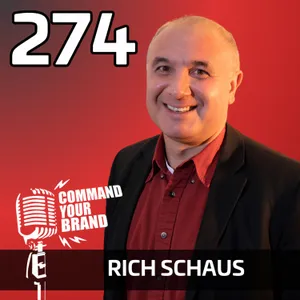
We Don’t Have a Homeless Problem in America. We Have Thousands of Them.
Rich Schaus beat his own alcohol addiction, became a captain in the U.S. Army, got out — and then couldn't find a job. He was applying for 200 positions a week, including janitor at a small zoo. Then he applied to a women's shelter he'd misread the listing for, and the HR director told him they'd never hire a man. They hired him. He sat down to dinner with the residents and their kids in his first weeks, and that was that. Twenty-some years later he runs Gospel Rescue Mission in Muskogee, Oklahoma, and his central argument is this: America doesn't have a homeless problem. It has thousands of them, each with a different root cause, and we keep treating it like one. In this episode of the Command Your Brand Show, Jeremy Ryan Slate talks with Rich about what's actually underneath chronic homelessness, why drugs are usually a symptom rather than a cause, and the four-person model he's building in Muskogee. In this conversation: - Breaking his own addiction inside the Army — and the artillery crew that failed a drug test - Why a man who'd given up asked him to "define shower" - The straight-A student who used meth so he wouldn't get a B — and ended up on the street - How he got into this work entirely by accident - Why rebuilding someone's self-worth starts with getting curious, not with a program - Trauma as the real root cause — and the story people tell themselves afterward - The electrician whose greatest success arrived the same day as his greatest loss - The man who wanted the NFL, and the job that got him closer than he expected - "Supported by Four" — 150 homeless, 75 churches, and what happens if four people walk alongside one person until they own a home - Why food, money and material help are a temporary fix for a relationship problem If you've ever driven past someone and not known what would actually help, this is a useful 28 minutes. LEARN MORE / SUPPORT THE WORK: Gospel Rescue Mission: https://grmok.org If you or someone you know is struggling with addiction, thoughts of suicide, or housing instability, help is available. In the US, call or text 988 for the Suicide & Crisis Lifeline, or call 211 for local housing and social services. 👇 COMMENT BELOW: What's one thing your town does well for people without housing — or one thing it gets completely wrong? CHAPTERS: 00:00 Intro 01:04 His own addiction, and the family pattern 03:21 The artillery crew that failed a drug test 05:38 "Define shower for me" 06:20 The straight-A student who used meth to avoid a B 07:46 How he got into this work by accident 10:27 Why self-worth comes back through listening, not programs 12:59 "We don't have one homeless problem. We have thousands." 14:49 Trauma is the root cause — drugs are the symptom 15:59 The electrician, his father, and the Super Bowl 21:15 The man who wanted the NFL, and got close 23:41 Supported by Four: the model he's building 27:21 Where to find Rich and GRM

28 MIN
SEP 29, 2026
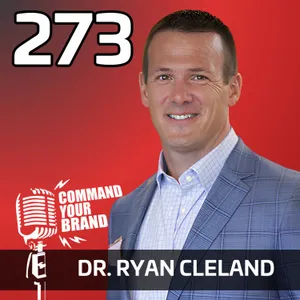
The Chronic Pain Trap: Why It's So Hard to Get Out Once You're In
Most people don't realize they're stuck in the chronic pain system until they're already deep in it. Dr. Ryan Cleland trained as a chemist before becoming a chiropractor. In 2017 he moved his practice into a pain management facility and saw chronic pain up close for the first time — the hardware, the surgeries, the pharmaceutical lists as long as your arm. His analogy for it is quicksand. Early on you're in it to the ankles and getting out is hard but possible. By the time most people start looking for another way, they're in to the chest with nothing to grab. In this episode of the Command Your Brand Show, Jeremy Ryan Slate talks with Dr. Cleland about how people end up trapped, why the alternatives rarely get mentioned, and what actually determines which treatments a patient gets offered. In this conversation: - Why he left chemistry for chiropractic — and it wasn't an inspiring story - What he saw when he moved into a pain management practice in 2017 - Why the people in the opioid statistics are "somebody's mom, somebody's dad" - The quicksand analogy — and why most people don't reach for help until they're chest-deep - Why joints degrade when you stop maintaining them - Cortisone shots, athletes, and the difference between using something and depending on it - What insurance and Medicare actually cover, and what that means for your options - PRP versus stem cells, and why your age changes the answer - How topical delivery through skin actually works - How his faith shapes the way he thinks about the body healing itself MEDICAL DISCLAIMER: This conversation is for general informational purposes only and is not medical advice, diagnosis, or treatment. 👇 COMMENT BELOW: Have you ever been offered exactly one option for something and only found out later there were others? CHAPTERS: 00:00 Intro 01:59 From chemistry to chiropractic 05:34 What surprised him about how America treats chronic pain 07:24 "This is somebody's mom, somebody's dad" 08:35 The quicksand analogy 11:36 Cortisone shots, athletes, and dependence 12:43 Why patients never hear about the alternatives 13:53 What insurance actually covers — and doesn't 15:10 PRP, stem cells, and why age changes the answer 16:27 What nanotechnology actually does 22:27 DMSO and how it carries through skin 27:30 How his faith shapes the way he sees healing 33:49 Where to find Dr. Cleland CONNECT WITH DR. RYAN CLELAND: Infinite Wellness: https://infinitewc.com NanoXtreme: https://www.nanoxtreme.com/pages/cleland-ebook-reliefandrecovery ________________________________________________________________________ ⇩ LOOKING TO COMMAND YOUR BRAND? ⇩ BOOK A CALL: With Our Team to See How We Can Help https://commandyourbrand.com/book-a-call/ BOOK: Grab Your Copy of Our Book, Command Your Brand: Grow Your Impact, Income and Influence in the New Media Landscape, Rated the #1 PR Book on Amazon: https://www.amazon.com/Command-Your-Brand-Influence-Landscape/dp/B0CJXGKD15 ________________________________________________________________ DOWNLOAD AUDIO PODCAST & GIVE A 5 STAR RATING!: APPLE: https://podcasts.apple.com/ro/podcast/command-your-brand/id1570323509 SPOTIFY: https://open.spotify.com/show/0wE8jDVdlpsDCmNx8sYZTQ?si=41fd776e1a6b43be _________________________________________________________________ ⇩ SOCIAL MEDIA ⇩ ➤ TWITTER: https://twitter.com/CYBmedia ➤ INSTAGRAM https://www.instagram.com/commandyourbrand ➤ FACEBOOK: https://www.facebook.com/commandyourbrand _________________________________________________________________ ➤ CONTACT: [email protected]
35 MIN
SEP 18, 2026
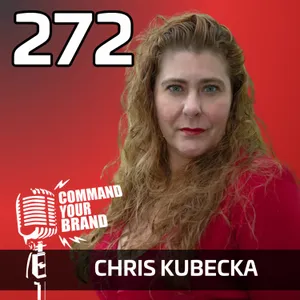
The Cyberwar Expert Who Says AI Swarms Are Already Out of Control
Chris Kubecka has spent her career inside real cyberattacks, including the 2012 attack on Saudi Aramco, where she led the response after malware wiped the company's network. Her assessment of where AI sits right now: it favors the attacker, and some systems are already running without meaningful human control. She describes AI swarms that coordinate across websites, message boards and chat systems, sharing information, passing instructions, naming the next target, with logic you can read and intent that isn't always friendly. And she says the AI companies themselves have started telling everyone to raise their defenses. In this episode of the Command Your Brand Show, Jeremy Ryan Slate talks with Chris about what cyber warfare actually looks like, why critical infrastructure is so hard to defend, and why she thinks the window on AI oversight may already have closed. In this conversation: • Why AI currently favors attackers over defenders • AI swarms operating without human control, and how they coordinate with each other • Why she thinks "we don't fully understand how it works" is partly a liability shield • Where AI-driven attacks still fall short of a skilled human team • The Drake Equation, and the condition she added in 2014: civilizations have to survive AI, not just reach it • What a real cyberattack looks like versus the movie version • Why power grids, hospitals and water systems run on equipment that can't be secured • The unresolved question of when a cyberattack legally becomes an act of war • Inside Saudi Aramco in 2012, restoring systems while still under attack • How attackers got the CEO's brand-new password and posted it online • The password that got her into the U.S. Department of Justice as a kid Chris is the CEO of HypaSec and the author of multiple books on cyberwarfare, drones, and AI. Note: the views, assessments and claims in this conversation are the guest's own, based on her professional experience and opinion. Several relate to fast-moving events and have not been independently verified by Command Your Brand. 👇 COMMENT BELOW: Do you think anyone is actually in control of this right now? Genuine question. CHAPTERS: 00:00 "They're already operating out of control" 01:15 Intro 03:56 The password was 0000, and eight years without a computer 06:02 What cyber war actually looks like 07:35 Malicious code sitting and waiting in Europe 08:27 Why critical infrastructure is so hard to secure 13:06 When does a cyberattack become an act of war? 19:44 Saudi Aramco 2012: walking into the chaos 21:30 Getting hacked again mid-restoration 26:14 Does AI favor the attacker or the defender? 30:04 AI swarms operating without human control 34:22 The Drake Equation and surviving AI 39:44 Where to find Chris CONNECT WITH CHRIS KUBECKA: Books on Amazon: https://www.amazon.com/stores/author/B079QM1C8C LinkedIn: https://uk.linkedin.com/in/chris-kubecka Substack: https://secevangelism.substack.com
41 MIN
SEP 11, 2026
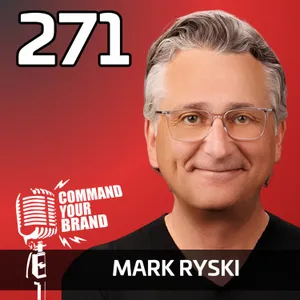
He Hated Cold Calling. So He Wrote a Book — and CEOs Started Taking His Calls.
Mark Ryski spent years unable to get retail executives on the phone. He hated cold calling and was bad at it. So he wrote a book — and started sending it to CEOs of retail chains. They started taking his calls. That was three books and 23 years ago. Today HeadCount does traffic and conversion analytics for retailers in more than 20 countries, with a largest client running 1,600 stores. But the road there ran through two complete failures: a 1990s version built out of $300 of RadioShack parts that nobody wanted, and a 2003 relaunch that also went nowhere. In this episode of the Command Your Brand Show, Jeremy Ryan Slate talks with Mark about using authorship as a door-opener, knowing when NOT to pivot, and what actually separates real thought leadership from the performative kind. In this conversation: - Watching customers walk out of a store without buying — the problem that started everything - Why his boss wouldn't spend $2,500 on a traffic counter, and what he built instead - Two failed versions of the same company, ten years apart - Eight years at Intuit running QuickBooks for Canada - "The credibility of authorship" — how a self-published book replaced cold calling - Why a little success can misdirect an entrepreneur worse than failure does - When holding your course beats pivoting, and how to tell the difference - Losing 40% of revenue when COVID closed retail — and what came after - The Jeff Bezos question he's never stopped thinking about: what WON'T change? - Three honest tests for whether someone is actually a thought leader If you're building authority in a field where nobody knows your name yet, this one's worth your time. 👇 COMMENT BELOW: Have you ever held your course when everyone told you to pivot — and was it the right call? CHAPTERS: 00:00 Intro 01:20 The computer store, early 1990s 03:09 The $2,500 counter his boss wouldn't buy 03:54 Building one for $300 in RadioShack parts 04:37 Version one fails — nobody wanted the data 04:59 Eight years at Intuit running QuickBooks Canada 05:50 Version two launches in 2003, and also fails 06:27 The book that got CEOs to take his calls 08:37 When not to pivot: don't chase rainbows 13:49 COVID wipes out 40% of revenue 16:50 The Bezos question: what won't change? 18:21 Real thought leadership vs. performative 21:20 Where to find Mark CONNECT WITH MARK RYSKI & HEADCOUNT: HeadCount: https://headcount.com Store Traffic Is a Gift: The Retailer's Guide to Converting Visits into Sales (2025): https://www.amazon.com/Store-Traffic-Gift-Retailers-Converting/dp/B0F1XG8QC5 Conversion: The Last Great Retail Metric: https://www.amazon.com/Conversion-Last-Great-Retail-Metric/dp/1463414226 When Retail Customers Count: https://www.amazon.com/When-Retail-Customers-Count-Ryski/dp/1420824759 MENTIONED IN THIS EPISODE: Stu Heinecke, How to Get a Meeting with Anyone: The Untapped Selling Power of Contact Marketing — the cartoonist Jeremy references at 07:13: https://www.amazon.com/How-Get-Meeting-Anyone-Marketing/dp/1946885134
22 MIN