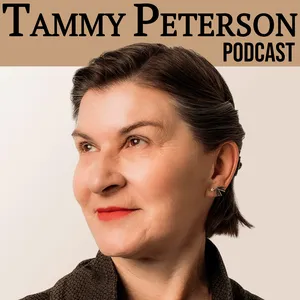
The Tammy Peterson Podcast

Tammy Peterson

Details

I help women of faith find clarity and strength through conversations on tradition, motherhood, and healing.

Recent Episodes

NOV 24, 2026
200. What To Do When You Feel Like You Have to Do It All at Once | Erica Komisar
Raising emotionally secure children starts long before the teenage years. So what happens when we tell our kids that life is a straight line, and family has to fit around it? In this conversation I'm joined again by psychoanalyst and parenting author Erica Komisar, LCSW, to talk about why the first three years matter so much for a child's sense of safety, why so many young people are breaking down in adolescence, and why women can do it all, just not all at the same time. We also talk about her book The Parent's Guide to Divorce (published in the UK as The Child-Healthy Divorce) and what it means to put children first when a marriage ends, along with sleep training, maternity leave, faith, and the seasons of a woman's life, including menopause. Erica is a licensed clinical social worker with more than 30 years of experience, the author of Being There and Chicken Little the Sky Isn't Falling, and the founder of Attachment Circles. I'd love to hear what stayed with you in the comments, and if this conversation meant something to you, please subscribe. Erica and I start with the idea of a linear life, the story we have told three generations of children that school, career, and material success come first and family has to fit in somewhere along the way. Erica explains why life is really lived in seasons, and why dependency is not a bad word. It is what intimacy and a relational life are built on. From there we go deep into early childhood attachment. Erica describes how babies are not born feeling safe, and how a mother's presence in the first three years layers in that safety, moment by moment. Without that foundation, she says, children can seem fine until adolescence brings its storms. We talk about sleep training, the fourth trimester, nannies and caregivers, preschool, and the pressure new mothers feel when they know they have only a few weeks or months before going back to work. We also talk about divorce. Erica shares why children are people, not possessions, why she uses the story of King Solomon in her book, and how parents can protect children's mental health through a healthy divorce by finding outlets for their own pain. I share some of my own story too: staying home with my children, walking my son to the bus, and the joy of grandchildren. We close on faith, community, and building the coping strategies our children will need, because the seasons of motherhood keep circling around, and each one gives us another chance. Find more from Erica: Being There: Why Prioritizing Motherhood in the First Three Years Matters: https://www.amazon.com/Being-There-Pr... Chicken Little The Sky Isn't Falling: Raising Resilient Adolescents in the New Age of Anxiety: https://www.ericakomisar.com/chicken-... Connect with me: My Website: http://tammympeterson.com Instagram: https://www.instagram.com/tammy.m.peterson Facebook: https://www.facebook.com/TammyPetersonPodcast TikTok: https://www.tiktok.com/@tammypetersonpodcast Twitter: https://twitter.com/Tammy1Peterson Rumble: https://rumble.com/c/TammyPetersonPodcast

92 MIN
NOV 3, 2026
198. What To Do When Your Teenager Is Addicted to Their Phone | Johann D'Souza
Kids and smartphones may be the most important conversation parents can have right now. Clinical psychologist Dr. Johann D'Souza has spent 16 years mentoring young men and thousands of hours in the therapy room, and his message to parents is simple: never give your child a smartphone. We talk about why a phone can be more dangerous than anything we worried about as kids, how video games are keeping young men from growing up, what social media is doing to girls, and why he believes the real problem is not the child but the parents. I also share how the phone ringing at our dinner table took my own dad away from me, and how Jordan and I are learning to choose calm over constant stimulation. Dr. D'Souza is the author of Saving Teens from Toxic Screens and hosts the Virtuous Leaders podcast. Visit neversmartphone.com for his free guide for parents, and tell me in the comments: when did your child get their first phone? Dr. Johann D'Souza is a clinical psychologist and national speaker on protecting children from digital destruction. He holds a PhD from the University of Houston and has published over 20 peer reviewed articles. After years of one on one therapy and mentoring with adolescents, he realized he could help far more families by speaking directly to parents, because they are the gatekeepers who can keep a smartphone out of a child's hands in the first place. We talk about why addiction is so hard to break when part of us believes the habit is good, and why a phone within arm's reach at night undoes so much effort. Dr. D'Souza explains why many flip phones are smartphones in disguise, why he suggests five minutes a day of texting is all a child needs, and why he encourages parents to find even one like minded friend so their children have peers without phones too. He also shares his own conversion while studying in Rome, and why he came to see pornography as the biggest challenge young people face today. Smartphone addiction in teens can look different for boys and girls. For boys, video games offer a feeling of progress without the effort real life requires, and that can keep young men from launching into adulthood. For girls, social media can become a full time job of curating their image, feeding loneliness rather than easing it. Underneath it all, Dr. D'Souza believes the hardest problem is not a lack of information, but our own struggle as adults to do what we already know is good. I share my own story too: how the phone on our kitchen wall took my dad's attention at dinner, what we are doing to keep Jordan's nervous system calm, and how I am trying to fill my own phone with prayer instead of distraction. If you are thinking about children and screen time in your own home, I hope this conversation gives you courage and a practical place to begin protecting children from digital destruction. You can find Dr. D'Souza's free resources for parents at neversmartphone.com. Find more from Johann: Free Guide for Parents: https://neversmartphone.com/ Speaking: https://johanndsouza.com/speaking Substack: https://drjohanndsouza.substack.com/ YouTube: https://www.youtube.com/@drjohanndsouza Connect with me: My Website: http://tammympeterson.com Instagram: https://www.instagram.com/tammy.m.peterson Facebook: https://www.facebook.com/TammyPetersonPodcast TikTok: https://www.tiktok.com/@tammypetersonpodcast Twitter: https://twitter.com/Tammy1Peterson Rumble: https://rumble.com/c/TammyPetersonPodcast

109 MIN
OCT 23, 2026
196. Hearing Mary in Prayer | Sonja Corbitt
Healing through Scripture sounds simple, but my guest Sonja Corbitt learned it the hard way. She came out of childhood with a deep father wound and a rage she was terrified of passing on to her own children, so she begged God for help and went looking for it in His Word. Sonja is the Catholic Evangelista and creator of the LOVE the Word Bible study and prayer method, and in this conversation she shares how one verse, Mark 12:30, became her template for healing the whole person: heart, soul, mind, and body. She tells the story of her conversion from Protestant Bible teacher to Catholic, the painful years when her husband could not follow her, and how holding on to Mary carried her through. She also explains how watching the way Mary prayed, by listening first, shaped the method she teaches today. Sonja began teaching Scripture in a small country church in the South when she was just 21. Two church splits, a three hour Easter Vigil she found strange and compelling all at once, and a catechism she picked up in a used bookstore set her on a year of reading her way into the Catholic Church through the early Church Fathers. Her husband was not ready to follow, and for a time they could not even speak about it. She chose not to defend herself, and the way God brought him home five years later moved me deeply. We spend much of our time on what healing through Scripture actually looks like day to day. Sonja shares the STOP tool she drew from Psalm 4, which taught her that anger is not the enemy and that underneath her rage was fear, and underneath the fear was pain. She describes the hard moments in our relationships as pop quizzes, places where God is already working, and walks through how our emotions, memories, judgments, unforgiveness, and even physical symptoms can become a path to inner healing rather than something to run from. We talk about anxiety and depression, emotional unavailability as a core wound, praying for the generations before us, and how chronic illness can carry a message we need to hear. Finally, Sonja tells the story of asking Mary directly what she was missing, and how Mary's Magnificat became the heart of her LOVE the Word prayer method: listen, observe, verbalize, and entrust. Her book Love Heals goes deeper into Mark 12:30, and her study Exalted explores Mary and the Magnificat. I hope this conversation gives you hope that no part of you is beyond God's healing love. Find more from Sonja: Love Heals, Ave Maria Press: https://www.avemariapress.com/products/love-heals Website: https://sonjacorbitt.com/ YouTube: https://www.youtube.com/@sonja_corbitt Connect with me: My Website: http://tammympeterson.com Instagram: https://www.instagram.com/tammy.m.peterson Facebook: https://www.facebook.com/TammyPetersonPodcast TikTok: https://www.tiktok.com/@tammypetersonpodcast Twitter: https://twitter.com/Tammy1Peterson Rumble: https://rumble.com/c/TammyPetersonPodcast
101 MIN