What If I Don’t Like It? - A Movie Discussion Podcast

Kt Baldassaro

Details

What If I Don’t Like It? is a movie podcast and film discussion hosted by actress and filmmaker Kt Baldassaro. Each episode, a guest finally watches a movie they’re sure they won’t like, despite never having seen it. Together they break down the film, exploring surprises, bias, and how personal taste shapes the way we judge and experience movies.

Recent Episodes

OCT 15, 2026
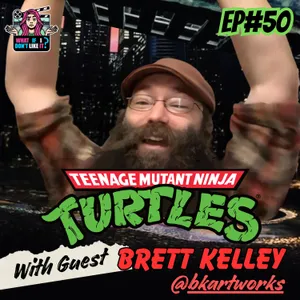
Teenage Mutant Ninja Turtles (1990) with Brett Kelley - Episode 51
What’s the first movie you remember seeing in a movie theater? It’s one of the three questions I ask every guest on What If I Don’t Like It?, and when Brett Kelley mentioned during his There Will Be Blood episode that the original Teenage Mutant Ninja Turtles was his answer, I knew we had to come back to it. Brett, the artist behind Gourdfolk, joins me to revisit the 1990 Teenage Mutant Ninja Turtles, a movie that helped shape his love of comics and remains a memorable part of his childhood. We get into the film’s roots in Kevin Eastman and Peter Laird’s darker comic books, the incredible practical effects from Jim Henson’s Creature Shop, and how this surprisingly gritty adaptation became a box office hit. We also discuss why it feels so different from the animated series and Teenage Mutant Ninja Turtles II: The Secret of the Ooze, its connections to martial arts cinema and Daredevil, and how the franchise evolved from an independent black-and-white comic into a global phenomenon. Brett brings his TMNT knowledge and personal history with the franchise to a conversation about what makes this adaptation so distinctive, why its darker tone works, and why the original still deserves a closer look. What's the first movie you remember seeing in a theater? Let me know, and tell me which turtle is your favorite! CONNECT WITH BRETT KELLEY Artwork & Shop: https://ko-fi.com/bkartmerc/shop Instagram: https://www.instagram.com/bkartworks/ Facebook: https://www.facebook.com/BKArtMerc/ MORE CONVERSATIONS WITH BRETT Check out our other conversations about The Usual Suspects: https://tinyurl.com/4v88b77u There Will Be Blood: https://tinyurl.com/4s4kur7t and Heavy Metal: https://tinyurl.com/49en7sev ABOUT WHAT IF I DON'T LIKE IT? Hosted by Kt Baldassaro, What If I Don't Like It? explores what happens when filmmakers, artists, writers, and performers finally watch movies they've avoided because of their expectations, biases, or preconceived notions. Through thoughtful, occasionally irreverent conversations, we explore the films we love, the ones we're skeptical of, and why stories connect with us. ▶️ YouTube: https://www.youtube.com/@MovieRuntime 🎧 Apple Podcasts: https://tinyurl.com/w877hmn8 👂 Spotify Podcasts: https://tinyurl.com/mrxu764f #TeenageMutantNinjaTurtles #TMNT #MoviePodcast
128 MIN
OCT 1, 2026
Why Do Movies Keep Making People Vomit? | The History of Vomiting on Screen with Jaina Cipriano
Why do movies and TV shows keep making people vomit? Vomiting scenes are everywhere in film and television. Sometimes they’re funny. Sometimes they’re horrifying. Sometimes they’re meant to make us uncomfortable. And sometimes they seem to exist for no reason other than making the audience think, “Do we really need to see this?” In this special episode of What If I Don’t Like It?, I sit down with filmmaker Jaina Cipriano - who you may recognize from our ConAir episode, No. 45 - to investigate the history and purpose of vomiting scenes in movies and TV. We talk about how vomiting went from something filmmakers largely kept offscreen to something we now see in increasingly graphic detail, and what that shift says about changing ideas of censorship, realism, comedy, disgust, and audience expectations. We get into Hitchcock and Rebecca, the Hays Code, The Exorcist, Monty Python and the Meaning of Life, Yellowjackets, Triangle of Sadness, and some of the most memorable vomiting scenes in film history. This conversation is especially personal for Jaina. She has lived with emetophobia for more than 20 years, so watching vomiting on screen isn’t an abstract exercise in film criticism. We talk about what it’s like to have a phobia repeatedly confronted by movies and television, how filmmakers use vomiting to provoke a physical reaction from an audience, and why Jaina eventually made a short film exploring her own emetophobia, called Actualization. We also ask why filmmakers so often use vomiting as shorthand for excess, disgust, illness, intoxication, humiliation, or emotional overwhelm. When does a vomiting scene actually tell us something about a character? When is it effective horror or comedy? And when is it simply a cliché? And if filmmakers are trying to make vomiting feel realistic, why do so many movies and TV shows leave out the very things that actually make the experience human? This is a conversation about vomiting in movies and TV, film history, censorship, horror, comedy, disgust, emetophobia, and the strange power of one of the most universal bodily functions we have. ### FIND JAINA 🎬 Website: www.jainaciprianophotography.com/ 🎥 Short film: www.jainaciprianophotography.com/actualization-2026 📸 Instagram: instagram.com/jainastudio ### WATCH / LISTEN TO THE PODCAST 🎙️ YouTube: www.youtube.com/@MovieRuntime 🎧 Spotify: open.spotify.com/show/2iyYtsB5zeuoCJZ3D3fKJt 🍎 Apple Podcasts: podcasts.apple.com/us/podcast/what-if-i-dont-like-it-a-movie-discussion-podcast/id1719394737 **GUEST:** Jaina Cipriano / ⁨@jainastudio⁩ **HOST:** Kt Baldassaro / ⁨@MovieRuntime⁩ What do you think is the most memorable vomiting scene in a movie or TV show? #FilmAnalysis #FilmHistory #Movies #FilmCriticism #HorrorMovies

63 MIN
AUG 15, 2026
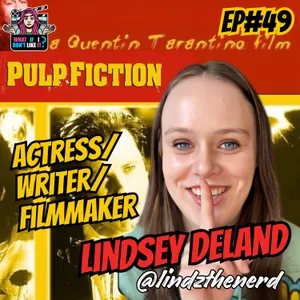
Pulp Fiction with Lindsey Deland - Episode 49
What if one of the most iconic movies ever made just... isn't your thing? Filmmaker, actress, and writer Lindsey Deland watched Quentin Tarantino's Pulp Fiction (1994) for the first time. Her verdict? ½ star. I loved it. She... really didn't. In this episode of What If I Don't Like It?, Lindsey and I take a deep dive into Pulp Fiction, Quentin Tarantino, and the very different ways we experienced one of the most influential movies of the 1990s. Why did Pulp Fiction feel disjointed and meaningless to Lindsey? How much does knowing the older movies Tarantino references change the experience? And can you recognize that a movie is influential, beautifully constructed, and important to film history while still simply... not liking it? Because Lindsey is a filmmaker, actress, and writer herself, we also look at Pulp Fiction from a filmmaking perspective. We talk about Tarantino's cinematic influences and use of bricolage, nonlinear storytelling, cinematography, reaction shots, monologues, iconic scenes, and the filmmaking choices Lindsey appreciated even when the story didn't work for her. We also get into film fandom and gatekeeping, the pressure to love movies considered “masterpieces,” gender and lived experience when watching violent films, and the difference between appreciating a filmmaker's choices and actually enjoying a movie. Before we get to Pulp Fiction, Lindsey talks about finding her path in film, screenwriting, her current creative projects, her first movie memories, and the films that shaped her. So how does a filmmaker give Pulp Fiction half a star while I still love it? Listen and find out! CHAPTERS 00:00 Introduction 03:24 Meet Lindsey Deland 04:20 Finding a Path in Film 18:19 Current Projects & Creative Influences 23:20 First Movie Memories & Comfort Films 37:04 First-Time Viewing: Pulp Fiction 43:26 First Reactions to Pulp Fiction 59:49 Monologues, Cinematography & Iconic Scenes 01:19:58 Fandom, Gatekeeping & Film Culture 01:38:14 Art, Artists & Interpretation 01:41:55 Final Verdict & Filmmaking Takeaways 02:00:35 Writing for Yourself & the Audience About Lindsey Deland Lindsey Deland is a filmmaker, actress, and writer currently developing her own feature film. You can watch her film Dark Places on Tubi. Instagram: @lindzthenerd Letterboxd: @lindzthenerd YouTube: @lindzthenerd 🎬 Watch Dark Places on Tubi:https://tubitv.com/movies/100053018/dark-places About What If I Don't Like It? What If I Don't Like It? is a movie podcast hosted by Kt Baldassaro where people watch films they think they won't enjoy and then unpack what happens when they finally press play. Follow Kt @MovieRuntime: TikTok: @movieruntime Instagram: @movieruntime Letterboxd: @MovieRuntime Listen to What If I Don't Like It? on Spotify, Apple Podcasts, and wherever you get your podcasts.
135 MIN
JUL 15, 2026
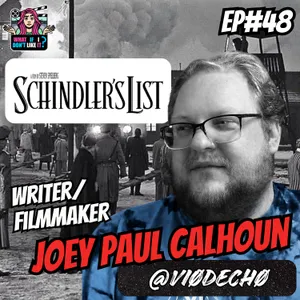
Schindler's List with Joey Paul Calhoun - Episode 48
What if one of the most important films ever made is also one of the hardest to bring yourself to watch? Writer and filmmaker Joey Paul Calhoun joins What If I Don't Like It? to discuss Schindler's List, exploring why its reputation can feel intimidating and what makes Steven Spielberg's Holocaust drama endure more than 30 years later. At its core, this episode is about the difference between a film's importance and the experience of actually watching it. We explore why Schindler's List carries so much emotional weight before you ever press play, how Spielberg approached one of history's darkest chapters, and why the film continues to resonate with audiences decades after its release. Joey and I also talk about historical storytelling, filmmaking, and the responsibility of adapting real events for the screen. Rather than asking whether Schindler's List is "good," we discuss what it means to create a film that challenges, educates, and moves its audience. In this episode we discuss: Why so many people put off watching Schindler's List The difference between an important film and an entertaining one Steven Spielberg's approach to telling a true story Oskar Schindler as one of cinema's most unexpected protagonists The role of hope in stories about unimaginable tragedy Why historical films continue to matter Follow Joey Paul Calhoun:🎬 YouTube: @followthevoid🎥 TikTok: @v0idech0📸 Instagram: @the_vi0dech0 Joey is a writer and filmmaker whose work explores character-driven storytelling, and he brings a thoughtful perspective to one of cinema's most widely discussed films. Films and filmmakers mentioned include Steven Spielberg, Schindler's List, The Pianist, Life Is Beautiful, Saving Private Ryan, The Zone of Interest, and other films that explore history, war, memory, and the Holocaust. Did Schindler's List live up to its reputation? More importantly, why has this film remained essential viewing for more than three decades? Listen to find out. 🎧 Listen on Spotify, Apple Podcasts, and wherever you get your podcasts. Follow Kt Baldassaro / MovieRuntime:🎬 YouTube: @MovieRuntime📸 Instagram: @movieruntime🎞️ Letterboxd: @MovieRuntime
102 MIN