The $2T market still running on spreadsheets
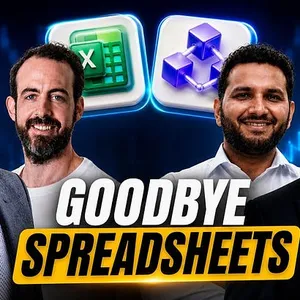
Hi, it’s Marc. ✌️ “Now my balance sheet as an originator drops from a week’s worth of production to one loan’s worth of production.” Mike Manning, Head of Institutional Finance, Ava Labs That is the most useful way I have heard someone explain the promise of onchain private credit. Private credit has grown to roughly $2 trillion. Yet many facilities still run on spreadsheets, monthly reports, emailed PDFs, and weekly funding cycles. An originator may make a loan today and wait days for the money that funds it. I sat down with Juan Montero, co-founder and CEO of Fence, Anant Matai, Investments & Product at Grove, and Mike Manning, Head of Institutional Finance at Ava Labs. We talked about what changes when the loan and the money move on the same rails, why most tokenization still stops at the wrapper, and what code should never be trusted to decide. This is a playbook for building working private-credit rails, not a podcast about putting old assets inside new tokens. This ad could belong to you. 🚀 Build credibility. Drive pipeline and revenue. We position you among 100,000+ digital asset decision-makers. Why this matters now The first wave of tokenization changed the ownership wrapper. A fund share or bond became a token, but the underlying loans, servicing, covenants, and cash movements often stayed in the old system. The second wave is trying to change the operating model. A loan is created digitally. Its legal documents point to an authoritative record. Eligibility and covenant rules can be checked continuously. Repayment can arrive in digital cash and map back to that exact loan. That distinction separates a faster transfer rail from a faster credit business. Our 51 Insights report estimates that working rails can compress funding from 5 to 15 days to 1 to 3 days, distributions from T+5 to T+30 to near real time, and refinancing from 4 to 8 weeks to 1 to 2 weeks. The loan does not become safer because it is onchain. The capital around it can move with less waiting and less clerical work. About the guests * Juan Montero is co-founder and CEO of Fence. The company builds operating infrastructure for asset-backed finance, from loan onboarding and borrowing-base calculations to covenants, cash flows, and reporting. Fence says it administers about $1.5 billion across live facilities. * Anant Matai works across investments and product at Grove, an institutional credit protocol backed by Sky. Grove allocates onchain capital to tokenized credit and provides financing against eligible digital assets. “The lenders are here ... what we’re really looking for is that end to end originators to originate assets that are on chain and borrow against them on chain.” * Mike Manning is Head of Institutional Finance at Ava Labs, which develops the Avalanche network. He previously led blockchain and digital-currency work at Amazon and held roles at Provenance and Symbiont. “This is a settlement and operational technology. It’s not a judgment technology.” The discussion was part of Same Loans, Better Rails: The Institutional Rebuild of Private Credit, presented by 51 Insights and Avalanche. Chapters 00:00 The $2 Trillion Private Credit Problem00:56 Meet the Panel02:38 Why Private Credit Still Runs on Spreadsheets06:38 Blockchain Without the Hype09:44 Bringing Institutional Credit Onchain12:41 Tokenization vs Onchain Lifecycle Management15:04 The Money Rail Meets the Asset Rail17:28 How Banks Save 80% in Operational Costs19:06 Can Blockchain Prevent Double Pledging?21:59 Is Regulation Holding Blockchain Back?25:01 Why Banks Will Adopt This26:50 Which Blockchain Should Institutions Use?29:00 What Really Needs to Go Onchain?31:56 The Future of Onchain Credit34:13 Final Thoughts Important links * Event page and guest details * 51 Insights report: The tokenized private credit opportunity * Fence case study: BBVA and Payflow * Grove Allocator * Grove’s $250 million Avalanche deployment target * Avalanche for institutions 1. The wrapper is not the product Thesis: A tokenized claim is useful. A digitally native loan lifecycle changes the economics. Mike drew a clean line between putting an ownership wrapper onchain and moving issuance, servicing, covenants, repayment, and settlement onto the same system. “Asset-backed finance and securitization is composable finance without a composable stack.” A wrapper gives investors a new way to hold an asset. It does not automatically change how the loan is originated, checked, funded, serviced, or enforced. * The underlying loan needs a durable digital identity. * The credit agreement needs machine-readable eligibility, covenant, and waterfall rules. * Cash movements need to reconcile to the same loan record. * The legal documents need to say which record controls ownership. What to do with this: When someone pitches a tokenized credit product, ask where the underlying loan, covenants, servicing events, and repayments live. If the answer is still email, PDF, and spreadsheet, the token changed the wrapper, not the operating model. Related read: The tokenized private credit opportunity 🚀 Build credibility. Drive pipeline. Win in digital assets. We produce institutional-grade research that helps digital asset companies own a category, then distribute it to 100,000+ decision-makers. Let’s talk. 2. Capital velocity is the business case Thesis: The most valuable output is not a token. It is less time between creating an eligible loan and receiving the capital that funds it. In a weekly borrowing-base process, an originator may carry days of new loans on its own balance sheet. If each loan enters the facility as soon as it passes the agreed rules, that inventory can fall sharply. “Now my balance sheet as an originator drops from a week’s worth of production to one loan’s worth of production.” “It turns a capital intensive model into a capital light model.” Juan used a Fence facility with BBVA as the proof point. Fence’s published case study says the system handles 100,000 transactions a month, reduced interest expense by about 30%, and increased the advance rate by more than 10%. Fence separately reports up to 80% lower operating overhead and up to 40% lower cost of capital across clients. These are company-reported outcomes and should be read that way. What to do with this: Measure idle funding days, reconciliation hours, advance rates, and the cost of carrying unfunded loans. Those numbers tell you whether new rails changed the business. Related read: Inside JPMorgan’s $3T tokenization machine 3. One ledger does not stop every double pledge Thesis: A ledger can prevent two claims against one digital asset only when that asset is the authoritative legal record from origination. The panel discussed the alleged double and triple pledging in the collapses of First Brands and Tricolor. A shared record can make duplicate claims visible, but only inside the system that everyone recognizes. “You can prevent double pledging of an asset once that it is on chain, but then the question is, well, how do I know the asset that’s on chain is the original one?” A digital twin can still be pledged on one chain, another chain, and a traditional facility. A signature can prove who submitted a record. It cannot prove that the offchain asset exists or that no competing claim sits elsewhere. * Origination must create the first authoritative asset record. * Legal documents must define control and priority. * All relevant lenders need access to the same ownership state. * Servicing data and cash need to reconcile to the asset continuously. What to do with this: Ask which record has legal priority, whether the same receivable can still exist offchain, and what happens when a servicer or borrower disputes the data. Related read: DTCC’s $20T October debut 4. Lenders are ready. Originators are the bottleneck Thesis: Capital is already willing to move onchain. The missing piece is a deeper supply of loans that are created, funded, and serviced onchain from the start. “The lenders are here ... what we’re really looking for is that end to end originators to origi… This is a public episode. If you would like to discuss this with other subscribers or get access to bonus episodes, visit 51insights.substack.com