Tell Me What It's Like

Stacy Raine

Details

What's it like to be a tween therapist? To start triathlons in your 50s? To be the first female chess grandmaster? Tell Me What It’s Like is a podcast about uncommon experiences and what they teach us about the world. Host Stacy Raine talks with people who have spent years in roles and life situations most of us don’t experience to understand what it’s actually like, what they’ve seen over time, and what those experiences reveal. Season 3 on now - new episodes weekly.

Recent Episodes

NOV 4, 2026
Never Too Late to Start: Becoming a Triathlete in Her 50s
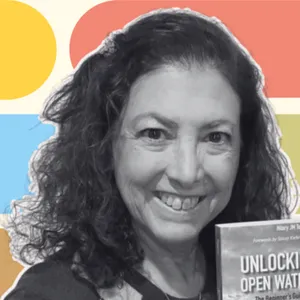
Hilary Topper had never been athletic. She’d spent years building her PR firm and raising kids, and didn’t make a lot of time for herself. At 48, she decided something had to change. She joined a gym for the first time, then started running, and a few years later, she signed up for her first triathlon. Today she coaches people just like her. "You're never too old. You're never too overweight ... You can do this." Hear Hilary talk about: Joining a gym for the first time at 48, and asking a stranger how to use the treadmill The Google Glass assignment that led to her first triathlon Learning to swim as an adult, and the nose plugs that changed everything Crossing her first triathlon finish line in tears Why consistency is the hardest part, and how she removes the barriers How her blog led her to become a certified coach Open water panic attacks, race cutoffs, and life at the back of the pack Why, after everything, she still feels she has something to prove Mentioned in this episode: Hilary’s blog, A Triathlete’s Diary Her books: From Couch Potato to Endurance Athlete, Unlocking the Triathlon, Unlocking the Open Water Swim WeREndurance, her triathlon team, run/walk group and Masters swim club Hilary Topper On Air, her podcast Jeff Galloway’s Run Walk Run method U.S. Masters Swimming Road Runners Club of America (RRCA) Support This Show: Follow Tell Me What It’s Like in your favorite podcast app Leave a rating & review — it helps others find the show Share the episode and tag @RaineMediaCo on social media Mentioned in this episode: Help Others Discover the Show Enjoying Tell Me What It’s Like? Leaving a rating and review in your podcast app helps more listeners discover the show. Thanks for supporting thoughtful conversations and perspective-driven storytelling.

41 MIN
OCT 20, 2026
Raising a Child with Disabilities: Jane Fischer on Pushing Past “Never”
When Jane Fischer’s daughter Suzy was born in 1974, doctors said she would never walk, talk, or learn. Suzy spent the next five decades proving them wrong. It wasn’t until Suzy was in her late 30s that the family finally learned the name for what she’d been living with all along: Joubert syndrome, a rare genetic disorder. Today, Suzy works in a preschool and lives on her own with support. In this episode, Jane discusses what it was like to raise a daughter with disabilities, push past the doctors’ predictions, and help Suzy build a life of her own. “ Predictions are not promises. Nobody knows your child like you." - Jane Fischer on Tell Me What It’s Like Hear Jane talk about: The day Suzy was born, and the doctors’ advice to send her away Finding help for a child with disabilities before Google How raising Suzy tested her marriage Shadowing Suzy at school, and the difference between inclusion and tolerance Why doctors call Suzy a medical miracle How a decades-long mystery was finally named Joubert syndrome What she’d go back and tell herself in that hospital room Mentioned in this episode: If You Knew Suzy: Pushing Past the Boundaries of Never by Jane Fischer Joubert syndrome ECLC of New Jersey Maplebrook School Jespy House Support This Show: Follow Tell Me What It’s Like in your favorite podcast app Leave a rating & review — it helps others find the show Share the episode and tag @RaineMediaCo on social media
49 MIN
OCT 14, 2026
Treating Women With Cancer: Dr. Tiffany Troso-Sandoval on Empowering Patients
For more than 25 years, Dr. Tiffany Troso-Sandoval has treated women with breast and gynecological cancers. Throughout her practice, she’s realized that women going through cancer need more than treatment. They need to understand their care, stay organized, and have the right support around them so they can be active participants in their own care. In this episode, she talks about why she became an oncologist, what it’s really like on the doctor’s side of the room, and how she’s helping patients feel empowered. "I call this becoming the CEO of your cancer care. You need to be the one in charge." Hear Dr. Troso discuss: How watching her mother’s frustration with her grandmother’s doctors shaped her path Walking out of the LSAT and choosing medical school instead What it’s like to deliver hard news, and how she handles the emotional weight How cancer treatment has changed over 25 years, and is like “night and day” The day she spent her lunch hour organizing a patient’s records into a binder – and why Why telling a friend or family member to “call me if you need anything” doesn’t work, and a better way patients can ask for help Mentioned in this episode: Calming the Cancer Chaos by Dr. Tiffany Troso-Sandoval Dr. Troso's website Memorial Sloan Kettering Cancer Center Support This Show: Follow Tell Me What It’s Like in your favorite podcast app Leave a rating & review — it helps others find the show Share the episode and tag @RaineMediaCo on social media Mentioned in this episode: Help Others Discover the Show Enjoying Tell Me What It’s Like? Leaving a rating and review in your podcast app helps more listeners discover the show. Thanks for supporting thoughtful conversations and perspective-driven storytelling.

43 MIN
OCT 7, 2026
Tracking Mountain Lions: Dr. Winston Vickers on Saving California's Big Cats
Dr. Winston Vickers has spent decades studying one of America's big cats, the mountain lion. He's tracked them, collared them, and even studied their poop, all to help Southern California's mountain lions survive. A veterinarian who went back to school mid-career to study big cats, he shares what it's like to come face to face with a mountain lion, why highways are pushing some populations toward extinction, and why killing one lion doesn't solve the problem. “There was concern that mountain lions in some parts of Southern California were making it harder for these bighorns to recover. So that's why we started putting collars on the mountain lions." Hear Dr. Vickers discuss: How he went back to school to study mountain lions after a 20 year vet career How you trap a mountain lion (it involves roadkill) The diseases threatening them, from avian flu to feline leukemia How one freeway split a population and led to dangerous inbreeding What scat-sniffing dogs reveal about what lions eat What it was like to collar his first mountain lion Close encounters with mountain lions Why "you can't kill your way out of the problem" Why there seem to be more lions in the suburbs Why mountain lions keep whole ecosystems in balance Mentioned in this episode: Learn more about the California Mountain Lion Project at UC Davis Listen to A Path for Mountain Lions by The Nature Conservancy, featuring Dr. Vickers View the mountain lion tracker About Dr. Vickers: Dr. T. Winston Vickers is a wildlife research veterinarian with the UC Davis Wildlife Health Center and the Institute for Wildlife Studies. For 20 years he directed or co-directed mountain lion studies across California, and he has studied mountain lions and other wildlife for 23 years. His work focuses on why mountain lions die, how they move, road crossings, genetics, and how they interact with people. "Just the sheer muscle that's there when you feel their bodies is just amazing. " - Dr. Winston Vickers on Tell Me What It’s Like
55 MIN