The Humanitarian Lens

Doctors Without Borders / MSF USA

Details

The Humanitarian Lens is a podcast produced by Doctors Without Borders/Médecins Sans Frontières (MSF) USA. Each episode explores humanitarian crises through the first-hand experience of our staff caring for people affected by conflict, epidemics, natural and human-made disasters, and other emergencies in more than 70 countries around the world.

Recent Episodes

NOV 10, 2026
Living with diabetes in the world’s largest refugee camp
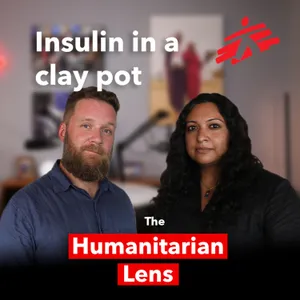
Diabetes care takes more than insulin. It also takes reliable access to food, regular monitoring, and support to manage the condition day to day. Now imagine doing all of that in a refugee camp with no reliable electricity, no transportation, and shrinking food rations. On this episode of the Humanitarian Lens, we explore MSF’s work with Rohingya refugees in Cox’s Bazar, Bangladesh, where close to a million refugees live after being displaced by violence and persecution in Myanmar since 2017. Our teams currently provide care to more than 2,000 people living with diabetes, high blood pressure, and other non-communicable diseases in Cox’s Bazar. In a conversation with host Elias Primoff, Dr. Anjoli Anand, who leads MSF's work on non-communicable diseases, explains why caring for chronic conditions is an essential part of humanitarian response. She describes a patient’s home visit that turned into an emergency, the stigma that leads families to hide a diabetes diagnosis, and a clay pot that lets patients store insulin at home instead of walking to a clinic twice a day. The Humanitarian Lens is a podcast from Doctors Without Borders/Médecins Sans Frontières (MSF) USA. MSF is an international, independent medical humanitarian organization providing care to people affected by conflict, epidemics, disasters, and exclusion from health care in more than 70 countries. #DoctorsWithoutBorders #CoxsBazar #Bangladesh #Rohingya #Diabetes #Type1Diabetes #GlobalHealth #HumanitarianAid #NCDs

34 MIN
FEB 10, 2026
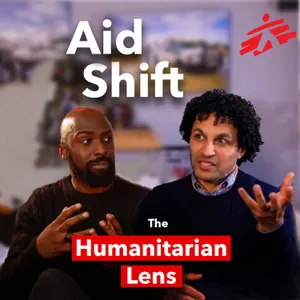
Understanding the aid shift and its devastating impact on global health programs
On this episode of the Humanitarian Lens podcast, MSF International President Dr. Javid Abdelmoneim speaks with host Chigo Ahunanya about the impact of US policy changes and funding cuts that upended humanitarian aid and global health programs over the past year. MSF does not accept US government funding, but our teams have witnessed the devastating impacts on the communities we assist: Clinics closed. Medicines sat stranded at ports. Health workers lost their jobs. Dr. Abdelmoneim talks about his experience working with community-based organizations in Sudan a year ago, right after the aid cuts were announced. He also shares insights about how changes to global health and humanitarian aid financing impact our teams, our patients, and communities already suffering from abuse and neglect. The Humanitarian Lens is a podcast produced by Doctors Without Borders/Médecins Sans Frontières USA that looks into the world’s most urgent humanitarian emergencies through the experiences of our aid workers. Note: This episode was recorded on December 15, 2025. 00:00–01:10 — How MSF responds to the changing humanitarian landscape 01:10–02:10 — Examining the impact of humanitarian aid funding cuts 02:10–08:13 — Javid’s firsthand experience of the cuts in Sudan 08:13–12:51 — How funding cuts disrupt health ecosystems where MSF works 12:51–15:00 — The changing humanitarian landscape 15:00–18:57 — The impact on HIV, tuberculosis, and malaria care 18:57–21:55 — How MSF is adapting to these global shifts 21:55–23:17 — The impact of rising healthcare costs 23:17–24:42 — The communities most affected by funding cuts 24:42–30:58 — Javid’s vision for the future of MSF
29 MIN