ShoutOut LGBT+ Radio

ShoutOut LGBT+ Radio

Details

With weekly shows, and special release podcasts, ShoutOut is a magazine show for the LGBT+ community. With live guests and reports from all over, we cover everything from the serious to the stupid.

Recent Episodes

SEP 10, 2026
A Quakers Oats
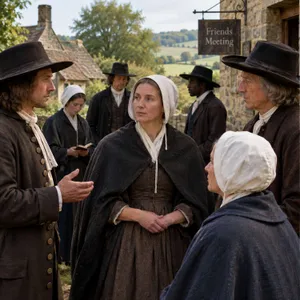
This week the team is joined in the studio by David Heald, a Quaker, for a conversation that ranges from silent worship to chocolate. Quakers, he explains, grew out of a 17th-century split from the Anglican Church and threw out the trappings most churches are built on — priests, buildings, set services, hierarchy — in favour of meeting in silence and holding peace, equality, simplicity and truth as founding principles. In 1963 they became the first religious group to say publicly that what makes a relationship equal has nothing to do with the sex of the people in it, and David traces that instinct back through an 18th-century Quaker who used they/them pronouns and the 13th-century mystic Julian of Norwich writing that God is neither male nor female. He also explains why the word "homosexual" only dates from 1869, and why the Leviticus passages so often used against LGBT+ people read very differently in the Greek and Aramaic the Bible came from. There's a chocolate connection, too — shut out of the army, Parliament and the priesthood, Quakers built a reputation for honesty that made them the trusted chocolate makers of Bristol and beyond — and David is candid about the harder edges of that history, from persecution after the Restoration to Quakers being arrested today on Palestine Action and climate protests. And this week's Queerstory tells the story of Ewan Forbes — a Scottish doctor, born in 1912 into an old Aberdeenshire family, registered at birth as a girl but understood by everyone who knew him as a boy. In 1952 he had his birth certificate corrected from female to male, married his housekeeper and settled into life as a country doctor. It was only when his brother died in 1965, and the family barony proved able to pass only down the male line, that a cousin challenged his right to inherit, and three years of argument in Scotland's supreme civil court followed. In 1968 Ewan won, the court accepting he was intersex and the Home Secretary confirming him as Sir Ewan Forbes, 11th Baronet. But the case was heard behind closed doors, the press kept out and the judgment never published, so it could never be cited — while an English court's opposite ruling the same year, published in full, shaped UK law for decades. Ewan died in 1991, known outside his community mainly as a well-liked country doctor, until the academic Zoë Playdon pieced the story back together for her 2021 book, The Hidden Case of Ewan Forbes.

49 MIN
SEP 3, 2026
Stories
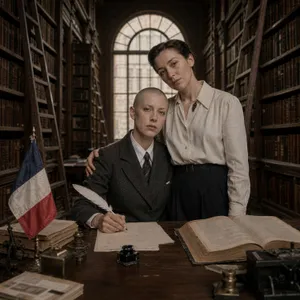
This week's Queerstory tells the story of Claude Cahun — born Lucy Schwob in France in 1894 into a Jewish literary family, and a surrealist photographer, writer and, as it turned out, resistance fighter. Decades before words like non-binary or gender-fluid were in common use, she was already writing about gender as something changeable, something that could be put on and taken off like a costume, and she took the name Claude precisely because in French it works equally as a man's or a woman's — refusing to let language decide who she was. In 1930s Paris she worked, and lived, with her partner Suzanne Malherbe, who took the name Marcel Moore; the two had been step-sisters before they were lovers, and out of that unlikely arrangement came one of the great creative partnerships of the twentieth century, so close that it is hard to say where one artist ended and the other began. In 1937 they left Paris for Jersey to escape the rising far right, and when the Nazis occupied the island in 1940 they stayed and ran one of the strangest resistance campaigns of the war — Claude writing messages in fluent German, signed by an invented disillusioned soldier, which the two of them slipped into coat pockets, left in vehicles and dropped at military funerals. They called their weapon the paper bullets, and for four years nobody suspected two ageing, eccentric French women of running a resistance operation from a stone house by the sea. In 1944 they were caught and sentenced to death; they were still awaiting execution when Jersey was liberated in May 1945. Claude never fully recovered, and died in 1954. Her photographs were largely forgotten until the 1990s, and today she is recognised as one of the earliest openly gender-fluid artists in modern history. And with autumn approaching, the team brings their reading list for the season — a top five chosen with the help of queer and independent bookshops in London, Manchester and Bristol, and spanning new fiction, a journey through queer cinema, and a trans-feminist essay on homelessness that lands at a painfully timely moment.
40 MIN
AUG 20, 2026
Houston We Have A Problem
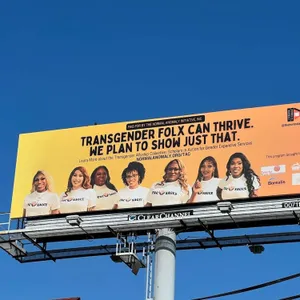
We chat to Joelle of the Normal Anomaly based in Houston... What began as a platform for telling stories has grown into an organisation working to change the systems behind them. The Normal Anomaly Initiative began in 2016 as a grassroots movement rooted in digital storytelling. At a time when the experiences of Black LGBTQ+ people were too often overlooked, misunderstood, or told by others, they created space for community members to tell their own stories, challenge harmful narratives, and make visible the realities shaping their lives. In 2018, that movement took its next step when Normal Anomaly became a nonprofit incubated at The Montrose Center in Houston, Texas. As they listened more deeply to the community, their work expanded beyond changing narratives to addressing the barriers those narratives revealed. Storytelling led to services. Services led to navigation. Navigation led to questions about why people were encountering the same barriers again and again. Along the way, their work has reached thousands of people through direct services, capacity building, research, technical assistance, advocacy, and community partnerships. They have supported emerging leaders, helped launch Black and LGBTQ+ businesses, collaborated with academic and public-health institutions, and brought community perspectives into spaces where decisions about our health and futures are made. They recognise that healthier communities cannot be built through isolated programs alone. They require people with the power to lead, pathways that help individuals navigate resources and care, organizations that are connected rather than siloed, and systems that can learn from the communities they are intended to serve. That is the infrastructure they are working to build. They listen to community. right now they are using what they hear not only to change the narrative—but to help change the conditions, connections, and systems that shape people’s lives.
55 MIN