Conversations with Tyler

Mercatus Center at George Mason University

Details

Tyler Cowen engages today's deepest thinkers in wide-ranging explorations of their work, the world, and everything in between. New conversations every other Wednesday. Subscribe wherever you get your podcasts.

Recent Episodes

NOV 25, 2026
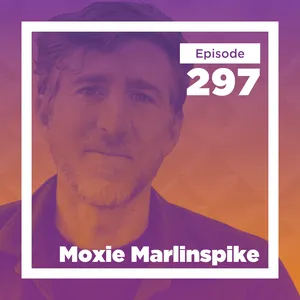
Moxie Marlinspike on Cryptography, Privacy, and Mass Surveillance
Help us keep the conversations going in 2027. Donate to Conversations with Tyler today. Moxie Marlinspike built Signal and designed the encryption protocol underneath it — the same protocol that also secures WhatsApp, Facebook Messenger, and Skype. He's spent his career on the unglamorous, structural side of privacy, down to whether the company itself can see your contacts, your group names, or your search history. That background makes him an unusually direct interlocutor on the biggest live question in his field: whether the recent flood of AI-assisted math results could put cryptography itself at risk, and what the world should actually do if public-key encryption stopped working with little warning. Tyler and Moxie discuss whether AI could break cryptography, Marlinspike's own private AI chat service, his case for surveilling AI models instead of the humans using them, his skepticism of airport facial recognition, the case he tentatively makes for consent-based over centralized surveillance, why he thinks law enforcement should stay deliberately imperfect, what makes Signal different from WhatsApp, his doubts about cryptocurrency as it's currently used, a Pentagon group chat scandal he seems almost pleased about, nearly drowning alone in San Francisco Bay, what Starlink has taken from solo sailing, hitchhiking across America in the late '90s, a mysterious period of being secretly flagged every time he flew internationally, what he's building next, and more. Read a transcript enhanced with helpful links, or watch the full video on YouTube. Recorded live at the Progress Conference, hosted by the Roots of Progress Institute, October 10th, 2026. Other ways to connect Follow us on X and Instagram Follow Tyler on X Follow Moxie on X Sign up for our newsletter Join our Discord Email us: [email protected] Learn more about Conversations with Tyler and other Mercatus Center podcasts here. Timestamps: 00:00:00 - Support CWT 00:01:34 - Intro 00:02:40 - On whether AI will break cryptography 00:07:31 - On private AI and mass surveillance 00:25:21 - On fame 00:29:03 - On Signal 00:31:47 - On crypto as a slot machine 00:35:30 - On nearly drowning in San Francisco Bay 00:39:51 - On hitchhiking 00:42:42 - On years of unexplained airport flagging 00:44:43 - On what's next 00:45:15 - Outro
45 MIN
NOV 11, 2026
Terence Tao on Proof, Beauty, and the Future of Mathematics
Tyler calls Terence Tao arguably the greatest mathematician of his generation: a Fields Medal winner who has published serious work across harmonic analysis, partial differential equations, number theory, probability, and compressed sensing, among many other fields. His new book, Six Math Essentials, is the occasion for this conversation, but Tyler spends much of it asking something more personal: not what the proofs say, but what they feel like. Tao's answers reveal a mathematician who treats beauty as a real signal, finds Gödel's incompleteness theorem genuinely unsettling even decades later, and is remarkably candid about failing both Fortran and quantum mechanics as an undergraduate. Tyler opens by asking Terence what it feels like to contemplate Euler's identity, quantum mechanics, the Riemann hypothesis, and Gödel's incompleteness theorem, before moving into why mathematical history gets stripped out of classrooms, whether abstract math is a lottery ticket or a unified whole, string theory's beauty versus its lack of confirmation, why real analysis arrived so late, why zero took until the 7th century to be invented, game theory, the Black-Scholes model, Bostrom's simulation argument, and Newcomb's paradox, math education and the case for teaching more statistics, Tao's view that AI has pushed mathematics from an era of "proof scarcity" into "proof abundance," what that means for the research paper, why video talks may become more valuable than papers themselves, Tao's favorite Hong Kong action movies, his unconventional path through an Australian university at age 13, his most unusual work habit, his verdict on the Collatz conjecture, and more. Read a transcript enhanced with helpful links, or watch the full video on YouTube. Recorded October 8th, 2026. Other ways to connect Follow us on X and Instagram Follow Tyler on X Sign up for our newsletter Join our Discord Email us: [email protected] Learn more about Conversations with Tyler and other Mercatus Center podcasts here. Timestamps: 00:00:00 - Intro 00:01:06 - On math and emotions 00:08:19 - On the history of mathematics 00:09:15 - On abstract mathematics 00:10:55 - On string theory 00:12:27 - On geometry and analysis 00:14:38 - On zero 00:16:07 - On game theory and the limits of rationality 00:22:26 - On math education 00:28:41 - On the end of proof scarcity 00:32:35 - On the future of the math paper 00:36:22 - On Terence's education and habits 00:43:07 - Outro
43 MIN
NOV 4, 2026
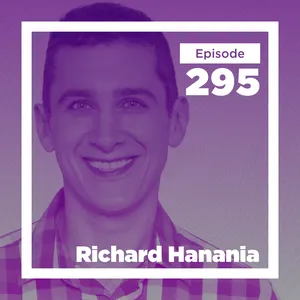
Richard Hanania on Conrad's Nostromo, Latin American Crime, and Populism
Joseph Conrad's Nostromo, widely considered his masterpiece, follows a fictional Latin American country torn apart by corruption and its uneasy dependence on foreign capital. Tyler and Richard Hanania picked it hoping to talk about something other than politics — a bit ironic, given Hanania's new book, Kakistocracy: Why Populism Ends in Disaster, is all about the stupidity of current politics. From early on, the two see the novel quite differently: Is its hero a rotten fraud or a flawed but decent man? Is Conrad quietly a classical liberal, or a tragedian who thinks every political ideology curdles into "folly and murder"? Is comparing regimes even the right way to read him at all? The first half of the conversation stays close to the text, covering the novel's political backdrop, its deliberately scrambled timeline, the near-total absence of religion in Conrad's universe, Nostromo's own vanity and treatment of women, a close reading of the "folly and murder" passage, the Fredric Jameson claim that no Latin American author could have written this book, and their very different research methods for preparing. Then the conversation opens outward, moving through why Latin America has unusually high crime despite not being especially poor, Panama's surprising success story, Shakespeare's objective greatness, the state of media criticism after the AI boom, who on the populist right is actually worth reading, why conservative women hug and liberal women shake hands, what Hanania wants to write and learn next, and more. Read a transcript enhanced with helpful links, or watch the full video on YouTube. Recorded June 16th, 2026. Other ways to connect Follow us on X and Instagram Follow Tyler on X Follow Richard on X Sign up for our newsletter Join our Discord Email us: [email protected] Learn more about Conversations with Tyler and other Mercatus Center podcasts here. Timestamps: 00:00:00 - Intro 00:01:18 - On the context of Nostromo 00:23:32 - On Nostromo's scrambled timeline 00:24:59 - On the absence of religion in Nostromo 00:27:15 - On romanticizing politics 00:30:14 - On writing about Latin America 00:34:18 - On reading Conrad's works 00:39:01 - On crime in Latin America 00:44:10 - On Shakespeare's objective greatness 00:49:05 - On the media after the AI boom 00:51:16 - On populism 01:00:00 - On what's next 01:02:30 - Outro
63 MIN
OCT 28, 2026
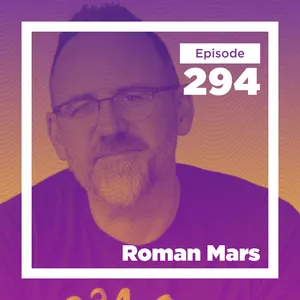
Roman Mars on Flags, Phones, and the Design of Everyday Life
Roman Mars has built one of podcasting's great empires out of noticing things everyone else walks past. His show, 99% Invisible, has racked up over 500 million downloads telling stories about the unnoticed design choices that quietly shape how cities and objects work, from speed bump psychology and flag design to the shape of a good street sign. His TED Talk on vexillology (the study of flags) is so influential that it has reportedly spurred 250 to 300 municipal flag redesigns across the country, including in Pocatello, Idaho, a city he once publicly called out for having the worst flag in America. Tyler asked questions about nearly every visual surface of modern life, and Mars's answers keep circling back to the same tension: beauty and efficiency are often at odds, and most of what looks ugly to us is just a compromise we haven't yet learned to love. Tyler and Roman discuss street signs, why classic cars were so much more distinctive than today's SUVs, Waymos, New Jersey jughandles, yellow streetlights, lane-stripe colors, why Houston keeps growing despite its lack of charm, whether any post-war American suburb is actually beautiful, the Chrysler Building's rocky reception, brutalism done right and wrong, Central Park as an urban miracle, what Jane Jacobs got wrong, e-bike lanes, Tokyo's bike-free transit model, the placelessness of global coffee shops, why the iPhone looks boring now, the ugliest country he's visited, his love for Australia's polymer notes, his soft spot for the dollar's "locked in amber" weirdness, underground power lines, how to warn future civilizations about nuclear waste, why highway signs lie to you about speed limits, the principles of a great city flag, the Pocatello redesign saga, his own studio, why 99% Invisible works precisely because it's audio-only, the most unusual habit behind his long productive career, and more. Read a transcript enhanced with helpful links, or watch the full video on YouTube. Recorded August 28th, 2026. Other ways to connect Follow us on X and Instagram Follow Tyler on X Follow Roman on X Sign up for our newsletter Join our Discord Email us: [email protected] Learn more about Conversations with Tyler and other Mercatus Center podcasts here. Timestamps: 00:00:00 - Intro 00:01:08 - On urban and suburban design 00:21:55 - On phone design 00:24:36 - On the world's ugliest places 00:26:03 - On currency design 00:28:33 - On power lines, speed bumps, and nuclear warning signs 00:34:31 - On city flags 00:40:39 - On building 99% Invisible 00:45:06 - Outro

45 MIN
OCT 14, 2026
Liaquat Ahamed on Financial Crises, Gold, and the Lessons of 1873
Liaquat Ahamed has spent years making central bankers into compelling characters. His 2009 book Lords of Finance won the Pulitzer Prize for its account of the bankers whose decisions helped cause the Great Depression; his new book, 1873: The Rothschilds, the First Great Depression, and the Making of the Modern World, tells a stranger story — a severe deflationary crisis that barely dented global growth but poisoned politics for a generation. Tyler pushes him hard on the central puzzle of those two books — why did one financial crisis derail the world, while another left growth almost untouched? Tyler and Liaquat start with that puzzle before moving through Gladstone's startlingly self-interested bet on Egyptian bonds, Bismarck's role in destroying bimetallism and deflating the world economy for two decades, whether a global silver or symmetallic standard could have worked, Britain's fateful decision to re-peg the pound to gold in 1926, Hjalmar Schacht's transformation from the economist who stabilized Weimar's currency to opportunist collaborator with the Nazi regime, Montagu Norman's spiritualist beliefs, why the 1920s produced such a creative cultural moment, lessons from the IMF on Ireland's housing bubble and Pakistan's two dozen bailouts, what went wrong in the eurozone crisis, Britain's baffling modern stagnation, and finally to his own restless career and what he wants to write next. Read a transcript enhanced with helpful links, or watch the full video on YouTube. Recorded July 28th, 2026. Other ways to connect Follow us on X and Instagram Follow Tyler on X Sign up for our newsletter Join our Discord Email us: [email protected] Learn more about Conversations with Tyler and other Mercatus Center podcasts here. Timestamps: 00:00:00 - Intro 00:01:13 - On 1873 vs. the Great Depression 00:15:32 - On bimetallism and the gold standard 00:21:32 - On the 1920s and Weimar hyperinflation 00:29:29 - On Ireland, Pakistan, and the Eurozone crisis 00:36:21 - On Liaquat's career and Ismaili Islam 00:44:37 - Outro
45 MIN