A Spark Of Awareness

Sophie Vo

Details

A Spark Of Awareness is a weekly 15-minute reflection practice for conscious leaders to practice self-awareness. Your time to pause, and sit with yourself. No distraction, just self-listening. Every week, Sophie Vo will offer a human prompt, drawn from real transformation work with tech and gaming founders, executives, and leaders to help you step out of old scripts, reconnect with your truth, and lead from integrity, presence, and self-mastery. Sophie is a leadership guide for high-achieving and conscious leaders. With 17 years of leadership experience in the tech and gaming industry, Sophie has built and led 30+ global teams across the U.S., Europe, and Asia, and has mentored over 200 executives across VC-backed startups and public companies. A four-time founder, her most recent venture scaled to six figures in its first year and evolved into ORIN, a curated global network redefining leadership for women. riseandplay.substack.com

Recent Episodes

NOV 24, 2026
What Are You Carrying That Was Never Yours?
In the previous episode of A Spark of Awareness, I explored the relationship between authenticity and belonging, and how much of who we become as adults is shaped by our early childhood experiences. Today, I want to continue that exploration and go one layer deeper. In most cases, what we carry is not our own story. It comes from our parents, our family lineage, generations before us, and sometimes even our ancestors. Through my recent training in deep inner-child work and somatic practices at Satya’s school in Portugal, I have been exploring how these inherited patterns shape our identity and behaviours. This is naturally a fundamental part of my leadership practice. I’m not particularly interested in working only on the symptoms. How to communicate better, how to set boundaries, how to stop people pleasing. These tools can help, but I want to work on what sits underneath them. The roots. What is behind the fear of speaking your truth? Why do you always feel responsible for everyone else? Where does the need to please others come from? I want to go straight to the origin, rather than simply fixing the symptoms. And today, I want to share two parts of my own story that have helped me understand what it means to carry responsibilities and identities that were never mine to begin with. The responsible child: when survival becomes an identity I have always been the responsible one. The adult in the room. The one who takes care of things. The one who manages, anticipates and makes sure everything is taken care of. But this was never really a choice I made. It was a conditioning that started at a very young age. I grew up in a stressful family environment where my parents did not have the emotional tools or maturity to provide the emotional security I needed as a child. They were materially present, and I believe they their best with what they knew. But emotionally and psychologically, they did not have the tools to be present. Before I was even six years old, I was already taking care of my siblings and learning to take care of myself. I had to grow up quickly. As I shared in the previous episode about attachment, when a child doesn’t feel emotionally safe relying on their caregivers, they find other ways to feel safe. In my case, it was withdrawing, becoming independent and taking responsibility. It was a coping mechanism. A way to survive an environment where relying on others felt too painful. But what happens when that coping mechanism becomes your identity? I didn’t have much space to be a carefree child. I was already the responsible one at school, at home and in my relationships. And later, this pattern followed me into adulthood. In romantic relationships, I became the one managing the other person, sometimes mothering my partners. In teams, I would take the leadership role and carry the responsibility, even when nobody had asked me to. Because that’s what I had always done. I didn’t question it. It was simply who I thought I was. Until I started to examine where it came from. Today, one of the biggest shifts for me is learning to give that responsibility back. If someone is angry with me, for example, I no longer automatically take responsibility for how they feel. I can take a step back and ask: “What is there for you?” What has this situation created in you? What are you actually angry about? Does it remind you of another experience where you felt the same way but couldn’t express it? Of course, this doesn’t mean that we should never take responsibility for our actions. If I have hurt someone or crossed a boundary, I need to own that. But someone else’s emotional reaction is not automatically mine to fix. In the past, if someone was upset with me, I would automatically go into guilt mode. I would try to understand, fix, and overcompensate to make everything right. Today, I can recognise that someone’s emotion belongs to them. I can listen, remain present and allow them to explore what has been activated, without taking it on as my own responsibility. This is a very different way of relating to others. And it starts with recognising that I don’t have to carry everything. The stories we inherit from our ancestors The second part of my work in Portugal was even deeper: exploring ancestral memories and the stories we carry through our family lineage. This is particularly personal for me as a Vietnamese woman, born into an immigrant family and raised in a Western society. My family roots are in Vietnam. My grandparents came from a family of farmers who lived in the countryside and experienced poverty. And when I started exploring my own reactions to certain situations, I noticed something very strong. I have always felt deeply activated by questions of justice and injustice, discrimination and inequality. Particularly when it comes to people of color, or when I see people with significant wealth and privilege. Sometimes, this would translate into envy, jealousy or even resentment towards people who have more privilege. I could also find myself siding with people who have less privilege, sometimes without looking at the full picture. So I started asking myself: where is this coming from? Because when we look closely, we can recognise how easily our experiences and inherited stories can create biases. There are people with poor behaviour across every background and level of privilege. And there are people with great character and integrity across every background and level of privilege. It is not as simple as dividing the world into privileged and underprivileged, good and bad. So I wanted to understand the origin of this strong emotional reaction. When I went deeper into my family history, I started to recognise the story of generations of poverty, exploitation and injustice. My ancestors worked the rice fields. They worked hard, but the value created through their labour did not necessarily return to them. There was a history of people working the land while others benefited from the wealth generated. That memory of poverty and exploitation was deeply present in the way my grandparents lived, and in how my parents related to money, wealth and people with privilege. There was also the experience of discrimination in France. And something else I had to recognise: people who have experienced discrimination can also develop prejudices towards other groups themselves. These are complicated stories. They don’t belong to one person or one generation. They are part of a much larger history. And as a Vietnamese person growing up in France, I carried many layers of that history into my own identity. The colonial relationship between France and Vietnam, the conflicts and divisions, the experiences of migration and discrimination — all of these shaped the environment in which my family lived and the stories I inherited. I also recognise a connection here with my work around medicine and the histories of indigenous communities. There are deep memories of exploitation, dispossession and disconnection that resonate across different histories. And something important happened when I started examining these stories with more distance. I could recognise the history without continuing to be defined by it. I can honor what happened. I can acknowledge the injustice and the suffering of previous generations. But I don’t have to carry their anger, their fear or their limitations as my own identity. I don’t have to see every person through the lens of that inherited story. And I don’t have to continue living with the belief that I will always be poor, that I will always be an outsider, or that I have to fight a battle that started generations before me. That story is part of my history. But it doesn’t have to determine my future. When a family story becomes your identity This is something I have observed in people from many different backgrounds. At some point, a family story becomes so deeply ingrained that we no longer recognise it as a story. We experience it as who we are. Maybe you grew up in a family where money was always a s… This is a public episode. If you would like to discuss this with other subscribers or get access to bonus episodes, visit riseandplay.substack.com

20 MIN
NOV 17, 2026
When Do You Trade Authenticity for Belonging?
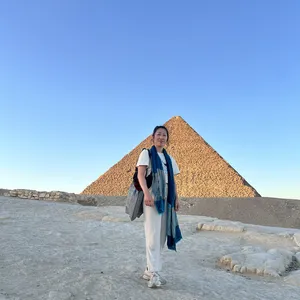
When Do You Trade Authenticity for Belonging? Welcome back to A Spark of Awareness. After a month away from the podcast, traveling through Egypt and Portugal, I’m happy to be back sharing reflections on leadership, consciousness and human evolution. My time away was a mix of experiences: a pilgrimage in Egypt, including a private visit to the ancient structures beneath the pyramid, and further training in somatic work in Portugal. The latter is becoming an increasingly important part of my practice, and something I will be bringing more into this podcast. One theme from my recent training stayed with me and inspired this episode: When do we trade authenticity for belonging? It’s a question that touches something fundamental about being human. And something I see repeatedly in the people I work with, particularly high-achieving professionals who reach a point in life where they start questioning who they really are beneath the roles they have been playing. Our two fundamental needs: authenticity and attachment During my somatic training with Satya, we spent time exploring inner-child development and the ways our early experiences continue to shape us as adults. One of the thinkers whose work came up was Dr. Gabor Maté, particularly his book The Myth of Normal. His work explores the relationship between childhood experiences, emotional repression, trauma and our physical and mental well-being. One idea that particularly resonated with me is that, as children, we have two fundamental needs: authenticity and attachment. Attachment is our need to feel connected, loved, protected and safe with the people who take care of us. Authenticity is our ability to be true to ourselves, to express what we feel, to follow our instincts and to be who we are. But what happens when these two needs come into conflict? As children, we depend on our parents and caregivers. We need them to survive. We need their love, protection and acceptance. And very early on, we can learn that being fully ourselves doesn’t always guarantee that we will receive those things. Perhaps we learn that being angry is not acceptable. That crying is not good. That expressing certain emotions makes us difficult to love. That we need to behave in a particular way to be accepted. So we adapt. We suppress parts of ourselves to maintain connection. We learn to fit in, to please, to behave, to become the person others expect us to be. And gradually, belonging can come at the cost of authenticity. The attachment patterns we carry into adulthood There are different attachment patterns that can develop through our early relationships. Four commonly discussed patterns are: * Secure attachment: We develop a sense of safety in ourselves and in our relationships. We can connect with others while maintaining a healthy relationship with ourselves. * Dismissive-avoidant attachment: We learn to rely heavily on ourselves, often because relying on others did not feel safe or dependable. Independence becomes a way of protecting ourselves. * Fearful-avoidant attachment: We want connection, but we are also afraid of being hurt or rejected. We may build walls around our hearts to avoid experiencing that pain again. * Anxious-preoccupied attachment: When caregiving has been inconsistent, we may develop a strong need for reassurance and validation. Our sense of security in relationships can become unstable. These patterns are not labels to put ourselves into. They are ways of understanding how our early experiences can influence how we relate to ourselves and others today. And the important question is: how much of our adult behaviour is actually a response to something we learned as children? We learn to fit in before we learn to be ourselves If you think about it, society reinforces this pattern from a very young age. At school, we learn to fit in with a group. We learn what is considered normal, acceptable, appropriate. We learn how to dress, how to speak, how to behave. I grew up as an immigrant in France, and I was the only Asian child at school. I remember having to let go of parts of my authentic way of being, including aspects of my original culture, to fit in and behave more like the French children around me. And this is just one example. There are so many layers of conditioning that tell us who we should be and who we shouldn’t be. Don’t be too emotional. Don’t be too loud. Don’t cry. Don’t be different. Don’t challenge the rules. Over time, these messages can become so deeply embedded that we no longer recognize what is genuinely ours and what we have adapted to be accepted. We become the role. The job title. The responsible one. The successful one. The partner. The parent. And one day, we may find ourselves asking: Who am I when I’m not any of these things? Who am I when I am not performing, achieving, pleasing or trying to be recognised? This is a question I see many people confronting in their mid-thirties, forties and fifties. What we sometimes call a midlife or identity crisis can also be a moment when the parts of ourselves that we have suppressed for years are asking to be seen again. What if we were all a little weird? Something else that stayed with me during the training was a conversation about being a weirdo. Some people in the group were saying, “I’m a weirdo. We’re all weirdos here.” And I remember thinking: aren’t we all? Wouldn’t we all be a little weird if we allowed ourselves to be truly ourselves? If we gave space to our unique traits, our imagination, our creativity, our unconventional ways of seeing the world? What if what we call “normal” is simply what we have collectively agreed is acceptable? In The Myth of Normal, Gabor Maté challenges the very idea of what we consider normal in our society, particularly when so many of our ways of living are disconnected from our fundamental human needs. I believe there is something powerful in questioning that. Because when we enter spaces where people feel safe enough to be themselves, something changes. They become more alive. More expressive. More creative. More free. I have experienced this in groups where people no longer need to wear a mask or prove anything. They can simply show up as they are. And what I have observed is that authenticity doesn’t have to come at the cost of belonging. When you find your tribe, you can belong precisely because you are yourself. You don’t have to become someone else to be accepted. The cost of suppressing ourselves There is another dimension to this that I have become increasingly interested in through my somatic work: the relationship between emotional repression and the body. We often think of our emotions as something that happens in our minds. Something we can rationalise, push aside or move past. But our emotional experiences are also embodied. When we repeatedly suppress what we feel, ignore our needs or disconnect from our instincts, this can affect how we experience stress and well-being. The work of researchers and practitioners such as Gabor Maté invites us to look more closely at the relationship between our emotional lives, our early experiences and our physical health. And this is where I believe we need to pay more attention. Sometimes, the body becomes the wake-up call. We reach a point where we can no longer continue living in the same way. We experience exhaustion, chronic stress or health challenges, and we are forced to ask ourselves: what is happening? What needs to change? I see many people reaching this threshold. People who have achieved so much externally, but who no longer recognise themselves beneath the identity they have built. People who have spent years being strong, responsible, successful and reliable, but who have forgotten how to simply be. And I would invite you not to wait for a wake-up call before asking yourself these questions. You don’t need to reach burnout or a breaking point to start making space for who you really are. How do you develop the courage to be yourself again? So, where do we start? Noticing the moments when you are not being a… This is a public episode. If you would like to discuss this with other subscribers or get access to bonus episodes, visit riseandplay.substack.com

17 MIN
OCT 6, 2026
What would I create if money wasn’t the driver?
For the past few weeks, I’ve been sharing the journey of my entrepreneurial shift — the ups and downs, the joy of building a business, and what happens when you decide to slow down. Building a business is an act of creation. You can change it, transform it, close it, reinvent it. It’s like a canvas. You can do whatever you want with it. And yet, sometimes we limit ourselves with what we think a business should be, instead of treating it as a creation. So I’ve been walking myself through an experiment: taking a pause, slowing down, and giving things some space and silence. And I’m still very much in the middle of it. What happens when you stop achieving? One of the main things I’ve identified, both in myself and in the high-achieving leaders I work with, is that we often don’t know what to do with ourselves when we are not achieving or doing something. For me, spending the past weeks without signing new clients, creating, producing or building the things I’m so familiar with has been very uncomfortable. Because when you stop doing, other things start to surface. Some very old fears that I thought I was already free from have come back: the fear of not making it, the fear of not being useful, and the fear of being lost. And the main fear underlying behind all of those: the fear of not being in control. So I’m observing myself through this experiment. What does it feel like to be lost? How long can I stay with feeling unsure and unclear? How long can I handle not being in control and allow something else to emerge? I don’t necessarily need to solve these feelings. I’m trying to stay with them and see what they have to teach me. And something very interesting has happened. When I leave enough space, bigger ideas start to emerge. Ideas that I don’t think I could have accessed if I had continued doing, doing, doing. The strategic value of slowing down This experience has reinforced something for me: retreating from your business is not necessarily a luxury. It can be a strategic need. As a leader, founder or business owner, sometimes the best thing you can do is step away from the business and stop trying to make things happen. Especially now, in an era of AI where we can execute more and more things, faster and faster. But if the idea is weak, you simply execute on shaky foundation. What is increasingly asked from us as humans is the quality of our thoughts, our ideas and the depth behind them. I’ve found that the longer I wait and listen, the more those aha moments appear. I start to see the big picture beyond the bushes and the trees. I start to see the mountain. And if I hadn’t given myself that time, I would probably still be doing, doing, doing. That has been a big reminder for me. Going back before moving forward Every year, especially around the change of seasons, I like to stop and revisit what has happened. This time, I decided to go much deeper. I started by reviewing the numbers of my business over the past three years. What grew? What worked? What didn’t? I did a huge retrospective of the business. Then I started cleaning up the administration of my business: my CRM, the work I had done, the people I hadn’t followed up with, all the things that had accumulated while I was busy building. But one of the most interesting parts has been going back through the trainings and learnings I have absorbed over the past three years. I realized that I had been so focused on acquiring knowledge that I hadn’t actually integrated much of it. I was moving from one training to the next, from one learning to the next, without really stopping to absorb what I had already learned. Now, when I go back and study the material again, I receive another layer of depth from it. And I have had this thought several times: “Wow. The gold is already in my hands. I just forgot about it.” I also went back and read testimonials from people who have been through my containers and experienced transformation. Sometimes we need to look back at what we have already created to remember what is actually working. Letting ideas breathe Another practice that has been helping me is simply not acting immediately on every idea. I journal. I read. I study. I let ideas come. And then I give them space. If an idea is still there after a week, I look at it again. If it disappears, maybe it was simply an impulse from the mind — another attempt to create, control or move forward. I’m planting multiple seeds right now and see which ones actually grow. This is particularly interesting for me because I love creating new ideas. I love being in flow. But I can also very easily move from one thing to the next, chasing the next shiny object. So slowing down has also been a way of asking: Is this something I really want to build, or is this simply another idea that wants my attention? What would I create if money wasn’t the driver? The most profound question that started to emerge when I realized I could give myself more financial freedom and space. What would I really create from my heart if money was out of the equation? Of course, money is still part of reality. I have bills, a mortgage, a lifestyle and responsibilities. But if money wasn’t the primary driver, what would I actually choose to create? And one thing became very clear. I want to continue building deep containers with women and holding spaces for transformation. I just came back from our retreat in Portugal, and witnessing such profound change in such a short amount of time confirmed something for me. This is where my heart goes. This is the work I want to continue doing. And I want to create it from a place of expansion and freedom rather than scarcity. So what happens when you stop? This is the experiment I want to invite you into. What would happen if you slowed down? Not forever. Maybe for a day. A few days. A week. What happens when you’re not doing? What starts to feel shaky or uncomfortable? What fears come up? Because that discomfort might actually be showing you something. And once you stop filling every empty space with action, something else can emerge. A bigger idea. The right path for you, from a place of truth, not fears. Maybe you realize that what you were looking for isn’t actually something new. That the gold is already in your hands. Thanks for reading Rise and Play! Subscribe for free to receive new posts and support my work. This is a public episode. If you would like to discuss this with other subscribers or get access to bonus episodes, visit riseandplay.substack.com
20 MIN
SEP 29, 2026
From The Lone Wolf To World Co-Creator
Welcome to a new episode of A Spark of Awareness. This week, I want to talk about something that has been a major theme in my own entrepreneurial journey: business partnerships, co-founders, collaboration, and trust. For a long time, I wore what I now recognize as the mask of the lone wolf. “I’m better by myself. I know what to do. I don’t need anyone.” I also wore the masks of the high achiever, the strong woman, and the person who could handle everything alone. Maybe you recognize yourself in some of these. The interesting thing is that these identities aren’t necessarily bad. At some point in our lives, they probably helped us. They became ways of protecting ourselves and creating a sense of safety. Being strong, independent and self-reliant can take us very far. But what protects us at one stage of our life can become a limitation at another. And that is what I have been discovering in my business. When independence becomes a limitation Over the past three years, I have become very good at building things independently. I created a business where I own my time, choose who I work with, decide how I work and have a lot of control over where I put my energy. There is a lot of freedom in that. But I also started to see the other side of it. I had become very comfortable being in charge, but I hadn’t learned equally well how to rely on others, receive support and build something with an equal. There is a big difference between working with a team member and working with a true partner. When you hire someone, there is still a hierarchy. You are ultimately the person making the decisions. You have authority, responsibility and control. But with a business partner or co-founder, you have to meet each other as equals. You can’t simply use authority or money to make things happen. You have to communicate, negotiate, trust, share responsibility and create something together. And that has been one of my biggest personal and professional challenges. The deeper question: Can I trust others? This has made me look beyond business strategy. Because the real question isn’t simply: “Should I have a business partner?” The deeper question is: “Can I trust another person enough to build with them?” And if not, why? For me, this question has connected to a lot of deeper inner work around trust, control, boundaries and my relationship with power. I realized that I had created a narrative that working with powerful people—particularly powerful men—could mean losing my own power. So I protected myself by creating distance. But that also meant I was limiting myself from collaborating with amazing people who had their own power, sovereignty and integrity. The problem wasn’t necessarily other people. It was my own capacity to trust, to collaborate and to remain grounded in myself while being in relationship with someone equally powerful. That required me to rewrite an old story. You can go faster alone. But can you go further together? One of the biggest stories I had to examine was this: “If I work with other people, I have to divide the wins.” Of course, that’s partly true. If you share a business, a project or an opportunity, you may also share the financial outcome. But I realized how limited that perspective was. Because if you only focus on maximizing what you get, you can miss what becomes possible when several people bring their strengths together. If you want to go fast, you can go alone. If you want to create greater impact, you need others. That has become increasingly clear to me. Over the past year, I have deliberately started experimenting with different forms of partnership. I’ve worked with people who understand marketing much better than I do. I’ve explored new platforms and advertising. I’ve started surrounding myself with people who can help me expand the reach of my work instead of trying to figure everything out myself. And I’ve discovered that this isn’t necessarily about maximizing profit margins. It’s about asking: What is the most powerful way to create the impact I want to create? Sometimes that means keeping everything in-house. Sometimes it means bringing in someone who can do something ten times better than you, or building something together. Your environment is part of your growth Another major shift for me has been moving out of my own bubble. For three years, I worked mostly from home. I was productive. I could organize my days exactly as I wanted. I didn’t see much need for a coworking space. But productivity isn’t the same thing as growth. Working alone also meant I was missing perspective, spontaneous conversations, new ideas and opportunities to co-create. So I started joining more curated communities and environments. I joined a co-creation coworking space where people actively connect, share ideas, create events and find ways to collaborate. I also joined a carefully curated network of founders and business leaders. And what I noticed was this: I didn’t just need to be a source of inspiration for others. I needed to be inspired by others, too. As a coach and mentor, I’m used to holding space for people, supporting their growth and helping them see things differently. But I also need people who challenge my thinking. People who have walked paths I haven’t walked yet. People who see things I don’t see. People who are a few steps ahead of me—and sometimes completely outside my frame of reference. That is where growth happens. Back Into Co-Founding The final experiment—and perhaps the biggest one—is that I’m opening myself to co-found a business with a partner again. I’ve co-founded several ventures in the past, and not all of those experiences were easy. There were difficult conversations, misalignment and complexity. At one point, I thought: “This is not for me anymore. I’m never going back there.” So I closed that door. And now, I’m opening it again. But I’m not entering partnership with the same identity I had before. I’m coming with more maturity, more experience and more awareness of what I need. I’ve learned that trust doesn’t mean abandoning your boundaries. A few reflections for your own business If you’re building something right now, I invite you to look at where you might be operating from the lone wolf archetype. Ask yourself: * Where am I doing everything myself when someone else could help me grow? * Where am I holding onto control because it makes me feel safe? * Do I actually want to maximize what I keep, or do I want to maximize the impact I can create? * What boundaries would I need in order to collaborate from a place of trust? * Who are the people I currently surround myself with? Are they reinforcing what I already know, or expanding the way I think? The most underlying question behind those questions: Am I building this business primarily for myself, or am I building it for the impact I want to create? Because those two questions can lead to very different choices. We are not meant to do everything alone One of the stories of modern entrepreneurship is that the successful founder is self-sufficient. The person who can do everything and doesn’t need anyone. “I have AI to build this and that.” But I increasingly believe that this isn’t the highest expression of leadership. We are human beings. We are wired for relationship, community and interdependence. And the next level of growth may not come from becoming more independent. It may come from becoming more capable of trusting, receiving, collaborating and creating together. This is something I’m learning myself. I’m still experimenting. I’m still navigating the transition in my business. And I’m still learning what the right partnerships look like. But I know now that closing the door to partnership because of what happened in the past can also mean closing the door to what might become possible in the future. And perhaps that’s the next chapter for me: not building alone, but learning how to build with others. A final reflection Take a moment today and ask yourself: Where might my need for control be limiting my growth? And what could become possibl… This is a public episode. If you would like to discuss this with other subscribers or get access to bonus episodes, visit riseandplay.substack.com
17 MIN
SEP 22, 2026
When There Is No Hope Left
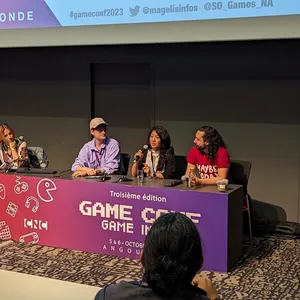
Welcome to another episode of A Spark of Awareness. This week, I want to share something very raw and very alive for me: what do we do when there is no hope left? I’m sharing this alongside my own process as an entrepreneur and founder, because building a business aligned with purpose is not a straight line. There are moments of expansion, moments of doubt, and moments when an old version of ourselves has to die before something new can emerge. I recently came back from Gamescom, after spending some time away from the gaming industry and going deeper into consciousness, working with founders, CEOs, and leaders in transition. Being back in that environment made something very clear to me: this is no longer my space. And that realization hit me harder than I expected. For years, being a gaming leader and working with gaming CEOs had been part of my identity. Coming back from the conference, I realized that I was grieving that identity. I felt depleted, confused, and without much hope for what would come next. I didn’t know whether I wanted to continue coaching, retreats, or even what kind of people I wanted to work with anymore. For a few days, everything looked negative. I think many of us know this place. We reach a point where we feel like we are at the bottom of a hole and cannot see the way forward. And when we are in that state for long enough, we can start believing that this feeling is reality. But it isn’t. What I’ve learned through my own coaching practice, and through working with many leaders, is that when you reach this place, the answer is often not to push harder. It is to stop. One thing that many high-achievers have a hard time to do. First, feel what is here The first thing we tend to avoid is actually the thing we need most: feeling the feelings. When I came back from Gamescom, I was incredibly sad. I cried. I felt grief. In the past, I would have judged myself for that. I would have thought, What is wrong with me? Why am I not happy? I have so much to be grateful for. But I have learned not to make myself wrong for feeling what I feel. Instead, I surrender to it. I inquired: What is this sadness about? And I realized I was grieving an old identity. I was grieving the version of myself that people knew from my gaming career, the persona I had built and become attached to. I was grieving something that had once been important to me but was no longer where I was going. Once I understood that, I didn’t need to fix the sadness. I just needed to let myself grieve. And that is often how we move through grief: we don’t bypass it. We go through it. Don’t make big decisions from an empty tank The second lesson is simple: don’t make major decisions when you are depleted. When I was feeling hopeless, I could feel my mind racing. I wanted to create a plan immediately. I wanted to know what client I should sign next, what I should send, what I should fix, what I should control. But underneath all of that was fear (hello again, friend!) My nervous system didn’t feel safe, and my mind was trying to regain control. So instead of following every thought, I simply observed it. Why do I need to control this right now? Why don’t I feel safe? And just noticing that started to calm things down. When your tank is empty, your perception becomes narrow. You don’t see possibilities clearly. You are not in the energy to create something new. You are simply trying to survive. So the priority is not strategy. The priority is you. For me, that meant sleeping, going back to yoga, taking care of my garden, spending time with people I love, and doing simple things that refilled my heart. Most importantly, I stopped asking myself, What am I going to do next? I gave myself permission not to know. Ask for help The next thing I did was ask for help. Not from my clients—I am the one holding the space for them—but from people who hold space for me. Mentors, my partner, and conscious people in my circle who could simply listen while I was feeling lost. Sometimes we don’t need someone to give us the answer. We just need someone to witness what we’re going through. There is a lot of healing in being witnessed without having to perform, explain, or solve anything. And slowly, when the energy comes back, something interesting happens. Perspective returns. The light comes back A few days later, I woke up completely differently. I had energy again. I felt almost like a warrior, ready to face things again. But from a new perspective. And suddenly, some of the things that had felt overwhelming became very simple. There was one practical example: my accountant had been difficult to reach for months, and I had been receiving warnings from the Finanzamt about late submissions. I had spent weeks going back and forth in my mind about whether I should wait, call again, or try to fix it. And suddenly I had a very clear thought: I don’t have to fight this. I can simply stop working with him and find another way. The situation hadn’t changed dramatically. I had changed. And from that new state, I could see things differently. I also started seeing my business differently. Instead of panicking about what I needed to fix, I could see that I was actually in the middle of a much bigger transition. Three years of building had prepared me for something beyond the gaming industry. There was a bigger vision emerging: a network and movement for conscious leaders. That insight could not have come while I was depleted and desperately trying to find an answer. It came when I gave myself enough space to grieve, rest, refill, and listen. There is always a rebirth after the death This is what I want to leave you with if you are currently in a place where you feel hopeless. You are probably in a cycle. Something may be ending. An identity, a relationship, a business model, an old dream, a way of seeing yourself. And when something dies, it can feel like there is nothing left. But there is often a seed already forming underneath it. You don’t have to know what that seed will become yet. You don’t have to rush to create a plan. You don’t have to force yourself to be positive or pretend that everything is fine. Sometimes the most powerful thing you can do is to stop, feel what is here, take care of yourself and trust the cycle. There is light again. There is always another chapter. And this is also why I believe retreats and spaces for deep inner work are so valuable for leaders. We rarely give ourselves enough space to step outside the noise of our businesses and see the bigger picture. Sometimes we need to step away from the forest before we can see where we are actually going. A simple practice for when you feel hopeless Take a few minutes and close your eyes. Breathe slowly, allowing your breath to become longer and softer. You can breathe in for five seconds and out for five seconds. Then bring your attention to your body. Where do you feel the grief, sadness, fear, or hopelessness? Maybe it is in your heart, your belly, your chest, or somewhere else. You don’t need to change it. Simply place your hand there if that feels supportive and breathe into that space. Ask yourself gently: What am I feeling? What am I grieving? What am I trying to control? What would happen if, just for today, I didn’t have to solve it? Stay there for a few minutes. The path forward rarely appears when we are forcing a path. Sometimes it appears only after we stop looking. You just have to stay there long enough to see. Thanks for reading Rise and Play! Subscribe for free to receive new posts and support my work. This is a public episode. If you would like to discuss this with other subscribers or get access to bonus episodes, visit riseandplay.substack.com
16 MIN