Biometric Tracking in Alabama Prisons: Accountability, Safety, and the Future of Correctional Technology
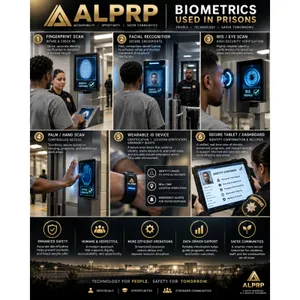
What if Alabama prisons could verify where residents are, document critical incidents more accurately, strengthen emergency response, and create a clearer record of what happens inside correctional facilities? In this episode of the Alabama Prison Reform Proposal (ALPRP) Podcast, we examine how biometric and secure identity technologies can support a more accountable correctional system. ALPRP’s technology framework uses biometric verification, secure resident identification, location-aware monitoring, encrypted data systems, and layered access controls as part of a broader strategy to improve safety and institutional accountability. The purpose is not simply surveillance. The purpose is to create reliable, auditable information that helps protect residents, correctional officers, medical personnel, administrators, and the public. The episode explores how this technology can support: Accurate resident identification and movement verification Emergency and duress alerts Faster response to medical and safety incidents Verification of program, education, work, and treatment participation More reliable documentation of institutional events Reduced opportunities for falsified or incomplete records Better accountability for contractors and service providers Improved coordination between security, medical care, rehabilitation, and reentry systems Data-driven oversight while maintaining appropriate privacy and security protections ALPRP does not replace correctional officers, professional judgment, physical counts, medical staff, or human oversight. Technology serves as an additional accountability layer—providing better information, stronger documentation, and earlier warning when intervention is needed. This episode also addresses an important question: How do we use biometric technology without creating an unchecked surveillance system? The ALPRP framework emphasizes limited authorized access, encryption, clear retention standards, audit trails, role-based permissions, independent oversight, and policies governing how biometric and location data may be collected and used. Alabama’s prison crisis cannot be solved by technology alone. But when technology is integrated with rehabilitation, healthcare, education, officer support, transparent oversight, and meaningful reentry planning, it can help create a correctional system in which accountability is measurable rather than assumed. Five Stages. One Correctional Journey. Learn more about the Alabama Prison Reform Proposal at ALPRP.org. #ALPRP #AlabamaPrisonReform #PrisonReform #Biometrics #CorrectionalTechnology #PrisonTechnology #CriminalJusticeReform #PublicSafety #CorrectionalAccountability #AlabamaPrisons #Rehabilitation #Reentry #PrisonOversight