



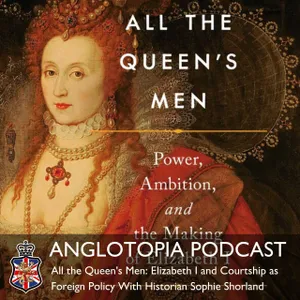
All the Queen’s Men: Elizabeth I and Courtship as Foreign Policy With Historian Sophie Shorland
OCT 30, 202639 MIN
Description
Historian Sophie Shorland returns to the podcast — last time for The Lost Queen, her book on Catherine of Braganza, the forgotten queen who helped bring tea to Britain. This time she has turned her attention to the most famous queen England ever had, and found a story most of us think we already know but really don't. All the Queen's Men takes the endless question that hung over Elizabeth's entire reign — who will marry the Virgin Queen? — and reframes it completely. Not as a love life, but as foreign policy. Courtship as diplomacy; flirtation as statecraft; a single woman keeping every prince in Europe dangling for decades in order to keep her country alive. Sophie's argument is that the domestic picture of Elizabeth — progresses, tilts, flirting with favorites, and the occasional baffling decision that older scholarship put down to the menopause — makes far more sense once you add the geopolitics back in. When she abruptly invites a French suitor over, it's because the relationship with Spain is deteriorating and she would rather not be invaded. Historians usually reach for a chess metaphor; Sophie prefers poker, because in chess you have one opponent, and Elizabeth was playing against every head of state in Europe and sometimes her own subjects too. Along the way: the ambassadorial brawl over whose heraldic heart had the better arrows; why whoever married Elizabeth would effectively have won England, its navy and its wealth without a shot fired; the Earl of Arundel who spent a fortune in bribes while the queen laughed behind her sleeve; Eric of Sweden signing himself "your most loving Eric" and complaining that four years of courtship felt like ten; Ivan the Terrible, already on roughly his seventh wife, cancelling the Anglo-Russian trade relationship in a huff; and the Duke of Alençon — nicknamed her Frog, possibly for his small froggy fingers — with whom Elizabeth exchanged rings in front of witnesses, which under Tudor law meant they were technically married, before paying him a great deal of money to leave the country.
Links
Sophie Shorland's Books
All the Queen's Men: Power, Ambition, and the Making of Elizabeth I — the US edition, published by Pegasus Books on 27 October 2026
All the Queen's Men at Pegasus Books / Simon & Schuster
All the Queen's Men: The Competition to Marry Elizabeth I — the UK edition, which carries a different subtitle
The Lost Queen: The Surprising Life of Catherine of Braganza — her previous book, and the subject of her first appearance on this podcast
The Lost Queen at Pegasus Books
Sophie Shorland at Simon & Schuster
Anglotopia
Friends of Anglotopia Club
Anglotopia Store
Takeaways
The gap Sophie found wasn't in the research but in the framing. There is superb scholarship on Elizabeth, but it tends to concentrate on the domestic reign — the progresses, the tilts, the flirtations — and some of her decisions look random or even irrational in that frame. One older strand of scholarship attributed a sudden invitation to a French suitor to the menopause. Add the international context and it resolves instantly: her relationship with Spain was deteriorating and she did not want to be invaded by a great power.
Her most reliable move was to open a marriage negotiation whenever something went wrong. In 1563 Margaret of Parma, governing the Netherlands, lost patience with English piracy and declared a trade embargo — disastrous for English wool, the country's main export. Elizabeth immediately began courting Margaret's cousin, the Habsburg Archduke Charles of Austria. On its own the courtship looks capricious; with the embargo in view it is obviously repair work.
Her accession set off something close to a feeding frenzy. Fights broke out in the corridors outside her rooms; courtiers complained of stumbling over ambassadors and envoys. The Danish and Swedish delegations had near-identical emblems — a heart pierced with arrows versus a heart pierced with javelins — and the resulting quarrel became a genuine diplomatic incident requiring the parties to be separated.
The stakes were that high because marrying Elizabeth meant acquiring England. As a woman, it was assumed her husband would head both household and realm; whoever married her became King of England, with her relegated to second place, and with direct control of the navy, the merchant fleet and the country's wealth. This was not theoretical — England had just been pulled into a French war on Spain's behalf during Mary's marriage to Philip, losing Calais, despite Parliament's efforts to limit his powers.
Poker beats chess as a metaphor, and Sophie makes the case cheerfully rather than dogmatically. In chess you face one opponent; Elizabeth faced every head of state in Europe and occasionally her own subjects. She played her cards close, to the lasting frustration of even her closest advisors, and she bluffed — especially early on, when the assumption was that an unmarried queen of a militarily humiliated country would be invaded within the year unless she married a great power quickly.
The serious contenders were the ones we still remember, plus some we don't. Robert Dudley; the French candidates including Alençon; Archduke Charles; and Frederick, Crown Prince of Denmark, who made real strategic sense — both Protestant, geographically close, and a combined Anglo-Danish grip on the shipping lanes would have been formidable.
The long shots are better company. The Earl of Arundel, fabulously rich, spent thousands bribing his way closer to a queen who laughed at him behind her sleeve. Ivan the Terrible, whom most people don't realize was Elizabeth's contemporary, was on roughly his seventh wife. Eric of Sweden wrote for years as "your most loving Eric," complaining that four years of courtship felt like ten — his language so overheated that when the King of Denmark intercepted the letters he was simply baffled. And Adolf of Denmark was briefly a strong contender mainly because he was handsome, which was apparently reason enough to float several candidates.
The Alençon courtship went further than any other and nearly became real. He was nineteen to her thirty-seven when it began, the youngest of four brothers and correspondingly ambitious, and one of the very few foreign suitors to actually make the trip. By his second visit she was forty-five — her last realistic chance to use the tactic. She promised to marry him before witnesses, he said the same, and they exchanged rings, which under Tudor practice meant they were married: no church service, no signature, just the words before witnesses. Ladies fainted. The Spanish ambassador reported home that this time she was serious. Spain relented, Elizabeth got what she wanted — and then had to extract herself, paying Alençon handsomely to leave and go fight his war in the Netherlands, with Dudley sent to make sure he actually went.
Jean de Simier, Alençon's envoy, is the episode's great comic discovery. Sent to England partly because he'd just fled France after a duel over his brother's affair with his wife, he flirted outrageously with Elizabeth on his master's behalf, stole her nightcap from her bedchamber to send back to Alençon, was rumored to be having an affair with her, survived assassination attempts, switched to working for Elizabeth after quarrelling with another Frenchman — and when Cecil discovered he had been taking enormous Spanish bribes throughout, Elizabeth was so fond of him that she simply let it go.
Elizabeth said she would never marry when she was eight, and said it again in her first address to Parliament, declaring she would remain a vestal virgin married to England. With hindsight, Sophie notes, it is baffling that everyone assumed otherwise. The closest we have to her strategy in writing is Walsingham's exasperation from Paris — essentially, I know what you're doing, and stringing the French along will not get you an alliance, it will just make them angry.
Soundbites
"It suddenly makes sense why she was inviting a suitor over from France. It's because her relationship with Spain was deteriorating and she wanted, basically, to not be invaded by a great power."
"Fights were breaking out outside her rooms, in the corridors. The Danes used a heart pierced with arrows, and the Swedes used a heart pierced with javelins — and this was a diplomatic contretemps. There was a big fight. They had to be separated."
"Here is an opportunity to basically conquer England, a pretty wealthy country, without any bloodshed." — Sophie on why Europe lost its head over Elizabeth's accession.
"Chess, you only have one opponent — whereas Elizabeth was playing against every head of state, basically, in Europe, and sometimes also her own subjects."
"He spent thousands and thousands of pounds bribing people trying to get close to her, and she just kind of laughed at him behind her sleeve." — on the Earl of Arundel.
"He'd only been courting her for four years, but it felt like ten." — Eric of Sweden, whose letters were so florid that the King of Denmark intercepted them and couldn't work out what was going on.
"She nicknamed him her frog, possibly because he had very small little fingers, like little froggy hands — which is slightly odd to think about."
"For Tudors it technically meant that they were married. You didn't need a church service, you didn't need to sign anything. All you needed to do was say I will marry you, I will marry you, in front of witnesses, and you're done."
"At one point the Spanish ambassador is just casually saying: maybe I'll assassinate this Italian spy. No — but actually, people might notice, so probably won't bother. I'll just intercept his letters."
"Once you've played the card of a marriage, you can't play that card again. Whereas if you just keep promising, you get almost the same benefits — and then you can reuse the same card."
Chapters
00:21 Welcome — A Guest Our Listeners Have Met Before
00:29 Sophie Shorland and The Lost Queen — Catherine of Braganza
00:40 THE NEW BOOK — All the Queen's Men
00:58 The Question That Hung Over the Entire Reign
01:03 Reframed: Not a Love Life, but Foreign Policy
01:22 From the Forgotten Queen to the Most Famous One
01:36 "Who Doesn't Want to Write a Book About Elizabeth?"
01:56 Was Her Reputation Deserved — Or Was She Just Lucky?
02:23 WHAT WAS MISSING FROM THE LITERATURE
02:41 The Focus on the Domestic Reign
02:57 Progresses, Tilts, and Apparently Random Decisions
03:04 The Menopause Theory
03:14 Add the Geopolitics and It Makes Sense
03:29 Not Wanting to Be Invaded by a Great Power
03:45 COURTSHIP AS FOREIGN POLICY
03:56 What Changes When You See It That Way
04:04 "A Bit of a Capricious Flirt" — The Old Characterization
04:19 The Strategy She Used Well Into Her Forties
04:35 1563 — MARGARET OF PARMA'S TRADE EMBARGO
04:49 Disastrous for English Wool
04:58 So She Courts the Habsburg Archduke Charles
05:18 Not Prescience, but Pattern
05:34 "TWENTY SEASONS OF THE BACHELOR AT ONCE"
05:48 Fights in the Corridors
06:07 Arrows vs. Javelins — A Diplomatic Contretemps
06:20 Why It Was Such a Huge Deal in Europe
06:37 Conquering England Without Bloodshed
06:44 Stumbling Over Ambassadors and Envoys
07:00 ENGLAND AS A EUROPEAN SWING STATE
07:10 Why Marrying Her Meant Winning England
07:17 Her Husband Would Head the Realm
07:32 The Navy, the Merchant Fleet, the Wealth
07:44 The Precedent — Mary, Philip, and the Loss of Calais
08:06 Parliament Tried to Limit His Powers and Couldn't
08:11 CHESS OR POKER?
08:23 One Opponent vs. Every Head of State in Europe
08:42 Cards Close to the Chest, Even From Her Advisors
08:59 A Big Fan of the Bluff
09:08 A Difficult Hand, Early in the Reign
09:18 The Assumption She'd Be Invaded Unless She Married Fast
09:27 THE FIELD OF SUITORS
09:44 The Serious Contenders
09:59 Frederick of Denmark, and Control of the Shipping Lanes
10:22 THE LONG SHOTS ARE MORE ENTERTAINING
10:31 The Earl of Arundel, Bribing His Way Nowhere
10:48 Ivan the Terrible, Eric the Mad, Adolf of Denmark
11:14 Candidates Floated Purely for Being Handsome
11:28 Ivan's Seventh Wife, and a Poor Track Record
11:47 HOW REAL WERE THEY?
12:08 Elements of Theatre in All the Courtships
12:31 Ivan's Competitiveness With Eric and Sweden
12:40 "Your Most Loving Eric"
12:56 Letters Intercepted by a Baffled King of Denmark
13:16 Ivan's Fury, and the Anglo-Russian Trade Rupture
13:47 Did Elizabeth Ever Enter Them in Good Faith?
14:02 FROG — The Duke of Alençon
14:12 Nineteen to Her Thirty-Seven
14:31 One of the Few Suitors to Actually Come to England
14:38 Convenient Timing — Spain Deteriorating Over Piracy
14:55 A Very Theatrical Flirtation
14:59 Little Froggy Hands
15:12 Lying Around All Morning in His Crimson Bed
15:28 By the Second Visit She Was Forty-Five
15:41 Her Last Chance to Use the Strategy
15:47 A Spanish Ambassador Who Had Seen It All Before
15:51 THE RINGS EXCHANGED BEFORE WITNESSES
15:59 Which, for Tudors, Meant They Were Married
16:13 Ladies Fainting; Spain Relenting
16:31 Awkwardly Disentangling Herself
16:39 Paying Him to Leave and Fight in the Netherlands
16:45 Dudley Sent to Make Sure He Went
16:54 Catherine de' Medici Furious With Her Son
17:10 Twenty-Three, Half Her Age, and Outclassed at Statecraft
17:25 JEAN DE SIMIER — The Ape
17:46 Flirting on His Master's Behalf
18:08 Why He Needed to Leave France in a Hurry
18:30 Stealing Her Nightcap to Send Back to Alençon
18:42 Rumors of an Affair
18:51 Quarrels, Defection, and Spanish Bribes
19:03 Elizabeth Was So Fond of Him She Let It Go
19:06 ROBERT DUDLEY
19:17 Playing the Role a King Would Have Played
19:33 Greeting the King of Sweden's Brother — And the Awkward Climb Down
19:55 Pushing for a Spanish Alliance, and Religious Concessions
20:11 An English Suitor Positioning Himself as a Foreign Prince
20:22 Offered to Mary Queen of Scots
20:35 1578 — DUDLEY MARRIES LETTICE KNOLLYS
20:43 Elizabeth Boxes Her Ears
20:47 "But One Sun Lights the East"
20:53 Her Father's Temper, and Real Jealousy
21:05 Dudley's Difficult Position — He Wanted an Heir
21:13 The Spooky Resemblance
21:26 Marrying the Queen's Doppelgänger, Who Is Also Her Cousin
22:00 THE TACTICS, STEP BY STEP
22:14 The Ring Exchange as the Peak — By Then Nobody Believed Her
22:24 Charming Whichever Ambassador She Wanted to Encourage
22:33 Baron Helfenstein, Boat Trips and Laughing at His Jokes
22:45 Asking for Portraits, and Descriptions of How Attractive He Was
23:02 THE MARRIAGE TREATIES
23:17 The Fleshed-Out Alençon Treaty
23:23 One Son Would Rule England and France
23:30 Two Sons, and the Crowns Split
23:42 Letting Them Be Drawn Up to Signal Seriousness
23:53 Then Invoking Religion to Withdraw
24:14 WHAT SINGLENESS BOUGHT ENGLAND
24:20 Permanent Flexibility; Always Available for an Alliance
24:30 Henry VIII Used the Same Trick With His Daughters
24:42 Mary Cottoned On and Lamented She'd Die a Maid
24:53 "Once You've Played the Card, You Can't Play It Again"
25:07 HER BODY AS DIPLOMATIC INTELLIGENCE
25:25 Always Being Looked At, Even as a Delegitimised Princess
25:42 The Spanish Ambassador Bribing Her Ladies to Inspect Her Sheets
25:49 How Openly People Discussed the Monarch's Body
26:04 Royal Autopsies and the Stories That Followed
26:23 Using It to Her Advantage
26:33 Called an Old Woman, She Danced Vigorously for the Ambassadors
26:53 DID SHE EVER DECIDE OUTRIGHT?
27:06 "I Will Never Marry" — Aged Eight
27:12 A Vestal Virgin, Married to England
27:26 Baffling, in Hindsight, That Anyone Assumed Otherwise
27:41 Walsingham's Exasperation From Paris
28:08 THE SPANISH ARMADA
28:28 It Came After Marriage Was Biologically Off the Table
28:47 Would She Have Opened Negotiations if She'd Been Twenty Years Younger?
29:00 A Secure French Alliance, and Mary Queen of Scots Beheaded
29:30 Confident Enough to Keep Antagonizing Spain
29:33 The English National Pastime
29:48 THE ARCHIVES
30:02 Catty, Casual Ambassadorial Reports
30:23 "Maybe I'll Assassinate This Italian Spy"
30:47 Cecil Running Rings Around a Naive Spanish Ambassador
31:10 THE SECRET WORLD
31:23 Letters, Codes and Messengers Waiting Outside the Door
31:38 Ambassadors Courting the Queen by Proxy
31:52 "I'm Sending You a Budget for Some Bribery"
32:03 Bribery as Entirely Normal
32:13 A Court Where Secrets Were Nearly Impossible
32:28 Gossip Written Down Just in Case
32:46 Did She Prefer the Ambassadors to Their Masters?
32:58 De Feria, and a Queen Who Respected a Good Plotter
33:17 BEYOND THE CATE BLANCHETT ELIZABETH
33:39 What the Films Get Right — Authority, and Commanding Men
33:57 THE MAKEUP MYTH
34:06 The Lead and the Rouge Almost Certainly Never Happened
34:13 Invented by a Jesuit Who Never Saw Her
34:21 Contemporaries Described a Very Fair Face
34:29 WHERE TO GO IN ELIZABETH'S FOOTSTEPS
34:50 Hatfield House — Where She Learned She Was Queen
35:00 Hever Castle — Anne Boleyn, and Anne of Cleves
35:15 Queen Elizabeth's Hunting Lodge, Epping Forest
35:49 The National Portrait Gallery and the Coronation Portrait
36:10 A Future Elizabethan Travel Episode?
36:17 RESCUING QUEENS FROM THE MARGINS
36:30 Diplomacy and Geopolitics as the Connecting Thread
36:50 Elizabeth Was Educated to Be a Diplomat
37:10 WHAT'S NEXT
37:27 The Duke of Anjou Elected King of Poland
37:34 And the Court Dwarf Who Brokered It
37:59 Wrap-Up
Video Version