Army History Archives - 250 and Counting

Acroasis Media

Details

Copyright 2025, 2026 by Acroasis Media

Recent Episodes

OCT 14, 2026
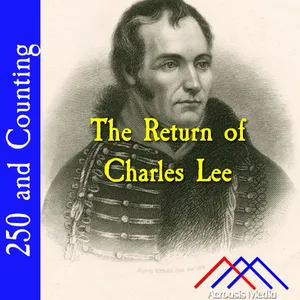
The Return of Charles Lee–October 14, 1776
Charles Lee was born in Great Britain and only came to British America in 1773, when he purchased an estate in western Virginia. It wasn’t his first time in America; he’d fought for the British in the French and Indian War and married the daughter of a Mohawk chief. Lee was injured in 1758 during an attack on Fort Ticonderoga. The following year he was part of the capture of Fort Niagara and of Montreal the year after that. Lee returned to Europe and served in Portugal as a lieutenant colonel. In 1763 he returned to England and retired on half-pay. Two years later he served as an aide-de-camp under King Stanislaus II of Poland. He saw some action in the Russo-Turkish War but it was during a duel in Italy that he lost two fingers. Lee returned to England and realized that he was sympathetic to the Colonists’ cause, so he moved to America and purchased an estate in what would now be West Virginia. When the Continental Army formed, he joined up immediately, expecting to be second-in-command to George Washington (he did realize that Congress would want a native-born Commander in Chief). Lee took on the command of the Southern Department and was present for the Battle of Sullivan’s Island. He was given credit for the victory, though based on some accounts the win didn’t really belong to him. Lee was captured in December 1776 in New Jersey and released in a prisoner exchange in 1778. In subsequent battles Lee was cast in a villain role by official reports, and he was court-martialed. He was found guilty by the jury but the court reduced the final charges and suspended from the army for a year. In 1780 Lee sent a scathing letter to Congress that led to his dismissal from the army. He returned to Virginia but his debts piled up and he was advised to sell off his property. Unfortunately he died in 1782 before he could complete the sale and his sister Sidney Lee inherited the property. It’s not clear but he likely died of tuberculosis. Lee’s legacy has waxed and waned over the years, and most recently it’s in a “down” cycle, as documents have been discovered that he may have been attempting to communicate with British officers regarding a potential plan with which they might defeat the American rebellion. However, there are still many who doubt the idea that Lee was specifically acting treasonously. The post The Return of Charles Lee–October 14, 1776 appeared first on 250 and Counting.
2 MIN
OCT 5, 2026
A Fort Is Abandoned–October 5, 1776
The cover art for today’s episode is the historical marker for Bergen Neck Fort, in Bayonne, New Jersey. As someone who was born and raised on the other side of the East River, it’s supposed to be my duty to bust on New Jersey and say something like “there’s nothing interesting going on in Bayonne” and I’d mostly be right, but I will note that Mercer Park, just a hair under a mile from this spot, is rather nice. I did spend a few years living in northern New Jersey, just a stone’s throw from what was then called The Meadowlands (and still is, if you’re a die-hard), and it’s really not a bad place to live. I had a decent sight-line to the Manhattan skyline, but my neighborhood had a very suburban feel to it. The town I lived in was practically Whoville during Christmas season. Bergen County was also home to many people who lost their lives to the attacks on the World Trade Center, since it was just across the Hudson River, so there are numerous memorials in the area. Lyndhurst, NJ (for example), which is mostly famous for a bunch of exterior scenes from The Sopranos, has one that’s made from stones reclaimed from the rubble. I moved away from the area just a couple of weeks before September 11, but I kept in touch and many people in the area were deeply affected. And now that I think about it, Bayonne—which is literally within sight of the former WTC buildings and the Statue of Liberty— has a truly moving memorial commonly called “The Teardrop”, which was a gift to the United States by a Russian sculptor named Zurab Tserteli. At 100 feet high, it can actually be seen from the other side of the river as well. So don’t go to Bayonne to see Bergen Neck Fort, since there’s nothing there. But if you do go, head to Harbor View Park. And please don’t tell anyone I have a soft spot for northern New Jersey; I could lose my NY cred for that. The post A Fort Is Abandoned–October 5, 1776 appeared first on 250 and Counting.

2 MIN