Audio Branding

Jodi Krangle

Details

Keeping a consistent sound in how you present your company really is the "hidden gem" of marketing. But audio or sonic branding influences us in many different ways and in many different places within our lives. Education is key! I explore that here, both with my own observations and by interviewing knowledgeable professionals in the field of advertising, marketing, music, technology and science. Want to be a guest on Audio Branding? Do you contribute something unique to the world of sound? Send me a message on PodMatch, here: https://podmatch.com/hostdetail/jodikrangle and we'll talk. This podcast uses the following third-party services for analysis: OP3 - https://op3.dev/privacy

Recent Episodes

OCT 28, 2026
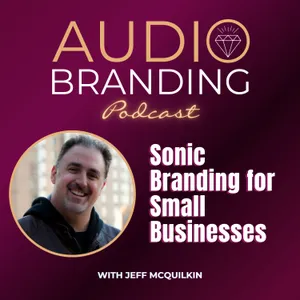
Sonic Branding for Small Businesses with Jeff McQuilkin
“They loved what I did. They put it on the ad, and they reported back to me six months from then that the ad had over-performed, that it had helped them get more than half a million dollars in revenue. And they had gone from near zero brand visibility in that market to almost top of mind in the polls. Six months. So, I looked at that situation, and I said, ‘That was real value.’ Then I looked at the landscape, and I saw that virtually nobody was offering this to small businesses. I knew what sonic branding was, but the agencies that are doing it are mostly serving the enterprise-level companies. So that was the need that I saw. I saw where I could add value, and I actually had a good time doing it. I was just helping to tell a brand story instead of a story of film and TV. So, as I began to get more projects like this, it made sense to create a company around it.” – Jeff McQuilkin This episode’s guest is an award-winning composer who’s created musical scores for numerous acclaimed indie films, as well as music for TV series such as History Channel’s American Pickers and Oxygen’s Snapped. He’s also the founder of JetstreamSONIC, a boutique agency offering affordable sonic branding to small businesses, empowering them to become top-of-mind over their competitors and to make their marketing better remembered, using the same audio techniques used by global brands. His name is Jeff McQuilkin, and if you want to learn how to turn raw emotion into audio, why great composers love silence, and how to use sound to stand out in a noisy world, keep listening. And if you like what you hear and you want to support this podcast, there are a bunch of ways to do that at audiobrandingpodcast.com, including subscribing to the YouTube channel, the newsletter, writing a review, or buying me a coffee. Because this takes a lot of coffee. Thanks so much. (00:00) – Sound and Film Scoring Our conversation starts off with Jeff’s early memories of sound, particularly the dramatic change that moving from California to Michigan brought as a child. “I think the first time sound really shook me was the first time I was ever in a thunderstorm,” he recalls. “When I was five, I moved to Michigan, where we did have them. And that was the biggest sound I’d ever heard.” We talk about how he got into the sound industry and what he’s learned from working in film and television, such as the unexpected value of silence in setting the mood. “What you need are the things that are unspoken,” Jeff explains. “What you need is to feel the subtext. And so I’ve learned to look for the things that are left unspoken, and what the characters might be feeling, or just the overall mood of the space.” (15:36) – Sonic Brands for Small Businesses Jeff tells us what inspired him to found JetstreamSONIC, and how social media helped create a gap in the sonic branding industry. “When the ad music field started gravitating away from jingles and more toward licensed music,” he says, “and the small business world moved over to digital media and social media and YouTube and podcasting, they began creating content in a new field, and I think somewhere along the way they just kind of forgot about the sound signals.” We discuss how audio branding has made a comeback in recent years, and how its online focus compares to brick-and-mortar techniques. “They’ll talk about what kind of scent we can put in the air,” Jeff says, “what kind of soundtrack are we going to put on the speakers, what environment are we creating? Scent, sight, sound to engage the senses as a brand experience…. Online, we have sight and sound, and we use sight a lot.” (29:10) – The Need for Original Sound As the first half of our conversation comes to a close, Jeff shares his thoughts on making the best use of sonic branding. “To have an effective sonic brand,” he explains, “it needs to basically be at least three things. It needs to be original, it needs to be memorable… and it needs to be exclusive. In other words, your brand is the only place that sound occurs.” We discuss the impact of AI and particularly how evolving copyright and licensing laws are helping shape its role. “There is kind of a guardrail against AI in what I do,” Jeff tells us, “because it is intellectual property. Like I said earlier, somebody needs to own the copyright. If it can’t be copyrighted, it shouldn’t be part of your brand.” Episode Summary Our discussion on how silence is used effectively in film scores. Jeff explains the importance and process of creating sonic identities. Exploring studies on how sound influences brand memory. Tune in for next week’s episode as we discuss how small businesses can use sonic branding to stay ahead of the competition, the lessons Jeff has to share about overcoming imposter syndrome and committing to a creative project, and where he draws the line between old-time jingles and sonic logos. Connect with the Audio Branding Podcast: Book your project with Voice Overs and Vocals by visiting https://voiceoversandvocals.com Connect with me on Instagram - https://www.instagram.com/jodikrangle/ Watch the Audio Branding Podcast on YouTube - https://www.youtube.com/c/JodiKrangleVO Connect with me on LinkedIn - https://www.linkedin.com/in/jodikrangle/ Leave the Audio Branding Podcast a review at https://lovethepodcast.com/audiobranding (Thank you!) Share your passion effectively with these Tips for Sounding Your Best as a Podcast Guest! https://voiceoversandvocals.com/tips-for-sounding-your-best-as-a-podcast-guest/ Get my Top Five Tips for Implementing an Intentional Audio Strategy https://voiceoversandvocals.com/audio-branding-strategy/ Editing/Production by Humberto Franco - https://humbertofranco.com/ This podcast uses the following third-party services for analysis: OP3 - https://op3.dev/privacy

36 MIN
OCT 21, 2026
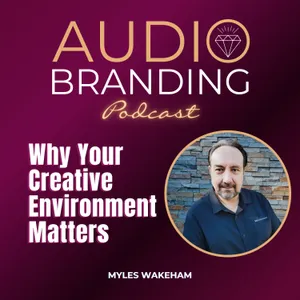
Why Your Creative Environment Matters | Myles Wakeham
“In the early ‘60s, when he went off on his own, he created this company called A-I-R, which I believe stands for the Association of Independent Recordists, and that was the key. Independence. He took that model, and he was getting great residuals and everything from The Beatles’ work. So he had the money, and he built a recording studio in London, which he called AIR Studios, named after the group he had founded, and that, because of who he was, everybody wanted to go there, from Bowie to Queen. Everybody went there. But the ‘70s turned out to be this renaissance period in music where you couldn’t think twice without having paparazzi in your backyard. It was horrible. And artists wanted to get away from that because they felt so constrained. They couldn’t think or create. It was just not the world that they wanted it to be, so they ended up wanting to go somewhere else.” – Myles Wakeham This episode is the second half of my conversation with recording engineer, producer, and owner of Troubled Clef Studios, Myles Wakeham, as we discuss the events that led him to found his own studio in Mexico, some of the most memorable sessions they’ve hosted so far, and his advice to musicians on how to get out from under the streaming platforms and back in front of an audience. And if you like what you hear and you want to support this podcast, there are a bunch of ways to do that at audiobrandingpodcast.com, including subscribing to the YouTube channel, the newsletter, writing a review, or buying me a coffee. Because this takes a lot of coffee. Thanks so much. (00:00) – The Legacy of George Martin Myles and I start the second half of our conversation with the story of how he founded Troubled Clef Studios in San Miguel de Allende, and how he was inspired by George Martin’s famous AIR Studios. “The legend goes that the last band that recorded there was the Rolling Stones,” he tells us. “And the Stones had a kind of reputation that any studio they went into, the studio was destroyed after they left. And lo and behold, guess what happened.” He shares the personal challenges that led to his new life and direction with Troubled Clef Studios, including the changes in the tech industry. “I’d seen the industry that, you know, as a kid in the garage kind of thing turn into this,” he says. “It just felt like it was consolidating around maybe half a dozen players, and, as it happens, now that’s the people who own and run the world pretty much. I just lost my faith in it and didn’t want to do it.” (13:18) – Building a Studio in Mexico He tells us more about how his wife helped inspire him to fulfill his dream of building a studio, and the logistics of starting a new business in Mexico. “’Why don’t you build that recording studio here?’” he recalls her asking. “So that became the mantra. Then the problem that creates, you know, you make a decision that you’re going to do something as epic as that, then it turns into, well, what challenges I’m going to have being in the middle of Mexico.” He shares the story of the studio’s first client, a New York Times bestselling author, and how it led to other high-profile clients and projects. “We sent it back, and they loved it,” Myles recalls. “That led to Condé Nast hiring us, and then after that The New Yorker magazine hired us. So we got into this whole production world very quickly.” (26:22) – The Importance of Live Music As our conversation comes to a close, Myles tells us about his role as a university professor, and the lessons he hopes to pass on to his students. “To teach what it’s like to work with a diva,” he explains. “[To] teach what it’s like to work with artists that aren’t confident, and to show them how to bring out their best side of themselves. You know, the stuff that you can’t watch in a YouTube video or read in a book or anything, but the stuff that’s real.” He tells listeners how they can get in touch, and offers his insights into what it takes to remain relevant in the world of Spotify and streaming playlists. “If you’re a musician doing it because you love music,” he says, “you’ve got to go out there with a crowd, and you’ve got to become a part of that world. You’ll be surprised how rewarding it really is.” Episode Summary George Martin’s impact and the creation of Air Studios. Myles recounts his most memorable projects and experiences. Why musicians need to engage with live audiences today. Connect with the Audio Branding Podcast: Book your project with Voice Overs and Vocals by visiting https://voiceoversandvocals.com Connect with me on Instagram - https://www.instagram.com/jodikrangle/ Watch the Audio Branding Podcast on YouTube - https://www.youtube.com/c/JodiKrangleVO Connect with me on LinkedIn - https://www.linkedin.com/in/jodikrangle/ Leave the Audio Branding Podcast a review at https://lovethepodcast.com/audiobranding (Thank you!) Share your passion effectively with these Tips for Sounding Your Best as a Podcast Guest! https://voiceoversandvocals.com/tips-for-sounding-your-best-as-a-podcast-guest/ Get my Top Five Tips for Implementing an Intentional Audio Strategy https://voiceoversandvocals.com/audio-branding-strategy/ Editing/Production by Humberto Franco - https://humbertofranco.com/ This podcast uses the following third-party services for analysis: OP3 - https://op3.dev/privacy

41 MIN
OCT 14, 2026
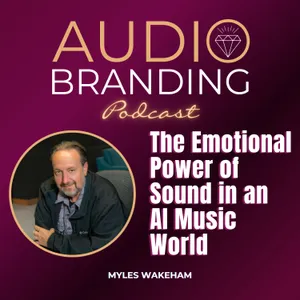
The Emotional Power of Sound in an AI Music World | Myles Wakeham
“If you’re a creator of sound, you’re in a blessed place, because you can not only communicate with somebody in that two-dimensional, ‘it sounds like this’ mode, but you also have the ability to touch their spirit. You have an ability to give them goosebumps. You have the ability to make them think differently about themselves, to question their belief system, right? Those things are powerful, and if we sit back and we defer them to a machine or a synthetic whatever, and we don’t pay the amount of respect for that, that very same society will rebel, and they will punk rock this.” – Myles Wakeham This week’s guest is a professional recording engineer, producer, and the owner of Troubled Clef Studios, located in San Miguel de Allende, Mexico. He’s originally from Australia, but at the age of twenty-five, he found himself unexpectedly living in Los Angeles, which turned into working in some of the largest and most legendary recording studios in Hollywood throughout the 1990s. After thirty years in technology, music, and recording in the United States, he and his wife left the US for Mexico and began a four-year project to build one of the world’s most prolific recording studios, based on the legendary AIR Studios Montserrat studio, which recorded many of the hits of the ‘80s. His name is Myles Wakeham, and he’ll be sharing what it takes to create a world-class studio environment, what challenges artists face in today’s world, and how AI is affecting what creators create. If you want to learn more about how sound is engineered to give you goosebumps, keep listening. And if you like what you hear and you want to support this podcast, there are a bunch of ways to do that at audiobrandingpodcast.com, including subscribing to the YouTube channel, the newsletter, writing a review, or buying me a coffee. Because this takes a lot of coffee. Thanks so much. (00:00) – From Orchestral Kid to Punk Rock Our conversation starts off as Myles shares the start of his audio journey, and the influence that his family’s musical background had on him growing up. “It was kind of weird because I grew up as a kid in orchestra,” he recalls. “I played with my friends and rode my bikes and all that stuff that kids do… but growing up as an orchestral kid, you’re always surrounded by music.” He talks about the early days of CB radios and self-built computers, and how moving from Australia to the US, and having to wait for his green card, left him with plenty of time to spare. “I went back to my music,” he tells us. “I mean, I’d been playing music all the time, but I transitioned away from orchestra and violin into punk rock and guitars and things…. so I ended up in [Los Angeles], and I ended up joining a band.” (13:18) – The Role of AI in Music Myles talks about the family tragedy that took him back to Australia, and how much the sound industry had changed upon his return. “I was there for like three years,” he tells us. “I didn’t come back until about 1999, and by the time I came back, the music industry was a disaster. And one word: Napster.” We discuss how the internet, streaming audio, and now AI have transformed the industry, and what it takes for artists to cut through the digital noise. “You used to be special, right?” he says. “Used to have fans, used to have record deals, used to have all of that. And you’re not special anymore. You might sing like Barbra Streisand, but that doesn’t matter because some computer can do that.” (26:22) – Cultural Shifts in the Music Industry As the first half of our conversation wraps up, he shares his insights as a studio owner and producer on the reluctance of artists to trade in authentic musicians for AI sounds. “And the thing is,” he continues, “I think that 80% of the audience doesn’t [want that] either. They want to know that something came from a real-life human being who suffered and struggled to create it. And I think that that means something to people.” We discuss the impact that growing up with his family’s musical legacy has had on his daughter. “She’s now a choreographer,” he explains. “She travels all over the world and does dance choreography. We’ve got a very artistic family, and it does follow down the line.” Episode Summary Myles shares how both punk rock and classical training shaped his early life. How AI is affecting music creation and the importance of human touch. The changes technology and streaming are bringing to the music industry. Tune in for next week’s episode as we talk about the lessons Myles learned from legendary producer George Martin about running a studio, how a break from audio brought him back into the industry just in time for the digital revolution, and his advice on building a fandom in the streaming era. Connect with the Audio Branding Podcast: Book your project with Voice Overs and Vocals by visiting https://voiceoversandvocals.com Connect with me on Instagram - https://www.instagram.com/jodikrangle/ Watch the Audio Branding Podcast on YouTube - https://www.youtube.com/c/JodiKrangleVO Connect with me on LinkedIn - https://www.linkedin.com/in/jodikrangle/ Leave the Audio Branding Podcast a review at https://lovethepodcast.com/audiobranding (Thank you!) Share your passion effectively with these Tips for Sounding Your Best as a Podcast Guest! https://voiceoversandvocals.com/tips-for-sounding-your-best-as-a-podcast-guest/ Get my Top Five Tips for Implementing an Intentional Audio Strategy https://voiceoversandvocals.com/audio-branding-strategy/ Editing/Production by Humberto Franco - https://humbertofranco.com/ This podcast uses the following third-party services for analysis: OP3 - https://op3.dev/privacy
34 MIN
OCT 7, 2026
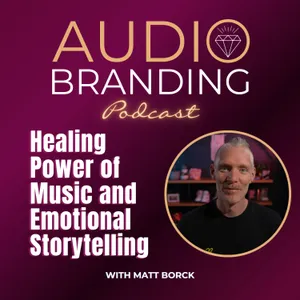
Healing Power of Music and Emotional Storytelling with Matt Borck
“And it’s also a progression, right, that you don’t know why that progression did it for you. Like, there is a moment in this one song by Manchester Orchestra where they hit this C [note], and I, the first time I listened to it, just ugly cried, and I had no idea what they were saying because I wasn’t listening. It’s this one note, and the way they hit it as like, a quote, like just as a unit, as a band, they come in together, and it just does something in me. And I recognize that I then hold the power to be able to do that when I create content.” – Matt Borck This episode is the second half of my conversation with Partner, Chief Listening Officer, and co-founder of The One Group Agency, Matt Borck, as we discuss Matt’s experience with the healing power of music and his strategies for breaking through social media algorithms to reach listeners. And if you like what you hear and you want to support this podcast, there are a bunch of ways to do that at audiobrandingpodcast.com, including subscribing to the YouTube channel, the newsletter, writing a review, or buying me a coffee. Because this takes a lot of coffee. Thanks so much. (00:00) – The Emotional Power of Music The second half of our conversation starts as Matt shares his thoughts on the connection sound fosters between people, and how AI fits into his branding strategy. “People want to get to know the human behind the brands,” he explains. “They need to feel that moment. That’s why I encourage people [to] get the people that you’re working with to do the voiceover if they’re comfortable, and if they’re not, kind of choose somebody else that’s close to it as best as you can. And at this point in my life, AI would be the last resort.” We discuss his experience with the healing power of sound, and the backdrop it forms to our lives and memories. “People talk about having a soundtrack to their life,” Matt says. “They’re able to look back and go, oh, I remember, right. I remember exactly where I was when that song came on. I’m actually better at that than I am at remembering my own memories.” (14:30) – Authenticity in Storytelling Matt shares a clip from a travel tourism project in Bermuda, and we discuss the dangers of letting social media be a substitute for connecting with the audience. “That aspect,” he says, “I really feel is something that is disheartening. I feel like we’re not actually honoring the audiences. What we’re doing is just creating a whack load of slop and hoping that at one point somebody bites. But is our whole intent then of being on social just to sell?” We talk more about the role of social media and the algorithm in marketing, and the value of creating trust with the listener. “Being able to build that trust,” he explains, “what ends up happening is… they’re going to come back and become your greatest marketing, because they’re going to say it’s unbelievable. It was worth every penny.” (28:25) – Creating Genuine Connections As our conversation comes to a close, we talk about the challenge of reaching out to different listener demographics, not all of whom are on every social media network. “The way that I talk to my daughters is completely different than the way that I’ll talk to, say, somebody in their 60s,” he explains. “But yet at the same time, we might have a product that might work for both. It’s just going to completely fall flat with one, so which one are you willing to leave?” Matt tells listeners how they can get in touch, and shares his thoughts on the power of sound in our lives. “There are moments where I’ve walked into our living room and a song has come on,” he says, “and what it’s done in that moment has been very healing… It’s been there for me to feel. It’s been there for me to encourage emotions to come out. It’s been there for me with groups to celebrate. It’s been there for me to just sit in the silence of something. Like, there is so much that it has been there. And I think of going back to the movie that you love and putting it on mute, and I can’t imagine my life on mute. I just can’t.” Episode Summary We discuss how music helps listeners process their emotions. The importance of real voices in branding and marketing. Matt talks about the therapeutic aspects of music and sound. Connect with the Audio Branding Podcast: Book your project with Voice Overs and Vocals by visiting https://voiceoversandvocals.com Connect with me on Instagram - https://www.instagram.com/jodikrangle/ Watch the Audio Branding Podcast on YouTube - https://www.youtube.com/c/JodiKrangleVO Connect with me on LinkedIn - https://www.linkedin.com/in/jodikrangle/ Leave the Audio Branding Podcast a review at https://lovethepodcast.com/audiobranding (Thank you!) Share your passion effectively with these Tips for Sounding Your Best as a Podcast Guest! https://voiceoversandvocals.com/tips-for-sounding-your-best-as-a-podcast-guest/ Get my Top Five Tips for Implementing an Intentional Audio Strategy https://voiceoversandvocals.com/audio-branding-strategy/ Editing/Production by Humberto Franco - https://humbertofranco.com/ This podcast uses the following third-party services for analysis: OP3 - https://op3.dev/privacy

34 MIN
SEP 30, 2026
Listening in Marketing: Why Sound Builds Trust with Matt Borck
“That’s sort of how we, like, when we started the agency, then we started with just the two of us, and my role alongside Jared was everything. We did everything. And then as we expanded and grew, like, we realized, actually, like, not only my partner at the agency, but I am the chief listening officer. It starts with listening, and everything flows from there. And I think that one thing that makes our agency unique is I’ve worked with every other agency, like when we worked as creators, and we were getting hired. So you see the uniqueness of, and I’ll actually even say too, like, the power of listening, and I think that’s something that, again, going back to what I say is, I can say that, like, Jodi, I see you, or I can say, Jodi, like, I see you. And there is a massive difference. And when we can take our brands, our business, or the people that we work with and say, like, I really see you, then we start creating content, including brand music.” – Matt Borck This episode’s guest is a partner, Chief Listening Officer, and co-founder of The One Group Agency. Driven by a deep curiosity about human behavior, he believes that companies must put their audiences first, speaking with them rather than shouting at them. Using empathy and deep listening to find the human truths buried beneath standard data, he helps organizations transition marketing teams from basic internal request departments into true strategic business partners. His name is Matt Borck, and if you’re tired of chasing empty metrics and want to build genuine, profitable relationships, Matt’s perspective shows that it all starts with listening. And if you like what you hear and you want to support this podcast, there are a bunch of ways to do that at audiobrandingpodcast.com, including subscribing to the YouTube channel, the newsletter, writing a review, or buying me a coffee. Because this takes a lot of coffee. Thanks so much. (00:00) – The Importance of Listening Our conversation starts with Matt’s earliest memories of music, and how much the power of sound influenced him as a child. “As a kid,” he recalls, “I always felt music that’s just… even now, even as I say it, like, I get shivers. I. When I would hear something, I felt it, and I felt what my nervous system was doing.” He shares more about his journey from music to marketing, and how his role as the One Group Agency’s chief listening officer evolved. “Great listeners don’t say they’re great listeners,” he adds. “Usually people tell you you’re a great listener. But one of the things it taught me so much about is how to truly be present, how to make [and] save space, how to truly listen.” (13:18) – From Music to Marketing Our conversation turns to Matt’s approach to harnessing the emotional power of sound in branding to build a sense of trust with listeners. “That’s where I would get to know as best as I can and choose something that also doesn’t feel out of place with the content that we’ve created,” he explains, “but it makes you feel something. If I can instantly put you at ease, I believe that you’ll be prepared for the rest of what we’ve got.” We discuss his work on a new study that focuses on music, community, and culture, and how he reaches beyond his own perspective to connect with his audience. “If I’m sent something to review from the agency,” he explains, “and, all of a sudden, I review it, and it doesn’t do anything for me, that’s actually a good thing… It takes me a little bit more to get into because it’s not my natural style, but if I want to honor the target audience, I’ve got to get over myself.” (26:22) – AI and the Future of Voice As the first half of our discussion wraps up, Matt talks about his two daughters and the role of music in their lives, and he illustrates a point about AI’s uncanny perfection with a story about U2’s concerts after they went big. “They were trying to figure out a way to get that [early] connection back,” he says. “And so they staged things like little screw-ups in their set or like an amp breaking, where they had to replace an amp. But what it did was it made them human again.” We talk about AI’s role in sound and audio branding, and the subtle imperfections that help set human performances apart. “We can train [AI] to do things like that,” he explains, “but it’s not the same, where, even the breath that you took, like, there are different breathing patterns that we all do as human beings.” Episode Summary Matt discusses how deep listening shapes marketing strategies. Matt explains his transition from musician to marketing expert. Discussion on the impact of AI in voiceover and sound branding. Tune in for next week’s episode as we continue discussing AI’s role in sonic branding, Matt’s latest musical and marketing projects, and his approach to building an authentic brand strategy. Connect with the Audio Branding Podcast: Book your project with Voice Overs and Vocals by visiting https://voiceoversandvocals.com Connect with me on Instagram - https://www.instagram.com/jodikrangle/ Watch the Audio Branding Podcast on YouTube - https://www.youtube.com/c/JodiKrangleVO Connect with me on LinkedIn - https://www.linkedin.com/in/jodikrangle/ Leave the Audio Branding Podcast a review at https://lovethepodcast.com/audiobranding (Thank you!) Share your passion effectively with these Tips for Sounding Your Best as a Podcast Guest! https://voiceoversandvocals.com/tips-for-sounding-your-best-as-a-podcast-guest/ Get my Top Five Tips for Implementing an Intentional Audio Strategy https://voiceoversandvocals.com/audio-branding-strategy/ Editing/Production by Humberto Franco - https://humbertofranco.com/ This podcast uses the following third-party services for analysis: OP3 - https://op3.dev/privacy
34 MIN