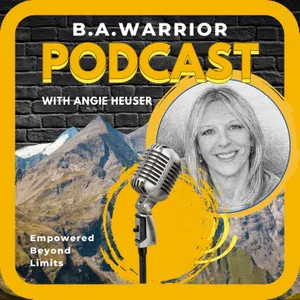
Be-YOU-tiful Adaptive Warrior

Angie Heuser

Details

Breaking through mental and physical barriers to becoming your best self, living your best life.

Recent Episodes

OCT 7, 2026
Pivoting and Grief
Honoring What Was, Before Reimagining What’s Next What if moving forward requires us to first acknowledge what we have lost? In Part Four of my five-part series on pivoting, I’m exploring a side of change that we don’t talk about enough: grief. We often celebrate the courage it takes to pivot, rebuild, and begin again, but every new direction may also require us to release the life, body, identity, or future we once imagined. As I approach eight years since electing to amputate my leg, I’ve been asking myself whether I ever truly grieved my limb loss. Looking back, I realize much of my grieving happened during the four months between deciding to amputate and undergoing surgery. I cried, wrestled with my fears, and tried to understand how my future might change. When I finally released it to God, I felt a peace that helped me move forward. Every amputee’s experience is different. Some of us have time to prepare, while others wake up after an accident or medical emergency and discover that their body has changed. There is no correct way or timeline for grieving. Grief is not limited to death. We can grieve our independence, body image, physical abilities, relationships, identity, trust, or the path we thought our lives would follow. We can also be deeply grateful for our prosthesis, medical team, family, and progress while still grieving what was lost. Grief does not make me ungrateful, and gratitude does not require me to pretend that nothing was lost. When grief remains unacknowledged, it can surface as anger, resentment, emotional numbness, comparison, overworking, or constantly pushing through pain. I recognize my own tendency to connect my value with productivity. Sometimes staying busy feels easier than slowing down long enough to feel what is happening inside me. I also share five steps for moving through a life-changing pivot: name what you lost, allow yourself to feel it, honor why it mattered, release the original shape of the dream, and reimagine what remains possible. I may not ski exactly as I once imagined, but I found another way. I learned to ski on one leg with outriggers, and that reimagined future has brought courage and joy back into my life. This week, name one thing you have been trying to move past. What changed? What do you miss? Why did it matter? Then ask yourself: How can I carry the heart of that dream forward in a new form? Give yourself permission to grieve without judgment—but don’t stop there. Honor what was, release the path you expected, and begin reimagining what could still be possible. Share this episode with someone facing an unexpected change, and follow the BAWarrior Podcast as we continue learning how to rebuild on the other side of the pivot. And as always, Be Healthy, Be Happy, Be YOU!!! Much love,
33 MIN
SEP 30, 2026
Prepare and Pivot
How to Adapt When Life, and Travel, Don’t Go as Planned What do you do when you have prepared for everything, and life still throws you a curveball? In this episode of BAWarrior Podcast, I’m continuing our Pivoting series with one of the most personal lessons I learned from international travel as an above-knee amputee: preparation matters, but adaptability is what carries us through the unexpected. Travel after limb loss can feel overwhelming. There are prosthetic supplies to pack, accessibility to consider, energy to manage, socket fit changes, weather, long airport days, and the fear of being far from the things that make everyday life feel safe. On my recent trip to Paris, I had converters, a surge protector, and my prosthetic charging system ready, yet I still lost power and burned out my surge protector before I could charge my leg. In that moment, I had a choice: panic and stay stuck, or pivot. I share how I worked through the fear, asked for help, reached out to my prosthetist and prosthetic team, searched for local resources, and took the next step in front of me. That experience reminded me that confidence is not built by waiting until we have every answer. Confidence is built in the middle of the trial, when we learn that we can adjust, recover, and find another way. We also talk about the energy budget behind adaptive travel and prosthetic life. Money may make a trip possible, but energy is a currency too. Airport delays, changing gates, standing in lines, carrying luggage, heat, humidity, fatigue, phantom pain, and the demands of walking with a prosthesis all add up. Choosing a wheelchair or asking for support before you hit your breaking point is not losing your independence—it is protecting it. I also share the hard lesson my body taught me after returning home: recovery cannot be rushed. Sometimes the strongest pivot is slowing down before pain, exhaustion, or injury forces you to stop. Before you go, I want you to name one thing fear has been keeping you from doing. It may be traveling, walking outside in your prosthesis, trying something new, asking for help, or giving yourself the recovery you truly need. Prepare what you can, stay open to the pivot, and take one small step this week. Confidence does not arrive before you begin, it grows as you keep going. If this episode encouraged you, please share it with someone who needs the reminder that they can adapt, recover, and find another way. Leave a comment and tell me: What is one fear you are ready to face with a little more flexibility and faith? And as always, Warriors, Be Healthy. Be Happy. Be YOU!!! Much love,
SEP 23, 2026
Pivoting Isn’t Quitting: Changing the Path Without Losing the Purpose
Power of the Pivot: Part 2 of 5 Sometimes the hardest part of a setback is not the pain itself, it is realizing that the plan you were so ready to chase suddenly cannot happen the way you imagined. In Part Two of my pivoting series on the BAWarrior Podcast, I share what I am learning in real time after pulling a muscle in my residual limb just as I set a new fall goal: one million steps by December 21. Step it up!! As an above-knee amputee, I am familiar with hard days. But this setback humbled me. Every step into my socket was painful, and I had to use a crutch, rest, and pull back from the walking routine I was excited to begin. My instinct has always been to push through. I have pushed through surgeries, recovery, pain, and the many obstacles that can come with amputee life. Yet I am learning that strength is not always about forcing your way forward. Sometimes strength looks like self-preservation. It looks like sitting down, asking for help, and letting your body heal. Pause, Reassess, and Redefine yourself and your goals during times of setbacks and trials. This is the heart of the episode: pivoting is not failure. A pivot means the method changes, not necessarily the purpose. My goal was never just a number on a step counter. I wanted to stay consistent, feel healthier and stronger, and protect the ability to ski, hike, travel, and make memories with my family. That purpose is still there even if my original plan has to change. Maybe I row instead of walk. Maybe I focus on healing first. Maybe I release this particular goal for now and come back to it in a different season. I also talk honestly about the grief that can come with a setback. We are allowed to be frustrated, disappointed, angry, and still keep moving forward. We can grieve what we thought this season would look like while holding onto hope for what is still possible. For those of us living with limb loss, a difficult socket, injury, skin issues, or a loss of trust after a fall, these pivots can feel deeply personal. But our prosthesis, our goals, and our current limitations are not our identity. Adjusting the pathway that leads to your goal is Pivoting. There is more than one way to achieve them. If you want it- PIVOT! When life stops you in your tracks, step back from the magnifying glass. Ask what truly matters, why it matters, and whether there is another path that honors both your goal and your healing. And remember: sometimes releasing something for now is not giving up. It is choosing the right timing. Take five quiet minutes this week and write down: What is my goal? Why does it matter to me? Can I reach it by changing the method, or is this a season to release it and heal? Choose one small next step that supports your purpose today, whether it is calling a professional, taking a rest day, asking for support, or creating a new plan. Then share this episode with a warrior who needs permission to pivot, not quit. You are more than your goals! You are stronger than your setbacks! Keep reaching for the stars, dear Warriors, and RISE UP, any way you can! As always, Be Healthy, Be Happy, Be YOU!! Much love,
32 MIN
SEP 16, 2026
The Power of the Pivot: A Five Part Series
When Your Body Changes the Plan What if pulling back is not weakness, but the very thing that keeps you moving forward? In this episode of BAWarrior Podcast, I’m opening a new five-part series called The Power of the Pivot. This first conversation is about one of the hardest pivots for me personally: when my body says, “I’m done,” even when my mind still wants to push ahead. After returning home from international travel, I was ready to get back into my normal rhythm. I wanted to eat well, get back to the gym, move my body, and feel strong again. But after a simple walk in the Arizona heat and humidity, I experienced a deep, unfamiliar pain inside my residual limb. It was not phantom pain or skin irritation-it felt like a physical muscle injury, and it made every first step into my prosthesis painful. The timing felt almost ironic. Just days later, I was headed to Boston for my one-year follow-up after my AMI revision with Dr. Carty, along with visits to my PT and the incredible researchers at MIT working on future prosthetic innovations. I was scared that I had damaged something significant. Instead, my appointment brought a possible silver lining: because my muscles are now working differently after AMI, I may have simply pulled a muscle after moving too quickly while my body was cooling down. Even with that reassurance, I had to face a truth I do not always like: I needed to pivot. For me, that meant stepping away from the gym, putting hikes and long walks on hold, and allowing myself to slow down. I do not pivot gracefully. I like momentum, routine, movement, and proving to myself that I can keep going. But this experience reminded me that strength is not always found in pushing harder. Sometimes strength is found in listening, adjusting, protecting what matters, and trusting that recovery is not the same thing as giving up. As amputees, our bodies often communicate in whispers before they scream. We have to learn the difference between something we can work through and something that deserves attention, rest, or professional care. Our prosthesis is part of how we move through life, so protecting our residual limb and physical health is not weakness, it is wisdom. Whether your pivot lasts a day, a week, or several months, it does not mean your goals are gone. It does not mean you have failed. It simply means your path needs a temporary adjustment. The momentum will return when your body is ready. Take a moment this week to listen to your body. Is there something you have been trying to push through that may require a pivot? Give yourself permission to adjust without guilt. Share this episode with someone who needs the reminder that rest, recovery, and changing direction can be powerful parts of the warrior journey. If you have to pivot this week, remember this is NOT failure but wisdom, when it comes to reaching your goals. Use your experiences and protect yourself from further injury. This way you’ll be ready to fight another day! Rise up Warriors, and Pivot who you need to. And as always, Be Healthy, Be Happy, Be YOU!!! Much love,
27 MIN
SEP 2, 2026
International Travel as an Amputee
From Phantom Pain to Freedom Walking Paris Streets What happens when the prosthetic leg you depend on suddenly will not charge-thousands of miles from home? In this episode of the BAWarrior Podcast, I’m sharing the honest story of my first international trip as an amputee. Returning to Paris carried special meaning for me because my previous trip there in 2018 ultimately led to my decision to have an above-knee amputation. This time, I returned stronger, healthier, and determined to experience international travel with my prosthetic leg, but the journey still tested me in ways I never expected. Security line in Charles De Gaulle airport Waiting at gate to board plane home Ugh! Got thru gate only to be held back for 15/20 minutes in a long line to board plane. We got further back in line due to my son being chosen, at random, for a full bag check AT the gate! Before leaving, I prepared for the long flights, airport security, possible swelling, phantom sensations, and everything I would need to care for my skin-fit socket. I packed my medical supplies, prosthetic charger, tools, cleaning products, electrical converters, and surge protector. What I could not anticipate was that plugging my charger into the hotel’s electrical system would blow the power-not once, but twice. Although my prosthetic leg was not connected when the electricity failed, my surge protector was burned and blackened. Suddenly, I had no way of knowing whether my charger still worked. After going more than a day without charging my prosthetic knee, I found myself lying awake wondering how I would make it through ten days in France if my leg stopped functioning. Our updated rig and the first time, in 4 days, that I was finally able to charge my leg! In that moment, I had never felt more disabled. With help from my prosthetist, my Össur representative, the hotel staff, and an electronics store in Paris, we found a safe European power strip and adapter. After three days without charging, I finally watched the green light come on. The next morning, my prosthetic was at 100 percent—and I felt an overwhelming sense of relief and gratitude. One time we had some rain, but some of the uneven brick roads we walked on all week long. Huge day, seeing The Cure at Pagaille Festival in Bordeaux. A TRUE test of my ability to stand, in thick crowds for hours!!! The trip also taught me important lessons about accessibility outside the United States. ADA standards do not follow us into other countries. I encountered cobblestone streets, restaurant bathrooms located in basements, showers without grab bars, large steps, slippery floors, and roadside toilets without seats. I had to use my balance, towels, creativity, and willingness to adapt. Despite blisters and days ranging from 12,000 to 20,000 steps, I experienced Paris, Disneyland, Bordeaux, and everything this incredible journey offered. International travel as an amputee takes preparation, but it is possible. Seeing the Mona Lisa (above), but when an attendant saw me she flagged me over and brought us in front of EVERYONE to get up close! A great perk of being an amputee (below)! If you are an amputee planning an international or domestic trip, reach out and share your questions with me. I would love to help you prepare, avoid the mistakes I made, and travel with greater confidence. You can do this, you simply need to prepare well and be ready to pivot. Have a beautifully blessed day, And as always, Be Healthy, Be Happy, Be YOU!!! Much love,

34 MIN