Biohacking Autism with Nadia Elkhatib.

Nadia Elkhatib

Details

Hosted by Nadia Elkhatib, Biohacking Autism is the go-to podcast for parents, caregivers, and families navigating the complex world of autism. Each week, we explore the biological root causes behind the toughest challenges in autism, from autism anxiety and sleep disruption to neuroinflammation, MCAS, gut health, seizures, and nervous system dysregulation, alongside evidence-informed integrative approaches that actually help. We also cover caregiver health and longevity for parents raising autistic children, because your health matters just as much as your child's. From caregiver burnout and stress management to practical longevity strategies, these episodes are for the parent who is running on empty and ready to invest in themselves, too. Whether you're just beginning your autism journey or deep into biomedical interventions, this podcast gives you the research, the real talk, and the practical tools to make informed decisions for your child and for yourself. Popular Topics Include: autism anxiety, autism sleep, gut health autism, MCAS autism, neuroinflammation, nervous system dysregulation, peptides for autism, functional medicine autism, integrative health autism, caregiver health, autism parent burnout, caregiver burnout, longevity for parents, caregiver longevity, autism supplements, sensory processing, autism diet, autism parent support, vagus nerve stimulation autism, bioregulators for autism, HRV training for caregivers This podcast uses the following third-party services for analysis: OP3 - https://op3.dev/privacy

Recent Episodes

NOV 16, 2026
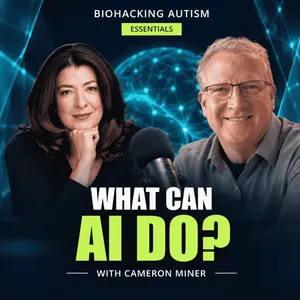
AI for Autism: How Parents Can Use AI to Make Sense of Their Child's Health
AI for autism families is already here, and most parents haven't opened it yet. Cameron Miner has spent 30 years building technology around the person who uses it, from surgical robotics research to wearables, neural interfaces and digital twins. He joins me to explain how a parent can use AI to make sense of their child's health. We talk about the personal digital twin: an AI that learns from your own family's labs, logs and wearables instead of from the average person on the internet. Cam explains what it can do today, how to start one inside the AI tools you already have, how to keep your data private, and why you stay in charge of every decision. In this episode: • The night Cam's watch told him to see a doctor • Why AI today is like "having a chat with the internet" • What AI can do with years of labs, sleep logs, food diaries and wearable data • Adding the caregiver's own data, like stress and HRV • Using one AI model or several • Privacy settings and keeping your family's data out of training • AI as your consultant and translator, with you as the CEO • Why AI flatters you, and how to ask so you get a real answer • What a family that uses AI well could look like in five years • AI on a phone as an equalizer for families with few resources • Brain-computer interfaces and nonverbal kids Cam builds technology and does not have a family connection to autism. He says so at the start. The autism examples are mine. I'm not a doctor, and nothing here is medical advice. AI can be wrong, so check what it tells you with your child's care team. Join the Biohacking Autism Community: https://biohackautism.com/community Watch this episode on YouTube: https://www.youtube.com/@BiohackingAutism If this conversation gave you an idea for your own family, share it with another parent who has never tried AI. This podcast uses the following third-party services for analysis: OP3 - https://op3.dev/privacy

70 MIN
NOV 12, 2026
Choosing an Autism Doctor: Where to Start | 10-Minute Essentials
Choosing an autism doctor starts with a question: what are we trying to understand or improve? In this 10:43 Essentials episode, I share what 22 years of caring for Jimmy taught me about choosing practitioners, organizing records, reviewing progress, and including caregiver health from the beginning. LEARN ABOUT THE BIOHACKING AUTISM COMMUNITY https://biohackautism.com/community/?utm_source=podcast&utm_medium=episode_description&utm_campaign=medical_journey_essentials The community includes weekly calls with me, practitioner Q&As as scheduled, and parent-to-parent conversation. Private clinical appointments are booked separately. The introductory Charter rate continues while membership remains active. Future members will pay more. CHAPTERS 00:00 Who should I take my child to? 00:57 What changed the order of Jimmy's care 01:41 Choosing a practitioner with a purpose 04:01 Agree on what progress should look like 04:45 Prepare the information for your care team 05:40 Organize records and track changes 06:47 What other parents can offer 07:25 Caregiver health belongs in the plan 08:11 How the community works 09:38 Education and your care team's role 10:01 The next question to write down I'm Nadia Elkhatib, host of Biohacking Autism and the mother of a 22-year-old with autism. I apply longevity and biohacking science to autism and to the caregivers behind it. We don't treat the label. We work on the biology underneath it. This episode shares my family's experience and is for education. It is not medical advice. Decisions about tests and treatment belong with your own qualified care team. This podcast uses the following third-party services for analysis: OP3 - https://op3.dev/privacy
10 MIN
NOV 9, 2026
Choosing an Autism Doctor: What I Wish I Knew 22 Years Ago
Choosing an autism doctor can shape the direction of care for months or years. After 22 years of caring for Jimmy, I wish I had asked a clearer question before choosing the next practitioner: what are we trying to understand, and what should progress look like? In this solo episode, I share what I would do differently, how I organize records and questions for appointments, why treatment priorities can change, and why caregiver health belongs in the plan from the beginning. LEARN ABOUT THE BIOHACKING AUTISM COMMUNITY https://biohackautism.com/community/?utm_source=podcast&utm_medium=episode_description&utm_campaign=medical_journey_full The community includes weekly calls with me, practitioner Q&As as scheduled, and parent-to-parent conversation. Private clinical appointments are booked separately. Our first paid group joins at the introductory Charter rate. Your rate continues while membership remains active. Future members will pay more. BASELINE LAB CHECKLIST https://biohacking-autism.kit.com/d9c8b01fd7 A conversation starter for you and your clinician. The right tests depend on the person. CHAPTERS 00:00 Newly diagnosed or stuck at a plateau 01:41 Welcome and the role of your care team 02:41 A deadline without the tools 04:13 When progress stops 06:10 Jimmy's story and changing the order of care 09:55 Why another family's doctor may not be your next step 12:15 The question comes before the practitioner 13:05 Agree on progress and reassess 14:33 Prepare for appointments 16:25 Data and the baseline checklist 17:24 Organize records and track changes 18:47 Learning from other parents 21:59 Caregiver health belongs in the plan 25:12 What happens in the community 27:10 What membership includes and Charter terms 28:29 Write down the next question I'm Nadia Elkhatib, host of Biohacking Autism and the mother of a 22-year-old with autism. I apply longevity and biohacking science to autism and to the caregivers behind it. We don't treat the label. We work on the biology underneath it. This episode shares my family's experience and is for education. It is not medical advice. Decisions about tests and treatment belong with your own qualified care team. This podcast uses the following third-party services for analysis: OP3 - https://op3.dev/privacy
29 MIN
NOV 5, 2026
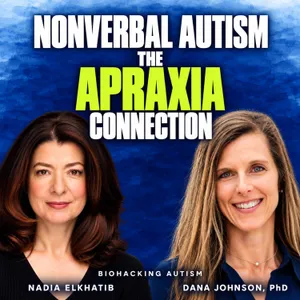
Nonverbal Autism and Apraxia: He Understands, but His Body Won’t Respond | Essentials
Nonverbal autism and apraxia can raise a difficult question: does my child understand, even when their body does not respond? In this 10-minute Essentials episode, Dana Johnson, PhD, occupational therapist and founder of the Spellers Center, shares her clinical perspective on whole body apraxia, motor planning, and the difference between understanding an instruction and initiating a response. We discuss unreliable speech, why repeated directions may not solve an initiation problem, and how excitement can be mistaken for anxiety or refusal. Dana also discusses vision, movement, toe walking, and motor support for communication. WATCH THE FULL INTERVIEW https://www.youtube.com/watch?v=K8CuwPXNOI4 LEARN ABOUT THE BIOHACKING AUTISM COMMUNITY https://biohackautism.com/community/?utm_source=podcast&utm_medium=episode_description&utm_campaign=dana_johnson_essentials CHAPTERS 00:00 Understanding without being able to initiate 00:33 Whole body apraxia and motor planning 01:58 Nonspeaking and unreliable speech 02:50 The backpack: understanding vs. doing 03:57 When excitement looks like refusal 05:07 Vision, movement, and sitting still 06:02 Dana’s perspective on toe walking 07:18 Motor skills take practice 08:10 Letterboards and motor support 09:07 What an alphabet assessment may miss Hosted by Nadia Elkhatib. This conversation shares personal experience and Dana’s clinical perspective for education. Individual assessment and care should be discussed with your qualified clinician. This podcast uses the following third-party services for analysis: OP3 - https://op3.dev/privacy
10 MIN