


Birds of a Feather Talk Together
John Bates, Shannon Hackett, RJ Pole, Amanda Marquart
167: Greater Honeyguide: More Brood Parasitism AND Helping Humans Find Honey!
OCT 26, 202630 MIN
Description
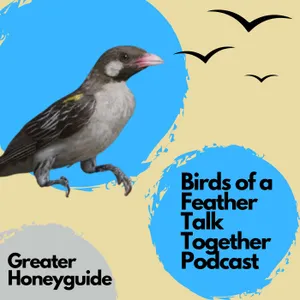
Meet the Greater Honeyguide (Indicator indicator), one of Africa's most remarkable birds, known for its extraordinary relationship with humans and its fascinating reproductive strategy called brood parasitism.
In this episode of Birds of a Feather Talk Together, we're continuing our exploration of brood parasitism following our episode on the Great Spotted Cuckoo. This time, we're diving into the incredible biology, behavior, and evolutionary adaptations of the Greater Honeyguide—a bird with one of the strangest life histories in the avian world.
Field Museum ornithologists Dr. John Bates and Dr. Shannon Hackett, RJ Pole and Amanda Pole explore how honeyguides lay their eggs in the nests of other bird species, leaving unsuspecting host parents to raise their chicks.
But the Greater Honeyguide takes brood parasitism to another level. Unlike Great Spotted Cuckoo chicks, which generally grow up alongside their host's young, Greater Honeyguide chicks hatch with specialized bill hooks that they use to kill the host's chicks, eliminating competition for food.
And that's only half the story! Greater Honeyguides are also famous for their remarkable cooperative relationship with humans, guiding honey hunters to wild beehives and benefiting from the beeswax left behind.
🪺 In this episode, we explore:
What is a Greater Honeyguide, and where does it live?
What is brood parasitism, and why do some birds lay eggs in other species' nests?
How do Greater Honeyguides trick other birds into raising their young?
Why do honeyguide chicks have specialized hooks on their bills?
How do Greater Honeyguides differ from Great Spotted Cuckoos?
How does the evolutionary arms race between brood parasites and host birds work?
Why do Greater Honeyguides lead humans to wild beehives?
How can humans and wild birds communicate and cooperate to find honey?
From the ruthless competition inside a bird's nest to an extraordinary partnership between humans and wild birds, the Greater Honeyguide reveals just how surprising evolution can be.
Whether you're a lifelong birder, a backyard birdwatcher, or someone fascinated by unusual animal behavior, this episode explores bird evolution, brood parasitism, coevolution, mutualism, and the remarkable adaptations that help birds survive.
🎧 ABOUT BIRDS OF A FEATHER TALK TOGETHER
Birds of a Feather Talk Together is a conversational birdwatching, nature, and ornithology podcast featuring Field Museum scientists Dr. John Bates and Dr. Shannon Hackett alongside RJ and Amanda.
Together, we explore the fascinating world of birds—from their extraordinary behaviors and evolutionary history to migration, conservation, and the incredible relationships between birds, humans, and the natural world.
Our goal is to make bird science accessible, entertaining, and inspiring for everyone, whether you're an experienced birder or just beginning to discover the wonders of birds.
🐦 Subscribe for more bird facts, wildlife science, and fascinating conversations about nature!
💬 Which brood parasite do you find more fascinating—the Great Spotted Cuckoo or the Greater Honeyguide? Let us know in the comments!
#GreaterHoneyguide #BroodParasitism #BirdFacts #Birdwatching #Ornithology
Here are links to our social and YouTube pages, give us a follow:
YouTube
Instagram
TikTok
BlueSky