Center of Excellence - Pharma 4.0 by Dr. Jayant Joshi

Dr. Jayant Joshi

Details

The Pharmaceutical Industry is undergoing a transformation driven by advancements in technology and data analytics. Smart Manufacturing, also known as Pharma 4.0, is revolutionising the way pharmaceutical products are developed, manufactured, and distributed. This podcast provides an in-depth exploration of Smart Manufacturing principles and Technologies as applied in the Pharmaceutical sector. You will gain a comprehensive understanding of how digitalization, automation, and data-driven decision-making are reshaping pharmaceutical manufacturing processes to enhance efficiency, quality, and compliance. We’ll speak with industry experts, data scientists, and supply chain leaders to uncover the opportunities and challenges that come with integrating technology into one of the world’s most critical industries. Whether you’re a Professional in Pharma, Tech, or simply curious about the future of Healthcare or Pharmaceutical Manufacturing in particular, this is the podcast for you.

Recent Episodes

OCT 24, 2026
Pharma Future Jobs 2030
Pharma Future Jobs 2030 What will the pharmaceutical workforce look like by 2030 as artificial intelligence, automation, and digital technologies reshape the industry? In this episode of Center of Excellence – Pharma 4.0, we explore a forward-looking framework for understanding the emerging job roles, digital capabilities, and career pathways that will define the next generation of pharmaceutical professionals. The transformation goes far beyond introducing AI tools into existing workflows. It represents a fundamental shift in how pharmaceutical companies operate, how employees create value, and how organizations develop the talent needed to remain competitive in an increasingly intelligent and connected industry. What You'll Discover in This Episode 25 Emerging Pharma Job Profiles: Explore new and evolving roles across AI strategy, digital transformation, manufacturing, robotics, automation, and quality management. Discover how positions such as Pharma AI Strategy Leader, AI Model Risk and Validation Manager, Digital Twin Manager, and Autonomous Manufacturing Leader could shape the future of pharmaceutical organizations. The Three-Level Digital Skills Architecture: Understand the progression from Basic digital skills to Advanced specialization and Expert-level leadership. The discussion highlights data literacy, cloud fundamentals, prompt engineering, applied AI and machine learning, process mining, Agentic AI, and GxP AI compliance. Digital Twins and Smart Manufacturing: Discover how real-time Industrial Internet of Things (IIoT) data and virtual manufacturing models can support process simulation, yield optimization, supply chain planning, and risk reduction before changes are implemented in physical manufacturing environments. The Evolution of Pharmaceutical Career Pathways: Learn how traditional professionals can progress into future-ready roles through structured upskilling. Examples from manufacturing and quality demonstrate how existing domain expertise can be combined with digital capabilities to create new career opportunities. AI Governance, Quality 4.0, and Agentic AI: Explore the growing importance of validating AI models, managing algorithmic risks, governing autonomous systems, and integrating Information Technology (IT) with Operational Technology (OT) in highly regulated pharmaceutical environments. Digital Pharma GPT: An AI-Powered Workforce Transformation Platform: Examine a seven-step approach to workforce development, covering job profiling, skills-gap assessment, personalized learning, practical projects, AI-based assessment, certification, and career progression. The Human Side of Digital Transformation: Consider why organizational change management, employee engagement, and institutional knowledge remain essential. The discussion challenges the assumption that digital transformation simply replaces traditional roles, emphasizing instead the potential to augment experienced professionals with new digital capabilities. Why This Episode Matters Pharmaceutical companies need more than advanced technologies to succeed in the AI era. They need a workforce capable of understanding, implementing, validating, and governing these technologies while maintaining the industry's uncompromising focus on patient safety, product quality, and regulatory compliance. This episode offers pharmaceutical executives, digital transformation leaders, manufacturing and quality professionals, HR and learning leaders, and aspiring Pharma 4.0 specialists a structured perspective on preparing for the jobs of 2030. The central message is clear: Digital skills + AI + Innovation = a Future-Ready Pharma Workforce. But the conversation concludes with a thought-provoking question: as AI systems become increasingly capable of predicting outcomes and eliminating errors, could the pursuit of perfect optimization unintentionally suppress the unexpected discoveries that have historically driven scientific breakthroughs? As the pha
23 MIN
OCT 23, 2026
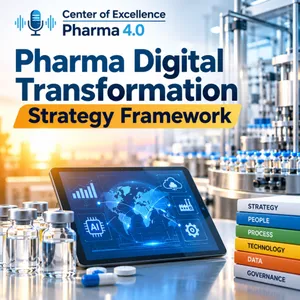
Pharma Digital Transformation Strategy Framework
Pharma Digital Transformation Strategy Framework Digital transformation in the pharmaceutical industry is far more complex than implementing new software or adopting the latest technologies. With patient safety, regulatory compliance, data integrity, and billions of dollars in research and development at stake, pharmaceutical companies must pursue innovation while carefully managing risk. How can the industry accelerate business growth, improve operational performance, and deliver better patient outcomes without compromising quality or compliance? In this episode of Center of Excellence – Pharma 4.0, we explore the Pharma Digital Transformation Strategy Framework, a strategic roadmap for turning digital ambitions into measurable business value. Discover how pharmaceutical organizations can align leadership, technology, processes, and people to build a sustainable, data-driven, and digitally enabled enterprise. The discussion examines the competing priorities facing pharmaceutical leaders, from revenue growth and faster time to market to risk management, patient-centric innovation, and environmental sustainability. It highlights how technologies such as artificial intelligence, IoT sensors, advanced analytics, cloud computing, and edge computing can help organizations move from reactive problem-solving to proactive, data-driven operations. A central theme of the episode is the Strategic Digital Transformation Framework, built around five interconnected steps: Envision the Future: Define the business vision, strategic priorities, and measurable objectives. Design the Strategy: Develop a practical roadmap that addresses business needs, risks, and transformation priorities. Enable the Enterprise: Invest in the right technologies, data capabilities, talent, processes, and organizational culture. Execute with Agility: Deliver early wins, validate solutions, and scale successful initiatives while managing implementation risks. Measure and Improve: Track key performance indicators, evaluate business outcomes, and continuously refine the transformation strategy. The episode also explores the leadership imperatives that determine whether digital transformation succeeds or fails. Building a digital-first culture requires more than executive mandates. Leaders must establish a clear purpose, make bold but evidence-based decisions, foster strategic partnerships, use trusted data to guide investments, and deliver sustainable results. Another important insight is the value of starting small and scaling intelligently. Rather than relying exclusively on large, high-risk technology programs, pharmaceutical companies can demonstrate value through targeted improvements in areas such as digital audits, manufacturing process monitoring, and temperature-sensitive supply chain operations. These early successes can build organizational confidence, establish measurable returns on investment, and create momentum for broader enterprise transformation. We also examine the ten essential Digital Transformation Enablers that combine technological capabilities with organizational foundations: Data and Analytics AI and Automation Cloud and Edge Computing IoT and Connectivity Cybersecurity Digital Platforms Talent and Culture Change Management Process Excellence Governance and Compliance Together, these enablers support the outcomes pharmaceutical organizations seek: faster time to market, lower costs, higher efficiency, better quality, improved patient experiences, and sustainable business growth. The discussion emphasizes that technology alone cannot deliver these results. Effective governance, optimized processes, cybersecurity, and employee adoption are equally critical. Finally, the episode looks beyond operational efficiency toward the future of healthcare. As connected devices, wearables, biometric sensors, and AI-driven analytics become increasingly integrated, digital transformation could help pharmaceutical organizations move toward mor

17 MIN
OCT 22, 2026
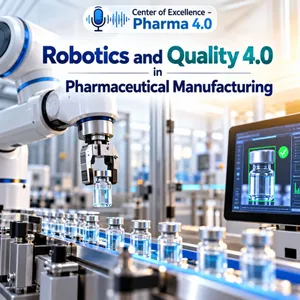
Robotics and Quality 4.0 in Pharmaceutical Manufacturing
Robotics and Quality 4.0 in Pharmaceutical Manufacturing What if pharmaceutical manufacturing could become smarter, safer, and more resilient through intelligent robots, artificial intelligence, and autonomous operations? In this episode of Center of Excellence – Pharma 4.0, we explore how robotics and Quality 4.0 are transforming pharmaceutical manufacturing, moving the industry beyond conventional automation toward interconnected, AI-driven operations that can monitor processes, anticipate disruptions, and make decisions within validated quality and regulatory boundaries. The pharmaceutical industry faces mounting pressures from rising production costs, accelerating innovation, stringent regulatory requirements, and shortages of specialized talent. At the same time, even minor variations in manufacturing conditions or human execution can compromise product quality and result in significant financial losses. These challenges are driving pharmaceutical companies to rethink how medicines are manufactured, inspected, and delivered. What You Will Discover in This Episode Robotics and Quality 4.0: How advanced robotics, digital quality systems, and AI can improve consistency, reduce process variability, and support a zero-defect quality mindset. AI-powered visual inspection: How computer vision and machine learning can identify vial defects, glass micro-fractures, and foreign particles at high speeds, supporting more consistent quality control. From automation to autonomous operations: Why conventional automation, which follows predefined instructions, differs from intelligent systems that use real-time data and AI to adapt operations across the pharmaceutical value chain. Digital twins in pharmaceutical manufacturing: How virtual factory models can simulate manufacturing conditions, evaluate process parameters, and help optimize operations before changes are implemented in the physical environment. Enterprise-wide robotic applications: How robotics is extending beyond production lines into research and development laboratories, quality control, sampling, warehousing, and logistics. Human–robot collaboration: Why the transformation is not simply about eliminating human involvement, but about shifting employees from repetitive manual activities toward system oversight, data analysis, quality decision-making, and strategic responsibilities. Regulatory compliance and validated AI: Why autonomous decision-making must remain within established and validated parameters, supported by reliable data and evidence of product quality and safety. Supply chain resilience and sustainability: How interconnected systems can anticipate disruptions, adjust operational plans, optimize resource utilization, and reduce waste. The strategic role of pharmaceutical leadership: Why robotics has become a boardroom priority, influencing operational efficiency, risk management, sustainable growth, and long-term competitiveness. From the Factory Floor to the Boardroom A key theme of this episode is the evolution from isolated robotic tasks to an interconnected pharmaceutical enterprise. When production, quality, laboratories, and logistics systems share information, manufacturers can move toward more proactive and coordinated operations rather than relying exclusively on manual intervention and retrospective analysis. The discussion also examines the importance of balancing speed with patient safety. Intelligent manufacturing systems must deliver efficiency without compromising validated processes, regulatory compliance, or product quality. Looking Ahead: Personalized Medicine at Scale The episode concludes by exploring an intriguing possibility: could increasingly flexible robotic systems and AI eventually make personalized medicine at scale more practical? As manufacturing becomes more adaptive and precise, the potential to produce therapies tailored to individual biological needs raises important questions about the future of pharmaceutical p
19 MIN
OCT 21, 2026
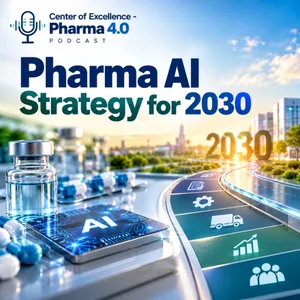
Pharma AI Strategy for 2030
Pharma AI Strategy for 2030 Artificial intelligence is poised to transform the pharmaceutical industry, but the real challenge is not simply discovering new drugs faster. It is translating AI-driven innovation into safe, scalable, compliant, and reliable healthcare solutions that reach patients when they need them. In this episode of Center of Excellence – Pharma 4.0, we explore the strategic roadmap shaping the future of pharmaceutical AI through 2030. Moving beyond the hype surrounding generative AI, we examine how pharmaceutical companies can progress from isolated AI pilots to integrated, intelligent enterprises that deliver measurable business value across the entire medicine lifecycle. A central insight is that AI's greatest potential value in pharma may lie not in drug discovery alone, but in manufacturing, operations, and supply chain resilience. The discussion explores why operational excellence, trusted data, human expertise, and robust governance are essential to realizing AI's full potential. What You'll Discover in This Episode Beyond the AI Hype: Understand why faster drug discovery does not automatically translate into faster patient access, and why laboratory validation, clinical trials, regulatory reviews, and manufacturing scale-up remain critical constraints. Where AI Creates the Greatest Business Value: Explore the potential distribution of AI value across pharmaceutical operations (39%), R&D (26%), and commercial functions (24%), highlighting the strategic importance of manufacturing, materials management, and supply chain optimization. AI-Native Pharmaceutical Manufacturing: Discover how predictive quality monitoring, real-time process analytics, and digital batch review can help identify potential manufacturing failures before they compromise product quality. Digital Twins and Predictive Maintenance: Learn how virtual representations of manufacturing facilities can support process optimization, production scheduling, and equipment maintenance while reducing the risks associated with real-world experimentation. Intelligent and Resilient Supply Chains: Examine how AI can analyze weather patterns, geopolitical developments, port congestion, and logistics disruptions to anticipate risks and support proactive supply chain decisions. From Generative AI to Agentic Workflows: Understand the difference between AI assistants that respond to prompts and AI agents that coordinate multi-step business processes across enterprise systems, including inventory management, supplier identification, cost analysis, and compliance documentation. Building Trusted, AI-Ready Data Foundations: Explore why clean, standardized, connected data, semantic layers, and common ontologies are essential for enabling AI systems to make reliable decisions across research, manufacturing, quality, and regulatory functions. Governance, Compliance, and Human Oversight: Discover why pharmaceutical AI must be fit for its intended use, rigorously validated, aligned with GxP requirements where applicable, and supported by appropriate human oversight. Preparing the Pharmaceutical Workforce for AI: Understand why employees must learn not only to use AI tools but also to question their outputs, recognize limitations, identify potential bias, and retain accountability for critical decisions. The Strategic Imperative for Pharma Leaders The episode highlights a fundamental principle: deploying AI technology is not enough. Sustainable value emerges when technology is combined with trusted data, skilled people, effective governance, and organizational change management. As pharmaceutical companies prepare for 2030, leaders must look beyond algorithms and software investments. They must also address the physical infrastructure, manufacturing capacity, laboratory capabilities, clinical testing resources, and cold-chain logistics needed to translate digital intelligence into real-world healthcare outcomes. The big question: If AI accelerates
19 MIN
OCT 20, 2026
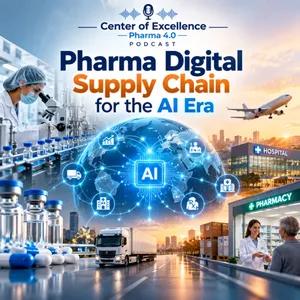
Pharma Digital Supply Chain for the AI Era
Pharma Digital Supply Chain for the AI Era What happens when artificial intelligence moves from being a technology initiative to becoming the central intelligence layer of the pharmaceutical supply chain? In this episode of Center of Excellence - Pharma 4.0, we explore how AI is reshaping the entire pharmaceutical supply chain—from demand sensing and sourcing to smart manufacturing, logistics, distribution, and ultimately patient delivery. The traditional pharmaceutical supply chain has largely operated as a fragmented, reactive network. Organizations respond to shortages, supplier disruptions, production failures, inventory imbalances, and logistics challenges after they occur. The AI-era model aims to replace this reactive approach with a connected, predictive, and proactive ecosystem. The episode follows the journey of a hypothetical advanced biologic therapy and examines how AI can continuously connect information across suppliers, manufacturing facilities, logistics networks, hospitals, pharmacies, and patients. Key areas explored in this episode: AI-driven demand sensing to anticipate regional medicine requirements before shortages occur Intelligent inventory optimization to balance product availability, working capital, and expiry risk Supplier risk intelligence to identify geopolitical and operational disruptions early Smart manufacturing and digital twins for predictive maintenance and operational resilience Real-time quality monitoring and Quality by Design approaches to detect and correct process deviations earlier AI-powered logistics optimization for dynamic routing, temperature-sensitive transportation, and real-time visibility Patient-centric delivery that makes reliability and availability the ultimate objectives Cybersecurity and privacy as foundational requirements for a highly connected pharmaceutical ecosystem The transformation of the supply chain from a cost centre into a strategic value creator The discussion also examines the potential business impact of this transformation, including the blueprint's projected improvements in forecast accuracy, reductions in stockouts and supply-chain costs, faster therapy availability, and improved patient access and reliability. Most importantly, the episode explores a deeper question: Can an AI-powered supply chain eventually become so predictive that it anticipates healthcare needs before patients or even healthcare professionals recognize them? That question takes the conversation beyond operational efficiency and into the future of healthcare itself—where predictive intelligence, patient data, connected ecosystems, and AI could fundamentally redefine how medicines are planned, manufactured, distributed, and accessed. Pharma Digital Supply Chain for the AI Era offers a forward-looking perspective on why the pharmaceutical supply chain is becoming one of the most important strategic domains in the Pharma 4.0 transformation. Resources: Book Series: Center of Excellence – Pharma 4.0 https://www.amazon.com/dp/B0F1DX4XXB Book Series: Cybersecurity for Pharma 4.0 https://www.amazon.com/dp/B0HFW5988N Podcast: https://pharma4coe.podbean.com YouTube Channel: https://www.youtube.com/@COE-PHARMA4.0 Udemy Course: Smart Manufacturing in Pharma https://www.udemy.com/course/smart-manufacturing-in-pharma/ Website: https://respa.com #Pharma40 #PharmaceuticalSupplyChain #DigitalSupplyChain #AISupplyChain #ArtificialIntelligence #PharmaTechnology #DigitalTransformation #SmartManufacturing #DigitalTwin #SupplyChainManagement #PredictiveAnalytics #DemandSensing #SupplyChainResilience #PharmaInnovation #SmartPharma #HealthcareAI #PharmaceuticalManufacturing #PatientCentricity #PharmaDigitalTransformation #FutureOfPharma
22 MIN