



Daily AI Safety News
Nathan Nguyen
Three Lawmakers Sketch Federal Safety Rules for the Most Powerful AI
NOV 23, 20265 MIN
Description
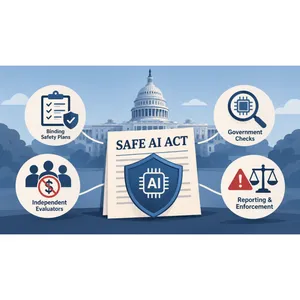
Today, the companies building the most powerful AI systems write their own safety rules, and no one outside can reliably check that they follow them. On November 19, Reps. Sara Jacobs, Don Beyer and Celeste Maloy, two Democrats and a Republican, released an outline of the SAFE AI Act. It is a plan for federal rules, not yet a bill.
In this episode
What the outline would require: binding company safety plans, checks before release, and evaluators the companies don't pay
A narrow emergency power to order fixes when an AI poses an imminent risk of severe harm, with prompt court review
Why it lets states go further, unlike another House draft and the White House's approach
The caveats: no bill text yet, industry objections to similar audit rules, and a government testing office that has no permanent leader
Bottom line
Three House members from both parties have sketched federal AI safety rules with binding plans, independent checks and a narrow emergency power. It is an outline, not a bill, and much is unsettled, but it gives a concrete picture of what bipartisan rules could look like.
Sources and further reading
SAFE AI Act outline (Nov. 19, 2026)
Sponsors' press release (Nov. 19, 2026)
Roll Call on the Obernolte–Trahan draft (June 4, 2026)
Americans for Responsible Innovation's endorsement (Nov. 19, 2026)
Executive Order 14365 (Dec. 11, 2025)
NetChoice testimony on Illinois SB 315 (May 26, 2026)
AP on the U.S. AI testing office (Nov. 8, 2026)
Earlier posts in this newsletter: "America's AI Testing Office Is Leaderless, Quieter and Closer to the White House" (Nov. 10, 2026) and "California Drafts a Plan to Let the State Shut Down a Dangerous AI" (Nov. 20, 2026)
This post was written by Claude and fact checked by Nathan Nguyen.