Educating to Be Human Podcast

Lisa Petrides

Details

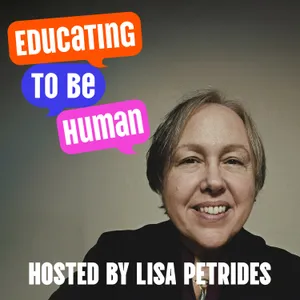
A bi-weekly podcast hosted by Lisa Petrides, CEO and Founder of the Institute for the Study of Knowledge Management in Education (ISKME), "Educating to Be Human" explores what it means to be human in today's evolving cultural and societal landscape. In each episode, Lisa speaks with people whose work addresses the challenges and possibilities of how we might educate and inspire transformative change in modern society, which reaches beyond the traditional classroom. In Season 2, we examine who controls access to knowledge, how learning is accelerated through embodied experiences, and how education is essential for resilience and connection in an evolving world. Think if Big Ideas Fest were a podcast, Educating to Be Human is born from the desire to keep the conversations going and making the knowledge we have gained and stories we've heard accessible to all. By bringing these unique voices into the podcast world, we are furthering ISKME's commitment to make learning and knowledge-sharing participatory, equitable, and open. Educating to be Human is hosted by Lisa Petrides, produced by Helene Theros, recorded by Nathan Sherman, and edited by Ty Mayer. Season 2 music is created by Orestis Koletsos.

Recent Episodes

NOV 10, 2026
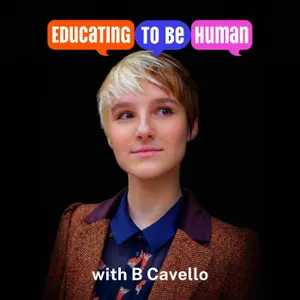
Beyond Big Tech: Why We Need Public AI with B Cavello
In this episode of Educating to be Human, Lisa is joined by B Cavello, Director of Emerging Technologies at Aspen Digital. Lisa and B explore the ideas of Public AI and what it means to innovate and develop technology that is grounded in the needs of our community rather than the interests of Big Tech corporations. Their conversation challenges the narrative of the inevitability of AI, reminding us that in a democracy, we have a say in how AI is built, governed and used – and who it ultimately serves. Public AI is not a single technology or platform, but an approach grounded in three principles: public access, public accountability and sustainability. Lisa and B's conversation explores the risks of concentrating AI development and governance in the hands of a small number of private companies, and offers an alternative more "open" vision in which AI becomes infrastructure that communities can access, shape and rely on. This conversation feels more important than ever; it's one that uplifts and empowers us - the public - with the realization that the choices and decisions we make today truly matter and can actively shape the future of technology, and its impact on us. B Cavello is a technology and facilitation expert passionate about creating social change by empowering everyone to participate in technological and social governance. They serve as director of emerging technologies for Aspen Digital, a program of the Aspen Institute. B also serves as a 2026 Siegel research fellow, as organizer for the Public AI Network, and as a board member to Metagov, an interdisciplinary research nonprofit promoting digital self-governance. Previously they worked assistant program chair for the Neural Information Processing Systems (NeurIPS) Conference, tech policy advisor in the US Congress, program lead at Partnership on AI, senior engagement lead at IBM, and director of product and community Exploding Kittens. Relevant Links: https://www.aspendigital.org/project/amplify-public-ai/ https://www.aspendigital.org/blog/its-not-the-speed-its-the-direction/
38 MIN
OCT 6, 2026
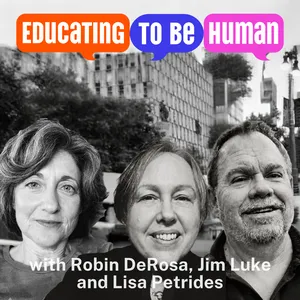
Open Education with Robin DeRosa, Jim Luke and Lisa Petrides
In this episode of Educating to Be Human, Lisa Petrides is joined by Robin DeRosa, executive director of the Open Education Network, and Jim Luke, Professor of Economics (ret.) and founder of Open Learning Lab at Lansing Community College take stock of where open education has been and where it is headed. With decades of experience in Open Education between the three of them, they explore why open education matters, what learners gain when they help shape knowledge rather than simply receive it, and how institutions might change to support that kind of learning. They consider the commons as something people actively do together, and what it takes to care for shared resources in a landscape increasingly shaped by commercial pressures and emerging AI technologies. It's a thoughtful, wide-ranging conversation about the values behind open education: sharing, reciprocity, care, and the public good. It also asks what the movement has gotten right, what it may have gotten wrong, and why the work still matters. Whether you're an educator, a librarian, a student, or simply curious about who gets to access and shape knowledge, this conversation offers plenty to think about. Dr. Robin DeRosa is the Executive Director of the Open Education Network. Based at the University of Minnesota, the OEN is a collective of institutions and consortia that work collaboratively to make higher education more affordable, equitable, and engaging for learners. She has previously worked as a professor of literature and Interdisciplinary Studies, the founder and director of a faculty development center, and as the library director at a public university. Jim Luke is an independent scholar studying the institutional economics of technology, higher education, and of healthcare. He's a retired professor of economics, having taught at a three colleges and universities. He's the author of chapters in Higher Education for Good and Of Many Minds, among other works. He lives in the Detroit, Michigan, USA area.

46 MIN
SEP 22, 2026
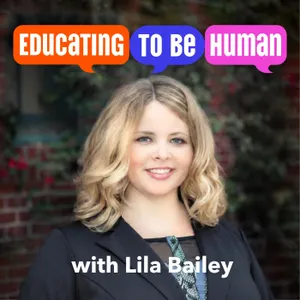
Who Owns Knowledge with Lila Bailey
In this episode of Educating to Be Human, host Lisa Petrides is joined by Lila Bailey, Senior Policy Counsel at the Internet Archive, to explore what it means to truly own something in a digital world, continuing this season's central theme of protecting and preserving open and decentralized access to information and knowledge. Together, they trace how human culture evolved as a communally shared experience - and how modern copyright law and digital gatekeepers have gradually closed off public knowledge, owned and created by the community. Lila unpacks the tension between traditional intellectual property, commercialization, and the foundational human drive to create, share, and remix ideas. Looking toward a more equitable future, Lila calls for efforts towards building public AI infrastructure - toolsets hosted by a diversity of entities such as libraries, schools, and civic institutions - that honor the ideals behind the "open" movement valuing community-built and -shared knowledge and culture. Key Topics Covered The Human Default: Why open sharing and collective culture long predate copyright law. Digital Ownership: How licensing agreements distort what it means to "own" books and media. AI & The Commons: Navigating corporate extraction, reciprocity, and the pushback against Big Tech data harvesting. Public Knowledge Infrastructure: The vital role of memory institutions like the Internet Archive in protecting public data and open source tools. Rebranding "Open": Shifting the conversation away from legal jargon to focus on shared human values, community, and equitable access. Lila Bailey is Senior Policy Counsel for the Internet Archive. A seasoned attorney and copyright expert, Lila leads the library's policy work.
34 MIN