Eye of Power

Tom Dardick

Details

The Eye of Power is a model that answers this question: "What's in the way of me making the positive change I wish to make?" The answer is always the same: it's always us. But it's never simple, especially when we struggle to sustain the new behaviors we desire. The Eye of Power model lights our way. It reveals the specific beliefs and habits that, while they may have served us in the past, now hold us in place. Once we clearly see the blockage, we are better positioned to get past them. And that's what we do - together. In the Eye of Power community, we apply the lessons and clarity of the model to the most pressing priorities we face at this moment of our life journey. It may be gaining a skill or habit that helps us in our role at work. It might be a career change. It could be gaining entrepreneurial skills, or a plan of action to launch some creative endeavor. The model works effectively to make positive changes in our relationships, be they our primary life partnership, or other familial, casual, or professional. And it isn't just about ideas. It's about actions. It's about support. It's about getting real, looking in the mirror, marshaling our spirit, and creating the life we're made to live. When we do this, we make the world around us a much better place. We gain mastery over ourselves so that we can better contribute to everyone around us. That's power. That's the kind of power we talk about in this podcast. And it's the kind of power we work to bring more of into the world. We examine issues through this lens. We talk to people who exemplify the principles embodied in the model. We suggest action items that will move you in a better direction - one where you feel more substantial, more seen, more impactful, and more fulfilled. Who is the podcast for? It's for CEO's, HR Directors, Agency Directors, Business Owners, and people who want to increase the quality of their organizational culture - the emotional connections between the people who work side by side on a shared mission. It's for leaders who want to build and nourish a culture of trust. The system provides tools - a map, a compass, and a flashlight - that helps people do the inner work, the introspection that builds self awareness, needed to make and sustain the positive changes they need to make in order to be their best and highest selves. This means they will better connect, more meaningfully, with a wider range of people to a greater effect. They become more valuable team members. Better leaders. Better able to provide support to others who share their mission. The other side of the coin is you get less in-fighting, less resentment, less playing the blame game. Instead of those negatives, your culture features more engagement, more enthusiasm, more support, better listening, better communication, and an ever-rising culture of trust. This is more and more a challenge in an environment of remote work or hybrid workforces. We must come up with new ways to connect our employees with each other and with the organization. The system of the Eye of Power, when installed at the organizational level, helps leaders with their leadership style - they'll be able to communicate and connect with their direct reports in a more human way - important as we move away from a transactional approach in the workplace to a whole human leadership approach. The pressure from increasing automation driven by accelerating AI capacities puts increasing pressure on leaders to think and act in the human dimension - to treat people with respect to their emotional needs. This means they need, more than ever, high EQ or emotional intelligence, great listening skills and a healthy habit of Active Listening, a way to get to that which holds people back from the actions they know will pay off. The topics we discuss, all circling around the elements of the Eye of Power model, feed these positive qualities. Leaders and anybody who wants to manifest their best selves and serve others as they do s


Recent Episodes

JAN 2, 2026
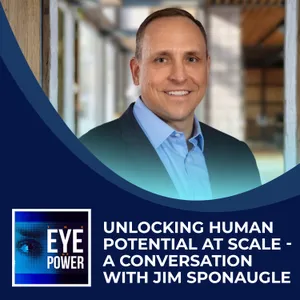
Unlocking Human Potential At Scale - A Conversation With Jim Sponaugle
What does it look like when a Chief People Officer truly understands the business—not just the policies, but the work, the pressures, and the human potential of the people who run it? In this conversation, Tom Dardick sits down with Jim Sponaugle, Chief People Officer at Utz Brands, to explore a fundamentally different approach to people strategy. Jim's is a non-traditional HR path. His experience is built from two decades in operations and P&L leadership. Jim shares how his background in running businesses reframed his view of HR’s role: moving beyond compliance and administration to becoming a genuine driver of strategy, culture, and human potential. Together, Tom and Jim examine what happens when HR leaders deeply understand the business they serve. Jim shares how that understanding allows them to unlock performance, engagement, and fulfillment rather than simply manage risk. Their conversation ranges from: The shift from fixing what’s wrong to cultivating fulfillment and engagement Why moving people from dissatisfaction to neutrality requires different drivers than moving them to full contribution How misalignment between role and strengths quietly erodes engagement—and how leaders can address it early Why focusing on the small portion of work that aligns with passion and strength can transform even difficult jobs The dignity of work, the power of mindset, and the ripple effects of individual contribution The importance of humility, curiosity, and lifelong learning in effective leadership Jim also shares personal practices that support growth and openness, along with candid reflections on what it actually takes to develop people in real organizations, not in theory. This episode will resonate with: Chief People Officers and HR leaders Executives and operators responsible for culture and performance Leaders interested in engagement, fulfillment, and sustainable people strategy Anyone thinking seriously about how organizations can support human growth at scale This is not a conversation about perks or programs. It’s a grounded exploration of what becomes possible when people strategy is treated as a serious business discipline.
46 MIN
DEC 30, 2025
Choosing Not to Hold Back
What happens when insight is no longer the problem? In this episode of The Eye of Power Podcast, Tom Dardick concludes a three-part series on holding back by turning toward the moment that matters most: the point where awareness becomes choice. After exploring how holding back hides in responsibility and discernment and examining the real costs it carries over time in the first two installments of this series, this third and final episode focuses on what it means to stop postponing action under the guise of patience, prudence, or “later.” We do so as a matter of reckoning rather than advice. This episode explores: Why insight without expression creates internal pressure rather than clarity How “later” often becomes a way of managing discomfort instead of exercising agency The difference between chosen restraint and habitual holding back Why momentum stalls when knowing and doing drift apart How agency shows up in ordinary, repeatable moments rather than dramatic gestures What it costs to keep work, ideas, and conviction partially hidden Tom also reflects candidly on the cost of holding back in his own work, including the tension between effort, visibility, and commitment. This episode is therefore less a conclusion and more a line being crossed in real time. This conversation is for people who: Feel capable but constrained Sense they already know what needs to change Are tired of more insight without movement Want alignment between what they see, value, and act on Are navigating leadership, creative work, or personal growth with honesty Choosing Not to Hold Back is not about forcing action or abandoning discernment. It’s about recognizing when restraint has become default and deciding what to do when that realization arrives. Key topics: personal growth • agency • alignment • leadership • self-awareness • holding back • decision-making • purpose • pressure • momentum • fulfillment • creative work • professional development
12 MIN
DEC 23, 2025
The Cost of Holding Back (and What to Do About It)
What does holding back actually cost us over time? In this episode of The Eye of Power Podcast, Tom Dardick continues a three-part series on holding back by exploring its real-life consequences. Not the dramatic kind, but the quieter costs that accumulate slowly and often go unnoticed: reduced energy, blurred clarity, strained connection, and a thinning sense of purpose. Many capable, thoughtful people hold back for good reasons. Discernment, responsibility, and self-control are often rewarded. This happens in families, in organizations, and in leadership roles. But when holding back becomes habitual, it doesn’t stay neutral. It shapes how we show up, how clearly we think, how connected we feel to others, and how meaningful our work becomes. In this episode, Tom reflects on: How holding back quietly drains energy and momentum Why clarity erodes when insight outpaces expression How restraint can turn connection into something procedural rather than alive The subtle way purpose goes quiet when contribution is consistently contained Why these patterns are human, not personal failure And how awareness becomes the starting point for real, lasting change Rather than offering quick fixes or motivational advice, this episode invites a deeper kind of attention. Tom offers a simple, practical experiment listeners can try. This experiment helps reveal the true cost of holding back in everyday moments and opens the door to more aligned action. This conversation is especially relevant for: Leaders and professionals navigating responsibility and self-expression People interested in personal growth, self-awareness, and fulfillment Those exploring agency, alignment, and purpose in work and life Anyone who senses they’re capable of more but isn’t fully bringing it forward The Cost of Holding Back (and What to Do About It) is not about forcing change. It’s about seeing clearly because when we see the cost honestly, the path forward begins to reveal itself. Key topics: personal growth • leadership development • self-awareness • agency • alignment • purpose • energy • clarity • connection • holding back • fulfillment • mindset • professional development
14 MIN