First Time Go

Benjamin Duchek

Details

A weekly podcast highlighting the creators of independent film and the business behind it. Hosted by Ben Duchek.

Recent Episodes

OCT 16, 2026
Filming Your Own War: Alisa Kovalenko, dir. of TRACES (2026), Ukraine's Oscar Nominee
Watch This Episode On YouTube There was intense fighting during America's Global War on Terror era in Iraq and Afghanistan, no question. But it's nothing compared to the sheer horror of what's been going on in Ukraine for years now. Especially with drones playing a ubiquitous role, a better way to think about that particular conflict is modern day World War I. At great personal risk, director Alisa Kovalenko set out to document the war in her films, most recently MY DEAR THEO (2025) and TRACES (2026), the latter of which is Ukraine's Oscar nominee. Along with her co-director Marysia Nikitiuk, the film follows six Ukrainian women survivors of conflict-related sexual violence, torture, and war crimes committed by Russian forces during the full-scale invasion. Besides documenting the war on film, she also served as a soldier defending her country on the frontlines. This is personal, deeply moving filmmaking by an extraordinarily talented director, and by the end, she talks about going back! It is truly incredible how she honors her country. In this episode, Alisa and I talk about: advice for filmmakers on premieres and traveling; earning Ukraine's Oscar nominee for her film TRACES and what people should expect when they watch the film; why documentary filmmaking?; does she feel like a soldier or a filmmaker -- both? what it's like making a documentary in the trenches; how she ensured she got things right the first time in a war documentary; advice for co-directing; how to follow her career and when to see TRACES; what's next for her. Alisa's Indie Film Highlight: I'M NOT EVERYTHING I WANT TO BE (2024) dir. by Klára Tasovská Memorable Quotes: "It's not my first marathon, but it is my craziest marathon." " I was very excited when I knew about that Ukrainian Oscar committee selected "Traces" for Ukrainian entry. But at the same time I felt that, oh, wow, it's even more responsibility." " With all wounds, I learn a lot of things also. And so all wounds actually very valuable for me. They're not only painful." Links: Follow Alisa On Instagram Follow TRACES On Instagram

33 MIN
OCT 9, 2026
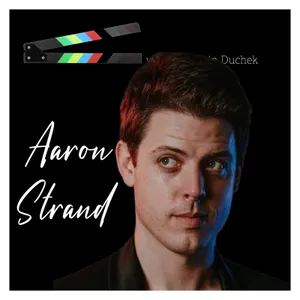
"I Hate Most Addiction Films": How Director Aaron Strand Broke Almost All Of The Rules
We're so accustomed to the tropes of addiction related films. Recovery is inspiration. There's a happy ending. The story is over when your protagonist comes out of therapy. As I listen to this conversation, it even invades how we talk to the directors of films. But my guest today, Aaron Strand, director of the brilliant film WITHDRAWAL (2025), thinks about all of these things differently: he hates addiction films because normally directors try to "inflict pain on people for them to act correctly." He encourages filmmakers to "clean up their side of the street before starting to tell [their] story." The concept of great art only coming from the tortured artist is a lie; stability has given him the ability to make a great film. He went to NYU to study acting and a few years later came out a storyteller with something significant and truly unique to say. Aaron will change how you think about so many things: indie films and their theatrical tours; Slamdance; the money pit of FilmFreeway; how to tell a true addiction story, and a lot more. In this episode, Aaron and I talk about: how a narrative film like WITHDRAWAL helps explain why so many documentaries are going for that feel -- because it's powerful; ensuring a film about trauma didn't cause trauma for the cast and crew; if the story is hard for him to talk about; his description of the film; choices made that showcase class differences in the film; his start studying acting at NYU and if he ever imagined making this film; advice for acting students now; when he knew he was ready to tell this story after ten years, especially after his first feature fizzled out; his thoughts on people tackling difficult subject matters; what he hates about addiction films; the hardest day on set for WITHDRAWAL; his article on Slamdance's Substack about independent film (even though his film didn't get into Slamdance); the film tour for WITHDRAWAL and what projects might not work that way; indie filmmaking with young kids; what's next for him and when WITHDRAWAL will be streaming. Aaron's Indie Film Highlights: A CELL PHONE MOVIE (2025) dir. by Will Sterling; THAT FRIEND (2026) dir. by Will Sterling and Alex Wall; META TAKE ONE (2025) dir. by John Dierre and Ryan Dutter Memorable Quotes: " I would be pretty hard-pressed to explore this subject without being exploitative of the people involved." " I do think that there's value in being open and talking about your past and moments of your past that are not just like the shiny parts that you usually show on social media." " I started working out in the theater world of New York and that was something that was a point of tension at NYU." "Everything about this film emerged from the wreckage of the other one." On FilmFreeway: " I generally consider any sort of offer, anyone reaching out to you to be a scam unless they're gonna give you a full waiver code." " I'm only going to theaters that will give me a ticket split deal." "Certain genres are easier to market than others." Links: Follow Aaron On Instagram Follow WITHDRAWAL On Instagram Aaron's Slamdance Substack Article
55 MIN
OCT 2, 2026
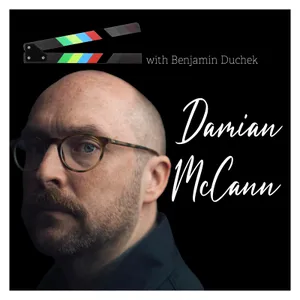
"It's Actually A Sunny Day In Ireland" Damian McCann, director of AONTAS (2025), Ireland's Oscar Pick for 2027
The most Irish friendly film podcast is back with another Irish guest, director Damian McCann, who brings a host of firsts with him -- first Irish language film made in Northern Ireland; first guy to be doing the laundry when he found out that his film, AONTAS (2025), is Ireland's nominee for the 2027 Oscar for Best International Film; and first guy to ask his parents about how to rob a bank and then use that information to make a banger of a heist film. On the last part: maybe. Hopefully. This is fantastic filmmaking that moves the bar foward for original screenwriting; Irish language films; and Irish filmmakers. Here's to hoping we get to hear some Irish at the 2027 Oscars. Damian and I discuss: the weather in the film -- they rent RAIN MACHINES in Ireland?; why it's important that his new film is the first Irish language film made in Northern Ireland; how he got his start in filmmaking; the choice of making an Irish language film; what he took from his first feature and documentary work; the format of reverse chronology; how he researched robbing banks; linking objects to visually tell people about flashbacks instead of text; is there a reverse chronology club of filmmakers who tried this concept? how he found out about Ireland's nomination for the Oscars and what the campaign looks like; the production company he founded to create bilingual films and what's next for him. Damian's Indie Film Highlights: KNEECAP (2024) dir. by Rich Peppiatt; THE QUIET GIRL (2022) dir. by Colm Bairéad; FOUR MOTHERS (2024) dir. by Darren Thornton Memorable Quotes: " It's actually a sunny day in Ireland, which is such a rarity that we are-- you're actually legally not allowed to complain at all throughout the day." " I often say that a lot of Irish speakers will talk this way, that you're an activist first and then your job second." "I just had it in my head that I wanted to make a heist film." "As soon as you start writing [reverse chronology], you realize why people don't do it very often." "The ideal case here is some people hate it and some people love it." "The phone rings, do you fancy the Oscars?" Links: Follow Púca Pictures
32 MIN
SEP 25, 2026
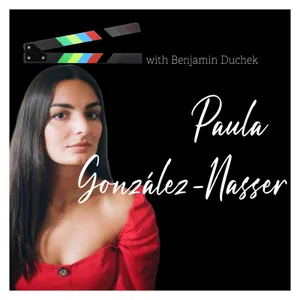
Paula González-Nasser — Six Years Scouting, One Film: THE SCOUT (2025)
Not a pop psychology show, but if it was, I'd explore more with my guest, writer and director Paula González-Nasser of the brilliant film THE SCOUT (2025), how she made her first feature about a job she didn't care for. I can't imagine a scenario where she was working as a location scout, and thought, this is my first feature film. And yet. THE SCOUT works brilliantly as a observational movie about the little seen lives of location scouts, even though their work has an outsized influence on the sets that you see in films. She captures all the little nuances of that life through wide shots and long takes. And she's here to share how she made it happen. Paula and I talk about: the theatrical premiere of THE SCOUT at the Film Forum -- including Q&As on September 25th and September 26th! how she responds to the criticism that the film is slow; how much of her location scouting experience for six years winds up in the film and when she realized the job was her debut feature; the shocking part that the film only worked for her when she stripped out her own personal experience; the unexpected setup required for wide, static, long takes and the incredible work by her DP; how she knew when it worked; why she kept her main character, played by Mimi Davila, away from the supporting cast; the process between its premiere and its theatrical debut; what's next for her. Memorable Quotes: " If the slowness is by design, I hope people can at least understand or appreciate the reasons behind it, even if they don't like it." "I'm so glad that it took me not doing the job anymore and having some distance away from it to really appreciate the job." "I don't think I would have said yes to dinner. That's where I draw the line." "I was very naive in thinking like, "Oh, I could just do these wide shots in the same amount of time." And it's like, no, it requires a lot of setup and lighting and timing and blocking." "This film should be observational almost in the same way that the scout is observing these spaces and the people within these spaces." "My style or my voice, I don't think has changed. If anything, I've really leaned into what I discovered about myself through this film." Links: THE SCOUT at the Film Forum Follow Paula On Instagram
20 MIN
SEP 18, 2026
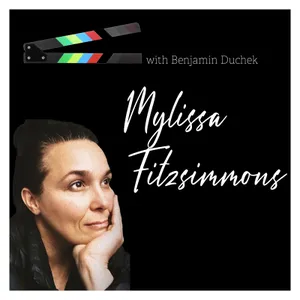
Mylissa Fitzsimmons On Running Away And The Making of MACKENZIE (2026)
My guest today, director Mylissa Fitzsimmons, previously released two features -- EVERYTHING IN THE END (2021) and THE LONG RUN (2025) -- and never got a premiere. She suffered from burnout of the excruciating process of making these brilliant films. And yet: here she is in 2026 with MACKENZIE (2026), opening at Film Fest Oldenburg this year. What does that say about perseverance? Resilience? A never quit attitude and the ability to keep going on even though this is really, really, fucking really hard? I think it says everything. I'm so motivated hearing her story and so excited for the journey of her new film and her renewed love of the art form. Hat tip to the best friend any indie filmmaker can have, Scott Monahan, for making this interview happen. In this episode, Mylissa and I talk about: why Oldenburg? how she's NEVER gotten an opportunity to have a full premiere for her films; what people should expect to see when watching MACKENZIE; why she waited till her third feature to tell her most personal story; the burnout she felt after her first two features; the incredible story in her film EVERYTHING IN THE END; directing actors to not really be actors in THE LONG RUN; where did the motif of running away comes from; the process of working with a non-professional actor as the star of MACKENZIE; why she has ambiguous endings in her films; what's next for her. Mylissa's Indie Film/Filmmaker Highlight: Frank Mosley in JACKRABBIT (2026); Leonora Pitts in I HATE MYSELF AND WANT TO DIE (2024) dir. by J. Davis Memorable Quotes: " So the baby is ready to walk, and we're gonna be there all as proud parents watching." " This kind of moment in childhood that we all have where we realize like the reality of the real world is seeping through the cracks of your childhood innocence and you are growing up." I don't want to have to worry about saying, "hey, I really want you to work on this, but it's a microbudget and I can't really pay you a lot," and then feel guilty and then have them not really be 100% committed." " When MACKENZIE came along, my only goal was like, "hey, I just wanna make a movie and have fun again." "I actually set out to make a movie about people who are lost." " I had worked with kids before, and I know it's like you don't really direct them, they direct you." Links: Follow Mylissa On Instagram
45 MIN