



GALACTIC PROGENY
GALACTIC PROGENY
CR21 X2M.260 Portail
AUG 5, 2026146 MIN
Description
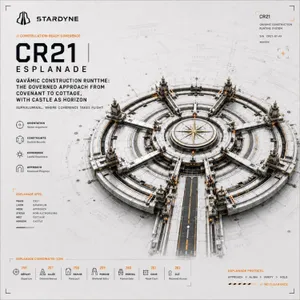
X2M.260 — PORTAIL: The Effectual Door of Habitation
Portail means a portal, gateway, or great door of entrance. It follows Parvis within Esplanade. Parvis purifies trust at the porch; Portail opens the effectual door where the soul crosses from limitation into the Father’s mind. The event begins with watchfulness: the opened door is real, but so are many adversaries. Distraction, isolation, and accusation try to bind the mind at the threshold. Portail answers by returning the mind to the Father’s delight and learning to conquer from rest.¹
Psalm 45 supplies the bridal and royal atmosphere. The King goes forth in meekness, truth, and righteousness; his words are elegant grace; his garments carry the fragrance of suffering love; the bride is summoned to forget former attachments and enter the palace. Portail is not escape from conflict. It is passage into the consciousness of Christ, where contemplation becomes reception and the believer waits for executable wisdom instead of reacting from pressure.²
The worship movement carries this through breath, shalom, and belovedness. Fear dissolves not by frantic battle, but by sitting in Christ’s victory. Bethel then gives the experience its name. Jacob wakes and says the place is the gate of heaven; Jesus tells Nathanael he will see angels ascending and descending upon the Son of Man. Portail identifies the believer and the gathered body as a gate through which love, revelation, mercy, and knowledge pass into the earth.³
The teaching turns to post-exilic habitation. Humanity has lived east of Eden since the first exile, barred from the tree of life until defilement can be healed. David and Moses largely live before or amid exile; the question now is how a person can begin to function from the restored world before the world fully looks restored. Portail names that passage: the metamorphic entrance into a mind able to carry trust, authority, and inheritance without perpetuating the old corruption.
Philemon becomes the practical demonstration. Paul is confined, yet he operates from the age to come. He does not command Philemon, though he could. He appeals as an old man, a friend, and a father. Onesimus, formerly useless and costly, becomes Paul’s own heart, no longer a slave but a beloved brother. Paul’s portal is not theory; it is conduct. He pays the debt, removes the occasion for offense, and asks Philemon to receive Onesimus as he would receive Paul himself.⁴
This is why Portail is also an indemnification event. Christ is the grand indemnifier: the one who takes the debt, wipes the record, and restores the person beyond what consequence alone could imagine. The question is whether those made whole can participate in that mercy for others. Not compulsively, not from resentment, and not by ignoring discernment, but by hearing the Father’s situational wisdom. Some situations require help to the uttermost; others require restraint. Post-exilic judgment does not decide by appearances, but from the Spirit of the Lord.⁵
Portail, then, is the effectual door of habitation. The obstacle becomes the way; limitation becomes the place of metamorphosis; contemplation receives the Father’s mind; and mercy becomes executable in family, conflict, debt, and restoration. Standing at the gate, the believer learns to live as if the Father has truly covered everything. The door is open, the adversaries are not ultimate, and the house of the Father begins to pass through a people who can receive forgiveness, forgive one another, and become epistles to be read.
⸻
Glorification | The Final Frontier
Decrease time over target:
Venmo / PayPal @clastronaut
Cash App $clastronaut
⸻
¹ 1 Cor. 16:9; Prov. 16:7; Rom. 12:21.
² Ps. 45:1–17; 1 Cor. 2:9–16; Phil. 2:5–11.
³ Gen. 28:10–19; John 1:47–51; 2 Cor. 3:17–18.
⁴ Phlm. 1–21; Eph. 4:7–10; 2 Cor. 12:1–10.
⁵ Isa. 11:1–5; John 14:1–6; Luke 5:12–16.