



Good Is In The Details
Gwendolyn Dolske, PhD & Rudy Salo | Philosophy & Education Podcast
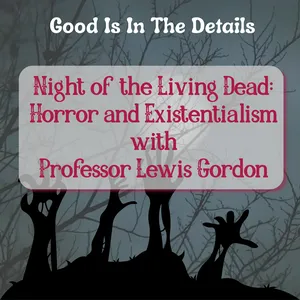
Night of the Living Dead (1968) and Existentialism: Horror, Absurdity, and Art
OCT 30, 202650 MIN
Description
A farmhouse. A cellar. A growing horde outside. What does George Romero's Night of the Living Dead (1968) have to say about despair, freedom, and what it means to grow up?
In this episode, we're joined by philosopher Lewis Gordon (University of Connecticut) for a philosophical analysis of the original zombie classic. We dig into the film's nihilistic horror, its existential dread, and the absurdity of trying to make meaning when the world offers none. Along the way, we bring in the thinkers who help illuminate it: Schopenhauer, Simone de Beauvoir, and Simone Weil.
We also explore:
The psychoanalytic reading: the cellar as womb, the outside as life, and the unavoidable truth that to live is to face death. At some point, we must become adults and go outside.
Limitation as creativity: how a tiny budget shaped the film's haunting look and feel.
That ending: why, according to Professor Gordon, it transforms the film from horror into a work of art.
Perfect for fans of philosophy of film, horror, and existentialism, and for anyone who's ever wondered why zombies still haunt us.
GoodIsInTheDetails.com
Learn more about Professor Gordon's work
Get your "Contemplation Mode On" mug
Join our Patreon: Patreon.com/GoodIsInTheDetails
Check out Dolske's favorite mystery/thriller books.