Growth Talks: Growth Marketing Strategies & Insights

Right Side Up

Details

Sit down with growth leaders and marketing executives from leading brands and companies across industries and stages. From exploring the evolution of growth marketing to walking the tightrope between brand and performance marketing to the epic saga of launching an ecommerce brand—we'll dig into it all! Our guests will share their wins and war stories, and arm you with actionable insights on how to craft best-in-class strategies, execute with efficiency, and build your dream team. Growth Talks is brought to you by Right Side Up and hosted by Krystina Rubino, general manager of offline services.

Recent Episodes

OCT 13, 2026
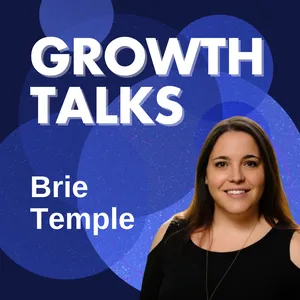
How to Grow a Managed Marketplace Without Losing Trust | Brie Temple (Tawkify)
In this episode of Growth Talks, Brie Temple, Chief Commercial Officer and Chief Matchmaker at Tawkify, joins host Tyler Elliston, CEO and founder of Right Side Up, to share what it takes to grow a curated, closed marketplace where human judgment is the product. She explains how Tawkify balances both sides of a high-stakes match, protects its quality bar as its network grows, and uses feedback after every date to refine the process. Brie also breaks down how Tawkify markets a service people are often discreet about, why lifetime value works differently in a business built to succeed itself out of a customer, and how the team is launching a lower-touch product to make matchmaking more accessible without compromising the human element that makes it work. 🗝️ Key Takeaways: Curation is the value proposition: A closed marketplace only works if the quality bar holds. Screen everyone who enters, and be willing to refund and part ways when you can't deliver. Human feedback is a competitive advantage: Honest, loving feedback after every match is something an app can't replicate. Every iteration sharpens the next match and helps clients understand what they actually need. Rethink lifetime value: When success means a client no longer needs you, renewals matter less. Focus on adding value within the customer's journey instead of extending it. Marketing around privacy takes creativity: When happy customers stay quiet, lean on discretion, standout testimonials, and the transformation story, not just the wedding announcement. Productize without losing your core: To reach new audiences at a lower price point, pool support and streamline the experience while preserving the curation and privacy people trust you for. ⏰ Timestamps 00:03 - Introduction to Tawkify and matchmaking 01:32 - How matchmaking works and why it's resurging 03:29 - Growing the network vs. protecting the quality bar 05:53 - Defining success for members vs. matchmaker clients 08:24 - The value of honest feedback in dating 12:02 - Why a closed network beats an app model 13:14 - Core anchors in romantic matchmaking 16:54 - Where human judgment matters most 17:44 - Channel mix and customer acquisition 20:10 - Testimonials, privacy, and stigma 24:47 - The impact of helping both sides of the marketplace 26:30 - Reaching the right customer at the right moment 28:51 - The A/B Test 30:43 - Do opposites really attract? 35:00 - Launching a lower-touch product without losing the brand 41:47 - Industry trends and the future of matchmaking 🔗 Mentioned in this episode: Tawkify: https://www.tawkify.com/ We'll be dropping episodes every other week. Want to follow along and listen to new episodes when they're released? Subscribe to Growth Talks on YouTube or wherever you get your podcasts.

42 MIN
SEP 29, 2026
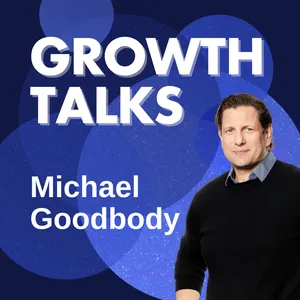
Why Trust Is FinTech's Most Underrated Growth Lever | Michael Goodbody (Robinhood, Dave, Credit Karma)
In this episode of Growth Talks, Michael Goodbody, a CEO, CMO, and FinTech growth leader, joins Right Side Up's Krystina Rubino to unpack more than 15 years spent scaling companies like Robinhood, Dave, and Credit Karma from early-stage startups into household names. He breaks down how to diagnose whether a growth problem is really a performance problem, a brand problem, or a trust problem, and why getting that diagnosis right determines everything that comes next. Michael also shares how he proved that brand sponsorships drive measurable revenue at Robinhood, why financial decisions require convincing both the "rational" and "irrational" brain, and how his view of marketing has evolved as he steps into the CEO seat of a new AI-era startup. 🗝️ Key Takeaways: Brand and performance aren't competing budgets, they're multipliers. Strong brand trust makes every performance dollar convert better; skipping the foundational layers just grows your competitors' demand capture. Speak to stakeholders in their own language. Technical, data-driven leadership teams buy into brand investment when it's framed as a testable, measurable component of a larger marketing algorithm, not a creative leap of faith. Trust can be tested like anything else. Michael's Washington Wizards sponsorship at Robinhood used a match-market test to trace a clear, laggy path from awareness to trust to subscription growth. FinTech decisions require both brains. Rational benefits win the "monkey brain," but urgency and emotional trust are what get the "lizard brain" to actually click. AI gets you to "okay" fast, but humans are needed for "great." The real leadership skill now is knowing which 10% of the work still demands an A+ and protecting the time to get there. ⏰ Timestamps 00:00 Michael Goodbody's Journey from Robinhood to FinTech CEO 02:10 Diagnosing Growth Constraints: Performance, Brand, or Trust? 05:18 Translating Brand Value for Data-Driven Leadership Teams 09:16 Marketing as an Algorithm: Why the CFO Is Your Best Partner 14:22 Where Brand Actually Shows Up in the Funnel 16:57 Case Study: The Washington Wizards Sponsorship Test 23:29 Proving the Trust-to-Revenue Cascade 25:53 What Marketers Get Wrong About Consumer Behavior in FinTech 27:53 The "Monkey Brain" vs. the "Lizard Brain" 32:34 Balancing Brand and Acquisition 37:14 Winning Over Every Internal Stakeholder, Not Just the Loudest 38:14 The A/B Test 45:14 From CMO to CEO: Building a New Company in the AI Era 47:26 Does Every Startup Still Need a Traditional Marketing Team? 52:50 The "Okay" Trap: Where AI Falls Short of Great 58:24 Why Humans Are Starting to Tune Out AI-Sounding Content 1:07:39 Michael's Favorite Growth Non-Hack: Building and Unblocking Great Teams 🔗 Mentioned in this episode: Robinhood: https://robinhood.com/ Dave: https://www.dave.com/ Credit Karma: https://www.creditkarma.com/ Wise: https://wise.com/ SoFi: https://www.sofi.com/ We'll be dropping episodes every other week. Want to follow along and listen to new episodes when they're released? Subscribe to Growth Talks on YouTube or wherever you get your podcasts.

64 MIN
SEP 15, 2026
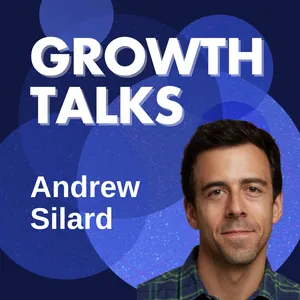
How to Build a Growth Engine That Scales in the AI Era | Andrew Silard (Grove, Notion, Maven)
In this episode of Growth Talks, Andrew Silard, fractional head of growth and advisor to companies including Maven Clinic, OpenRouter, Just AI, and Appy, joins Right Side Up Founder and host Tyler Elliston to unpack the growth lessons from his time leading growth marketing at Notion and Grove. He breaks down the critical shift from exploration to exploitation, why spreading your budget too thin across channels can quietly stall growth, and how the "spike test" can reveal whether a channel is actually worth doubling down on. Andrew also shares how AI is reshaping marketing teams in real time—from Slack-based AI agents to the risks of vibe-coded prototypes that never scale—and offers a practical framework for CMOs deciding when to build AI tools in-house versus buy point solutions. 🗝️ Key Takeaways: Exploration and exploitation require different skills. The scrappy experimentation that gets you to product-market fit can actually work against you once it's time to scale and focus. Run a spike test before you commit. Pushing 5–10x more investment into a channel for a short burst reveals whether your product-channel fit is real or illusory. Segmentation is a growth unlock, not a nice-to-have. Getting precise about who you're solving a problem for sharpens positioning and turns loose product-market fit into tight product-market fit. Marketing's job is to be the voice of the customer. Pairing quantitative data with real customer conversations builds the credibility to influence the rest of the organization. AI adoption in marketing is still early. The biggest near-term wins are Slack-based AI agents and a centralized "context brain"—not fully AI-native teams. ⏰ Timestamps 00:00 Welcome & Introducing Andrew Silard 00:50 Building Growth Across Startups: Lessons from Notion and Grove 01:20 Exploration vs. Exploitation: The Two Phases of Growth 05:09 Signs You're Stuck in Exploration Mode 07:53 The Spike Test: Validating Product-Channel Fit 16:55 Understanding Marginal CAC and Incrementality 18:13 Segmentation, Positioning, and Go-to-Market Strategy 24:49 Marketing as the Voice of the Customer 28:15 Where AI Is (and Isn't) Delivering Value in Marketing 32:16 AI Agents in Slack and the Rise of Devin 36:22 Building an AI-Native Marketing Team: Buy vs. Build 41:19 Should Growth Teams Go All-In on AI? 44:14 A/B Test 45:38 Growth Strategy in 2026: Efficiency vs. Growth 48:59 Building Early-Stage Marketing Teams in the AI Era 🔗 Mentioned in this episode: Notion: https://www.notion.com/ Grove Collaborative: https://www.grove.co/ Maven Clinic: https://www.mavenclinic.com/ OpenRouter: https://openrouter.ai/ Reforge: https://www.reforge.com/ Cognition (Devin): https://www.cognition.ai/ We'll be dropping episodes every other week. Want to follow along and listen to new episodes when they're released? Subscribe to Growth Talks on YouTube or wherever you get your podcasts.
45 MIN
SEP 1, 2026
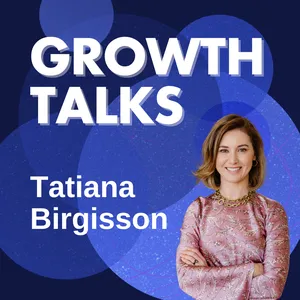
The Stacked S-Curve Playbook for Sustained Growth | Tatiana Birgisson (Serval, Rippling)
In this episode of Growth Talks, Tatiana Birgisson, COO at Serval, the AI-native enterprise service management platform, joins host Krystina Rubino to unpack the mental models that have carried her from founding a beverage company out of her dorm room to scaling go-to-market at Rippling to building an entire function from scratch in a category that barely exists yet. Tatiana breaks down her "stacked S curves" framework for sustaining growth, explains why executional excellence is the only way to know when a channel is really fizzling out, and shares how Serval discovered it had less than 1% visibility in LLM search results—and what they did to fix it. 🗝️ Key Takeaways: Growth isn't one curve, it's many. The best growth leaders launch the next channel before the current one peaks—waiting for the metrics to soften means you're already too late. Executional excellence comes before diagnosis. You can't tell if a channel is truly maturing until you've ruled out that you're just running it poorly. LLM visibility is the new SEO. Serval found they had under 1% visibility for their core terms in AI search tools—and treated it as a wake-up call, not a footnote. Management is changing. Fewer standing meetings, fewer layers, more "super ICs"—the best managers are still doing the hardest work themselves, not just coordinating it. Judgment beats hours. In an AI-native world, the edge goes to whoever can spot the highest-priority problem and apply exceptional taste—a skill Tatiana has seen consistently in parents. ⏰ Timestamps 00:00 Introduction with Krystina Rubino 01:25 From Founder to Operator: Lessons from Mati Energy 06:58 Building Rippling's Cross-Sell Function from Scratch 14:54 The Stacked S Curve Model, Explained 17:41 Knowing When a Channel Is Really Peaking 20:37 Defending New Bets to a Skeptical CFO 22:50 Why Serval Bet on LLM Search Over Google 30:22 The A/B Test 37:24 Unlearning "Professional Management" 44:42 GTM Strategy that Cuts through the AI Noise 46:49 Why Parents Make Great Operators in the AI Era 55:09 Tatiana's Favorite Growth Non-Hack 🔗 Mentioned in this episode: Serval: https://www.getserval.com/Rippling: https://www.rippling.com/ We'll be dropping episodes every other week. Want to follow along and listen to new episodes when they're released? Subscribe to Growth Talks on YouTube or wherever you get your podcasts.
54 MIN
AUG 18, 2026
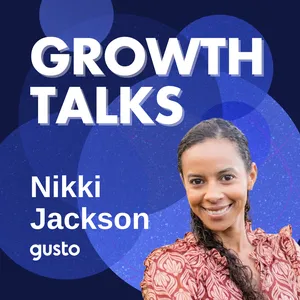
Building AI Fluency, One Uncomfortable Step at a Time | Nikki Jackson (Gusto)
In this episode of Growth Talks, Nikki Jackson, Head of Demand Generation at Gusto, joins host Krystina Rubino to share how she's spent the past year building AI fluency across her entire team—from scrappy, self-taught agent building to structured Learning Days and quarterly OKRs. Nikki breaks down exactly how she got a whole demand gen team comfortable experimenting, failing, and sharing in public, and why that discomfort is the real unlock. Nikki also digs into how she measures the ROI of AI adoption, how she's using Claude as a "second brain" to move faster with data, and why staying customer-first and authentic matters more than ever in a world full of AI-generated noise. She closes with a candid take on women, AI, and marketing leadership—and why nobody actually has it all figured out. 🗝️ Key Takeaways: Lean into the uncomfortable. Real AI fluency comes from hands-on building and failing in public—not waiting until you feel ready. Structure accelerates adoption. Dedicated AI Learning Days, IT/security onboarding, and quarterly agent-building OKRs turned curiosity into consistent team-wide progress. ROI isn't as fuzzy as it feels. Time savings and efficiency gains from AI agents can be tracked concretely—don't let "it's hard to measure" become a blocker. AI is a second brain, not a replacement. Conversational access to data frees up strategic time and elevates conversations with analysts instead of eliminating them. Authenticity is the differentiator. As AI content scales, a distinct voice and point of view—especially for women in marketing—become the real competitive edge. ⏰ Timestamps 00:00 Meet Nikki Jackson: Building AI Fluency at Gusto 01:02 How Nikki's AI Journey Started 03:34 Structuring a Team-Wide AI Rollout 07:24 Clearing IT and Security Hurdles 08:46 AI Learning Days in Action 09:56 Quarterly Agent-Building OKRs 12:07 Measuring the ROI of AI Fluency 16:10 Building a Prioritization Rubric with AI 19:04 AI as a Second Brain for Data 23:27 The A/B Test: Nikki's Quick-Fire Round 29:42 Women, AI, and Marketing Leadership 34:57 Staying Authentic Amid AI Slop 39:40 Marketing to Busy SMB Owners 44:44 Brand Storytelling at Gusto 46:16 Creating Demand Before the Search Begins 50:48 Nikki's Favorite Growth Non-Hack 🔗 Mentioned in this episode: Gusto: https://gusto.com/ We'll be dropping episodes every other week. Want to follow along and listen to new episodes when they're released? Subscribe to Growth Talks on YouTube or wherever you get your podcasts.
47 MIN