No need for Prince Charming

Alisha Burns

Details

The podcast for all Australian women considering, creating or conquering life as a solo mum by choice (SMBC)

Recent Episodes

NOV 2, 2026
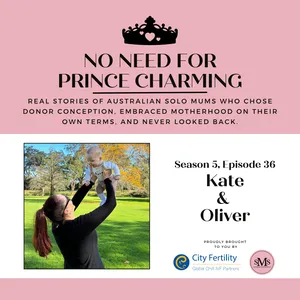
S5:E36 - Kate & Oliver
Kate was 39, grieving her dad, and finally certain. She’d spent three years in a COVID relationship, lost her father to cancer, watched her partner lose his dad, and felt the whole thing quietly unravel. When it did, the clarity was instant: she rang Melbourne IVF two months before her 40th birthday. What followed was ICSI, 13 eggs retrieved, a failed first transfer, a natural frozen cycle that worked — and then the worst hyperemesis gravidarum her obstetrician had ever seen. Kate was on 13 tablets a day, had IV fluids at home, missed most of a school term, and spent the first trimester in what she describes honestly as anxiety and depression. Her baby was perfectly healthy. She wasn’t, and she talks about it without filters. She also talks about the C-section she loved (favourite song, saw the placenta, best part of the whole process), the Airbnb-for-mum postpartum hack, the triple feeding she stopped at three months, and Oliver Ian — 11 months old, named for her nan Olive and her dad Ian. Trigger warnings: Hyperemesis gravidarum; mental health impact during pregnancy (anxiety, depression); pregnancy movement scare (resolved). In this episode: Grief as the catalyst that made everything clear Choosing Melbourne IVF and Dr Kate Stern ICSI at 40 — why Kate went straight there The pre-op cubicle moment (feeling dad and nan) 13 eggs, failed first transfer, natural frozen cycle Hyperemesis gravidarum — the honest account Elective C-section at Francis Perry Hospital The Airbnb-for-mum postpartum solution Triple feeding, formula feeding, and enormous relief Oliver Ian: three generations in a name Frozen embryos — the home freezer decision Why Kate decided one child is exactly right for her life This episode is brought to you by City Fertility Exploring fertility treatment as a solo mum in Australia? City Fertility offers an exclusive 20% discount for No Need for Prince Charming listeners. Claim your discount here. Still considering whether this path is right for you? The Considering Solo Motherhood course helps you make an informed, empowered decision — and understand what the process actually looks like before you start. Live or on demand, from anywhere in the world. Learn more here.
69 MIN
OCT 26, 2026
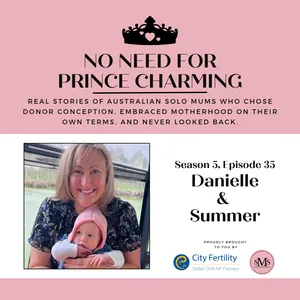
S5:E35 - Danielle & Summer
Danielle spent a year travelling solo around Australia in a campervan — her “year of summer” — using the time and the open road to work out whether she was ready to become a solo mum. Now she’s the mum of six-month-old Summer, and she couldn’t be happier. In this episode, Danielle shares her journey from hopeless romantic to intentional solo mum: setting a cutoff age of 35, freezing her eggs at 34, navigating interstate treatment from Tasmania to Melbourne, a chemical pregnancy on her first IUI, a C-section at 38 weeks with her sister by her side, and the moment everything shifted. She also covers some of the practical side: accessing superannuation for fertility costs, choosing a local Australian donor for regulatory and identity reasons, and what it’s like to build a solo mum community in a small state. And her message to Summer, recorded when Summer was just six months old, is not to be missed. Trigger note: This episode includes mention of a chemical pregnancy. This episode is brought to you by City Fertility Exploring fertility treatment as a solo mum in Australia? City Fertility offers an exclusive 20% discount for No Need for Prince Charming listeners. Claim your discount here. Still considering whether this path is right for you? The Considering Solo Motherhood course helps you make an informed, empowered decision — and understand what the process actually looks like before you start. Live or on demand, from anywhere in the world. Learn more here.
49 MIN
OCT 19, 2026
S5:E34 | Surrogacy in Australia for Solo Mums — with Sarah Jefford, Family Creation Lawyer
Surrogacy is legal in Australia. Most people don’t know that. This week I’m joined by Sarah Jefford — family creation lawyer, egg donor, and surrogate — who has spent the last decade working exclusively in family creation law. No divorces, no custody battles. Just helping people build their families in all the different ways that looks like today. She’s based in Melbourne, works nationally, and has both donated her eggs and carried a baby as a surrogate for a gay couple she met through Facebook. This episode is for any solo mum who has been on a long fertility journey and is now wondering whether surrogacy is the next option — or for anyone who has thought about being a surrogate themselves. Sarah explains how surrogacy actually works in Australia, why it’s so hard to find a surrogate, what you can and can’t legally pay for, how the legal process after birth works (and why it’s more complicated than it sounds), and how to share your story online without falling foul of the no-advertising laws. She also covers overseas surrogacy — including which states make it illegal for their residents to pursue it commercially overseas, and what happens when you bring a baby back to Australia. The numbers are sobering: fewer than 100 surrogacy births happen in Australia each year. Over 350 Australian children are born via international surrogacy annually. The laws haven’t kept pace with how people actually find each other — which is Facebook — and there are no agencies to help match surrogates with intended parents. But it does happen. Regularly. And the advice from someone who has done it — both as a surrogate and as a lawyer — is simply: build community, share your story, make connections. Your surrogate might already be in your orbit. In this episode: How Sarah went from divorce law to family creation law — via IVF, egg donation, and surrogacy What gestational surrogacy (using a donor egg and embryo) versus traditional surrogacy (surrogate’s own egg) actually means Why altruistic surrogacy laws limit the number of women willing to put their hands up — and what intended parents can legally cover Lost income, medical expenses, maternity clothing, acupuncture, lawn mowing — what expenses are covered and what aren’t The post-birth legal process: parentage orders, birth certificates, and what it means that the surrogate is always initially the legal parent State by state: why Victorian surrogacy must occur in a Victorian clinic, why Tasmania requires a Tasmanian surrogate, and why national laws are long overdue The advertising prohibition — and how to share your story without technically advertising Overseas surrogacy: which states prohibit their residents from commercial surrogacy overseas, and the complexity of bringing a baby home How to find a surrogate: Facebook communities, state-based groups, your beautician What the Big Conversations list is and why intended parents and surrogates need to work through it before they begin Pregnancy termination, vaccination, circumcision, home birth — the conversations that need to happen before conception Centrelink and paid parental leave for both surrogates and intended parents What it was actually like for Sarah to carry a baby for someone else, and what she’d say to someone thinking about doing the same Resources: Sarah Jefford’s website Preparing for Surrogacy The surrogacy process in Australia So you want to be a surrogate Key Takeaways Surrogacy is legal in Australia — but finding a surrogate is genuinely difficult, and most are found through social media or existing relationships You cannot advertise for a surrogate, but you can share your story — there is an important distinction What intended parents can cover: medical expenses, counselling, legal fees, lost income, maternity clothing, pregnancy-related allied health, domestic help. What they can’t cover: a profit or payment above actual expenses The surrogate is the legal parent unti
50 MIN
OCT 12, 2026
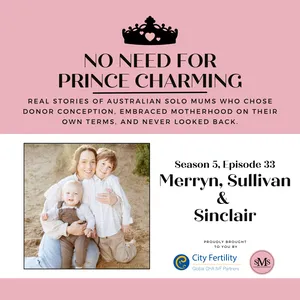
S5:E33 - Merry, Sullivan & Sinclair
She does both, and solo is easier. Merryn grew up thinking life would look a certain way. Her parents together, her aunties and uncles together, everyone partnered, everyone staying. She figured the same would happen for her. She spent her 20s travelling Europe, living in Perth, playing football, nursing, having classic terrible dating stories. She moved back to Victoria at 30, booked a fertility check just to see where things stood, and met someone through a friend from work. She thought she’d finally got it right. Two weeks after her son Sully was born, her best friend took her for a walk and told her she’d been contacted by the ex. It turned out Merryn’s partner had been regularly visiting his ex-girlfriend during night shifts and coming home to her while she was pregnant. She kicked him out. She tried to make it work for Sully’s sake. She eventually couldn’t. By the time Sully was 18 months, Merryn had gone back to the fertility clinic. She did two IUIs that didn’t work, then IVF — 22 eggs at 36 and a half, eight embryos. First frozen transfer. Positive. What followed was a pregnancy that started beautifully and got complicated — placenta previa diagnosed at 20 weeks, a bleed at 25 weeks, waters breaking at 33 weeks, and then at 36 weeks an emergency caesarean under general anaesthetic for a placental abruption. Sinclair came out at 2.4 kilograms. Merryn’s best friend was in the waiting room because they couldn’t have a support person under general anaesthetic. Sinclair spent three days in NICU, Merryn got a hotel near the hospital so she could feed him every four hours, and they went home. He is now 19 months old, platinum blonde, cheeky, a watcher, doesn’t talk much but is doing things the whole time. The Dennis the Menace of the family. Merryn is now 20 weeks pregnant with a girl — same donor, same clinic, first transfer again. Sully is six and has strong opinions about gender reveals. Sinclair has no idea what’s coming and is currently learning not to hit babies. And two months ago, Merryn moved into a duplex she built next door to another solo mum. Shared backyard, no fence, kids running free, baby monitor working across the wall, dropping each other’s kids at school, nipping to the shops while the other one watches them. Six weeks in and she says it’s already a game changer. She also does both — co-parenting Sully with his dad, and raising Sinclair and her daughter on her own. And she says, unprompted and clearly: solo is easier. In this episode: Travelling, nursing, Perth, football — and a decade of dating that never led anywhere serious Getting a fertility check at 31 out of curiosity — not yet ready to go solo Meeting someone through a colleague, getting accidentally pregnant with Sully at 32, and thinking she’d finally got her life plan back on track Finding out two weeks postpartum that her partner had been sleeping with his ex throughout the pregnancy Staying civil for Sully’s sake and the strength that took — then finding her feet as a solo mum Going back to the clinic when Sully was 18 months old: two failed IUIs, then IVF at 36 with Dr David Wilkinson at City Fertility 22 eggs, 8 embryos, a first frozen transfer that worked Placenta previa at 20 weeks, a bleed at 25 weeks, waters breaking at 33 weeks and then an emergency caesarean with general anaesthetic at 36+4 Her best friend waiting outside the theatre — and getting Sinclair’s first cuddle because Merryn couldn’t Three days in NICU, a hotel near the hospital, and coming home Sinclair at 19 months: platinum blonde, a watcher, the Dennis the Menace stage Telling Sully about donor conception — “you’ve got a dad, this one’s got a donor” — and him accepting it completely because his best friend’s family looks similar Going back for number three — same donor, same clinic, first transfer, 20 weeks pregnant with a girl What it’s actually like to do both — co-parenting Sully and solo-parenting the younger two Building a

61 MIN
OCT 5, 2026
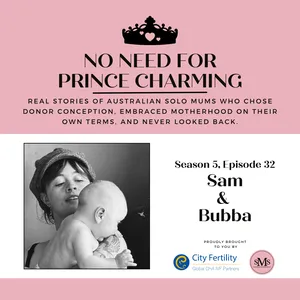
S5:E32 - Sam & Bubba
She always knew Sam walked into a fertility clinic at 24 with her friend as her fake partner, because she assumed single women weren't allowed to do this alone. When the counsellor handed her a booklet with a section on solo mums, she had a quiet revelation: she didn't need to pretend anything. She went on the donor waitlist that day. Then she waited three years. Sam is an emergency department nurse in Canterbury, New Zealand, who grew up in a family with a cycle of difficult relationships and decided early that the best thing she could do for herself — and for a future child — was to do it differently. When she realised donor conception meant she could have a baby without any of that cycle attached to it, she felt, as she describes it, delighted. She was 28 when she finally got the call that a donor was available. She was 29 when she fell pregnant — on her first frozen transfer, the one she called the Easter transfer, the favourite egg that ever existed. She named him Dandy Lion while he was still in her uterus, because dandelions are resilient and they symbolise the sun, moon, and stars. She did her injection in the back of an ambulance. She showed everyone at work a weekly ultrasound. She threw herself a gender reveal party in the emergency department with blue lollies and a balloon pop. She found out she was pregnant on Mother's Day. Her son is now eight months old. Sam recently got back from Fiji — terrible weather, little shacks in the middle of nowhere, best memories she's ever made. She’s found a beautiful Canterbury solo mum community from a Facebook post. She goes to the Solo Mum Society book club at one in the morning NZ time. She's one and only, by choice, and completely at peace with it. This is one of the most joyful episodes I've recorded in five seasons. In this episode: Growing up in a family with a difficult relationship pattern — and deciding to break the cycle Walking into a fertility clinic at 24 with a fake partner because she thought single women couldn't do it alone Going on the NZ donor waitlist at 24, expecting a two-year wait — and waiting over three years Choosing a donor in New Zealand based on why he donated and openness to early contact IVF at 28-29: doing injections between ambulance shifts, finding the whole process genuinely fascinating A fresh transfer that didn't work, then the Easter frozen transfer that became Bubba Finding out she was pregnant on Mother's Day — doing a home test and planning it that way Pregnancy as an emergency department nurse: telling colleagues early for safety reasons, the whole ward adopting him as the ward baby, weekly ultrasounds for the team Pre-labour rupture of membranes at 39 weeks — going in terrified, having the most incredible birth experience Pulling Bubba onto her chest herself and cutting his cord The triple feeding plan in the first weeks — and why breastfeeding was harder than she expected Coming home to just the two of them in a thunderstorm — what the NZ system looks like (Plunket, midwife for 6 weeks, Plunketline) Finding a Canterbury solo mum community via a Facebook post — now she attends monthly meetups The SMS Facebook group, book club, and SMS Membership that filled the gap Being blindsided by how much the village disappears after discharge — the loneliness nobody warns you about Fiji at seven months — terrible weather, magic memories, and why his childhood is her motherhood Choosing to be one and only — and the beautiful logic of treasuring every moment because it only happens once What she says to him every night — and what she'd tell anyone considering this path Key Takeaways You don't have to be certain to start — in New Zealand, you can go on the donor waitlist and stay on it without committing to anything, because it can take years Shift work and IVF can work together — let your clinic know your schedule and they'll accommodate; Sam's clinic moved her to 11am appointments so she could
39 MIN