


Normal Curves: Sexy Science, Serious Statistics
Regina Nuzzo and Kristin Sainani
Researching Honesty Part 2: Can innocent mistakes explain the data?
NOV 2, 202672 MIN
Description
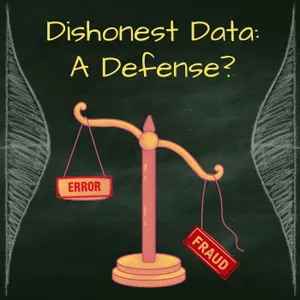
Does cheating make you more creative? A provocative study from Harvard Business School suggested that it does. But data detectives uncovered suspicious patterns in the results, and a Harvard investigation found even more troubling changes in the data. In Part 2 of our investigation into the Francesca Gino research misconduct case, we dig into the now-retracted “Evil Genius” study and the suspicious changes that made its results look better, then turn to Harvard law professor Lawrence Lessig's defense of Gino: Could innocent mistakes by “an army of research assistants” explain what happened? Along the way, we explore the trap of circular reasoning in statistics, why good data management matters, and how much responsibility researchers bear for their data even when it's out of their hands.
Statistical topics
Statistical sleuthing
Data forensics
Data integrity
Data cleaning
Data management
Reproducibility
Statistical significance
Spreadsheets
Predictor variables
Outcome variables
Circular reasoning
Research misconduct
Methodologic Morals
“You cannot define your predictor variable using your outcome variable.”
“If it takes an army of research assistants to clean your data, you're probably doing something wrong and maybe you need a statistician.”
“Being too smart to commit stupid fraud is not a defense. Smart people do stupid things all the time.”
“The more hoops your explanation has to jump through, the less convincing it becomes.”
References
Gino F, Wiltermuth SS. Evil genius? How dishonesty can lead to greater creativity. Psychol Sci. 2014;25(4):973-981. Retracted. doi:10.1177/0956797614520714
Retraction notice: Evil genius? How dishonesty can lead to greater creativity. Psychol Sci. 2023;34(8):947. doi:10.1177/09567976231187595
Simonsohn U, Simmons JP, Nelson LD. Data falsificada (part 3): “The cheaters are out of order.” Data Colada. June 23, 2023. https://datacolada.org/111
Simonsohn U, Simmons JP, Nelson LD. Exhibits 3, 4, and 5. Data Colada. September 16, 2023. https://datacolada.org/114
Simmons JP. Harvard's Gino report reveals how a dataset was altered. Data Colada. July 9, 2024. https://datacolada.org/118
Lessig L. The Gino Case. Website and podcast series presenting arguments challenging Harvard's research misconduct findings. https://theginocase.info/
Simonsohn U, Simmons JP, Nelson LD. Data Falsificada. ResearchBox. Research data, analysis code, and supporting materials accompanying the Data Colada investigations. https://researchbox.org/1630.34
Harvard Business School. Investigative report concerning allegations of research misconduct involving Francesca Gino. Harvard Business School Research Integrity Investigation Report. 2023. Accessed October 18, 2026. https://datacolada.org/wp-content/uploads/Harvard-Report-on-Gino.pdf
Kristin and Regina’s online courses:
Demystifying Data: A Modern Approach to Statistical Understanding
Clinical Trials: Design, Strategy, and Analysis
Medical Statistics Certificate Program
Writing in the Sciences
Epidemiology and Clinical Research Graduate Certificate Program
Program that Kristin teaches in::
Epidemiology and Clinical Research Graduate Certificate Program
Kristin’s manuscript writing course:
https://instats.org/seminar/from-data-to-discussion-writing-a-scient
Find us on:
Kristin - LinkedIn & Twitter/X
Regina - LinkedIn & ReginaNuzzo.com
(00:00) - Intro
(06:50) - The Claim: Superstars and Fraud
(08:09) - Lessig’s Army of Research Assistants
(22:15) - Sorted Data and 13 Suspicious Values
(27:32) - Harvard’s Recovered Files from Gino’s Laptop
(30:30) - Twelve People Reclassified as Cheaters
(34:01) - Four RAT Totals That Don’t Add Up
(45:25) - Lessig’s Research Assistant Theory
(49:03) - Circular Logic and the Googling Defense
(01:04:39) - Where the Evidence Leaves Us
(01:07:18) - Rating the Claim
(01:09:38) - Methodological Morals