PowettPlay Podcast

Jordan Shannon

Details

Join Jordan Shannon & Kieran Powell from the Powett Elite Group accompanied by guests from across the cricketing and business world. We talk all things cricket and the business around the ever evolving game we love.

Recent Episodes

OCT 21, 2026
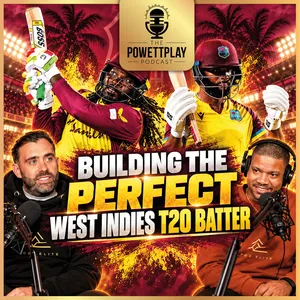
Building The Perfect West Indies T20 Batter | PowettPlay Podcast
On the latest episode of the PowettPlay Podcast, hosts Jordan Shannon and Kieran Powell explore what it really takes to build an elite T20 batter, arguing that the strongest short-format players are often developed through a deep grounding in red-ball cricket rather than T20 cricket alone. The discussion looks at players such as Chris Gayle and Shai Hope, whose success in limited-overs cricket has been shaped by extensive experience in first-class and Test cricket. Jordan and Kieran examine how long-form cricket helps batters develop patience, game awareness, technical discipline and the ability to problem-solve under pressure. A major theme of the episode is the importance of understanding your own strengths and weaknesses. Through longer innings and more challenging passages of play, batters are forced to learn how to survive difficult spells, manipulate bowling attacks and adapt their approach depending on conditions, match situations and opposition plans. The hosts argue that these lessons become incredibly valuable in modern T20 cricket, particularly for top-order batters who need more than just power. While specialist T20 players can be highly effective as explosive hitters or finishers, complete top-order batters often need a much broader skill set including strike rotation, tempo control, shot selection and the ability to rebuild after early wickets. Jordan and Kieran also discuss why red-ball cricket remains an essential part of player development. The longer format gives young batters more time at the crease, exposes technical weaknesses and creates situations where they must think their way through difficult periods rather than simply attack. The episode questions whether young Caribbean players are currently getting enough high-quality cricket across multiple formats to develop these skills. If West Indies wants to produce the next generation of intelligent, adaptable and world-class T20 batters, the hosts argue that players need a high volume of competitive multi-format cricket rather than being pushed towards short-format specialisation too early. Ultimately, the conversation is about building better cricketers, not simply better T20 hitters. The best players understand tempo, pressure, conditions and their own game - qualities often developed through years of experience in longer-form cricket.Does red-ball cricket still provide the best foundation for elite T20 batting? Can players become complete top-order T20 batters without first-class experience? And should young West Indian cricketers be playing significantly more multi-format cricket? Join the conversation and share your thoughts.PowettPlay Podcast - Caribbean cricket discussion and analysis covering T20 cricket, red-ball cricket, Test cricket, first-class cricket, Chris Gayle, Shai Hope, batting development, T20 batting technique, player development, West Indies cricket and Caribbean cricket. #PowettPlay #WestIndiesCricket #T20Cricket #TestCricket #RedBallCricket #FirstClassCricket #ShaiHope #ChrisGayle #Batting #CricketDevelopment #CaribbeanCricket #CricketPodcast Learn more about your ad choices. Visit podcastchoices.com/adchoices
9 MIN
OCT 19, 2026
Building On A Successful India Tour: The Bold Plan That Could Save West Indies Cricket | PowettPlay Podcast
On the latest episode of the PowettPlay Podcast, hosts Jordan Shannon and Kieran Powell take a big-picture look at the challenges facing West Indies cricket and explore a bold idea that could completely reshape the regional game. With Cricket West Indies under pressure from financial constraints, expensive inter-island travel, reduced domestic opportunities and declining local attendances, Jordan and Kieran discuss whether the traditional structure of regional cricket is still sustainable in its current form. One radical solution raised in the episode is the possibility of staging parts of the West Indies domestic cricket calendar in India. The hosts examine how a strategic partnership with major Indian cricketing markets, including influential regions such as Mumbai, could potentially open the door to stronger sponsorship deals, improved broadcast exposure and access to high-quality cricket facilities. For the players, competing regularly in India could also provide a significant development opportunity. Jordan and Kieran discuss how exposure to different conditions, bigger crowds, greater media attention and higher-pressure environments could help West Indian cricketers develop greater composure and become better prepared for the demands of international cricket. The conversation also looks at the commercial side of the proposal. By taking regional cricket into one of the biggest cricket markets in the world, could West Indies cricket attract new sponsors, international audiences and broadcasting partners that may not currently be available within the Caribbean? Jordan and Kieran explore whether this type of international expansion could help turn West Indies domestic cricket into a stronger global product, following the model used by major sporting leagues that have taken matches and competitions into new international markets to grow their brands. There are, of course, major questions around identity, tradition and the importance of keeping Caribbean cricket connected to Caribbean supporters. The hosts debate whether moving tournaments overseas would risk weakening that connection, or whether a carefully structured partnership could actually provide the financial stability needed to protect the game at home. Ultimately, the episode asks whether West Indies cricket needs to think far more radically about its future. If the current model continues to face financial and logistical difficulties, could taking regional cricket to India become part of a wider strategy to generate revenue, improve player development and rebuild the global profile of the West Indies game? Could India help provide a new commercial future for West Indies cricket? Would playing regional tournaments overseas accelerate player development? And is bold change now necessary to protect the long-term future of the game? Join the conversation and share your thoughts. PowettPlay Podcast — independent Caribbean cricket discussion, analysis and debate covering West Indies cricket, Cricket West Indies, regional cricket, India cricket, Mumbai cricket, domestic tournaments, cricket sponsorship, broadcasting, player development, sports business, global cricket markets and the future of Caribbean cricket. #PowettPlay #WestIndiesCricket #CricketWestIndies #CWI #CaribbeanCricket #RegionalCricket #IndiaCricket #MumbaiCricket #CricketBusiness #CricketSponsorship #PlayerDevelopment #CricketPodcast #WestIndies Learn more about your ad choices. Visit podcastchoices.com/adchoices
14 MIN
OCT 16, 2026
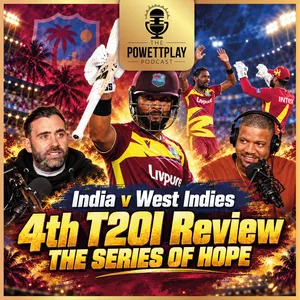
India v West Indies 4th T20I Review | The Series Of Hope | PowettPlay Podcast
On the latest episode of the PowettPlay Podcast, hosts Jordan Shannon and Kieran Powell review a huge West Indies victory over India that levels the T20I series and sets up a decisive final match in Bangalore. A major focus of the episode is the outstanding form of Shai Hope, who continues to lead from the front with the bat. Jordan and Kieran discuss how Hope’s consistency, control and aggression at the top of the order are giving the West Indies a strong foundation and creating a tactical “slipstream” for the players around him. With Hope taking responsibility early in the innings, the pressure on the middle order is reduced, allowing players such as Shimron Hetmyer and Sherfane Rutherford to play with greater freedom and attack the game on their own terms. The hosts explore how this balance is beginning to make the West Indies batting line-up look far more dangerous and complete. The conversation also gives huge credit to Keemo Paul, whose sensational five-wicket haul played a decisive role in the result. Jordan and Kieran discuss his ability to deliver in pressure moments and compare his impact to the kind of clutch performances West Indies fans became accustomed to from Dwayne Bravo in T20 cricket. There is also plenty of praise for the wider West Indies bowling unit, particularly the way the attack built pressure through discipline and the accumulation of dot balls. Rather than relying solely on wickets, the hosts highlight how sustained pressure forced India into riskier options and eventually created opportunities. With the series now level, attention turns to the deciding T20I in Bangalore. Jordan and Kieran assess the momentum West Indies have built, the growing depth within the squad and the encouraging signs ahead of future international assignments and major qualification campaigns. Can Shai Hope continue his incredible form? Can Keemo Paul deliver another match-winning performance? And can West Indies complete the series comeback in Bangalore? Join the conversation and share your thoughts ahead of the decider. PowettPlay Podcast - Caribbean cricket discussion, analysis and insight covering West Indies cricket, India vs West Indies, T20I cricket, Shai Hope, Keemo Paul, Shimron Hetmyer, Sherfane Rutherford, T20 bowling, dot-ball pressure, Dwayne Bravo, Bangalore and international cricket. #PowettPlay #WestIndiesCricket #IndiaVsWestIndies #INDvWI #WIvIND #T20I #T20Cricket #ShaiHope #KeemoPaul #ShimronHetmyer #SherfaneRutherford #DwayneBravo #CaribbeanCricket #CricketPodcast #WestIndies Learn more about your ad choices. Visit podcastchoices.com/adchoices
15 MIN
OCT 16, 2026
Dear CWI Part 3 | PowettPlay Podcast
On Part 3 of the Dear CWI series from the PowettPlay Podcast, hosts Jordan Shannon and Kieran Powell conclude their in-depth discussion on the financial and operational challenges facing Cricket West Indies (CWI), focusing on spending priorities, commercial opportunities and what they believe must change to create a more sustainable future for Caribbean cricket. The episode examines questions around how CWI allocates its resources, including significant investment in the Coolidge Cricket Ground and High Performance Centre, staff travel and other operational expenditure. Jordan and Kieran discuss whether more of the available funding should instead be directed towards the fundamentals of the game - competitive regional cricket, player development, improved facilities across the Caribbean and creating more opportunities for cricketers to play. A major theme throughout Dear CWI Part 3 is the difference between cutting costs and spending more effectively. After discussing reduced fixtures and player contracts in the first two parts of the series, the hosts ask whether savings could be found elsewhere without directly affecting the players and competitions that form the foundation of West Indies cricket. The conversation also explores the commercial potential of North American cricket, particularly as the sport continues to grow in markets such as the United States and Canada. Jordan and Kieran consider whether Cricket West Indies could take greater advantage of the huge Caribbean diaspora and expanding interest in cricket across North America through new events, sponsorship opportunities, broadcasting arrangements and strategic partnerships. Alternative revenue streams for Cricket West Indies are another key talking point. The hosts discuss whether partnerships involving influential figures from the global game, commercial organisations and franchise cricket could help generate new income without weakening the traditional West Indies pathway. Internally, Jordan and Kieran also consider potential changes to player compensation and travel structures, asking whether contracts could be designed differently to provide players with greater security while still allowing CWI to manage expenditure. Travel costs, accommodation, staffing structures and the wider logistics surrounding international and regional cricket are also examined as areas where efficiencies may be possible. Throughout the discussion, the message remains consistent: financial sustainability cannot come at the expense of the cricket itself. The players, domestic competitions and development pathways remain the core assets of the West Indies game, and protecting them must be central to any long-term strategy. This concluding episode of the Dear CWI trilogy brings together the issues explored across all three parts - the reduction in cricket, shorter player contracts and financial pressures, and questions surrounding spending and future revenue generation. Jordan and Kieran ultimately discuss what meaningful strategic reform could look like and why stronger communication, smarter commercial thinking and clearer priorities will be essential if West Indies cricket is to thrive for future generations. Where should Cricket West Indies be investing its money? Can North America provide a major new commercial opportunity? And what changes could create a financially sustainable system without reducing opportunities for players? Join the conversation and share your thoughts. PowettPlay Podcast - independent discussion, analysis and debate covering Cricket West Indies, West Indies cricket, CWI finances, Coolidge Cricket Ground, Caribbean cricket, regional cricket, player contracts, cricket development, North American cricket, commercial partnerships, sponsorship, revenue generation and the future of West Indies cricket. #PowettPlay #DearCWI #DearCWIPart3 #CricketWestIndies #WestIndiesCricket #CWI #CaribbeanCricket #RegionalCricket #Coolidge #CricketDevelopment #CricketFinance #CricketBusiness #WestIndies #CricketPodcast Learn more about your ad choices. Visit podcastchoices.com/adchoices

17 MIN
OCT 12, 2026
India vs West Indies 3rd T20I Review | Did West Indies Throw Away Their Chance? | PowettPlay Podcast
On the latest episode of the PowettPlay Podcast, hosts Jordan Shannon and Kieran Powell break down the West Indies’ narrow 14-run defeat against India in another high-scoring T20 International, analysing where the game was won and lost and what the Caribbean side must improve before the next match. The discussion begins with the West Indies bowling performance, where Roston Chase receives major praise for his control, intelligence and economy in difficult batting conditions. Jordan and Kieran highlight how Chase continues to show the value of a smart spinner who can read the game, vary his pace and force batters into mistakes even on flat pitches. Attention also turns to Shamar Joseph, with the hosts discussing the need for greater variation if he is to become consistently effective in T20 cricket. While his raw pace remains a major weapon, Jordan and Kieran argue that on batter-friendly surfaces, speed alone is rarely enough. Developing slower balls, changes of length and other variations could make him far more difficult to line up in high-scoring conditions. From a batting perspective, the hosts examine the early stages of the West Indies chase and the pressure created by a slow start. Kamil Pooran’s tempo at the top of the order comes under scrutiny, while the early dismissal of captain Shai Hope left the batting line-up with even more work to do. Jordan and Kieran discuss how pressure builds quickly in modern T20 cricket when the required rate begins to climb, particularly against a strong Indian bowling attack. Even when later batters are capable of accelerating, a sluggish powerplay can leave too much ground to make up in the final overs. The episode also focuses on the fine margins that separate winning and losing at international level. A 14-run defeat may look close on the scorecard, but the hosts argue that small tactical errors, missed opportunities and periods of slow scoring can become decisive against a side as strong as India. After the momentum of the previous victory, this match is viewed as a missed opportunity for West Indies to take control of the series in India. However, Jordan and Kieran remain encouraged by the overall direction of the side and believe the improvements required are relatively small rather than wholesale. With another match coming quickly, the focus now shifts to the 4th T20I and whether West Indies can tighten those details, improve their powerplay intent and find better ways to control India’s batting on flat surfaces. Can West Indies bounce back in the fourth T20I? Should Shamar Joseph vary his attack more? And how important will a faster start with the bat be next time around? Join the conversation and share your thoughts. PowettPlay Podcast - Caribbean cricket discussion, analysis and insight covering West Indies cricket, India vs West Indies, T20I cricket, Roston Chase, Shamar Joseph, Shai Hope, Kamil Pooran, powerplay batting, T20 bowling tactics and international cricket. #PowettPlay #WestIndiesCricket #IndiaVsWestIndies #INDvWI #WIvIND #T20I #T20Cricket #RostonChase #ShamarJoseph #ShaiHope #KamilPooran #CaribbeanCricket #CricketPodcast #WestIndies Learn more about your ad choices. Visit podcastchoices.com/adchoices

10 MIN