


Rights in Russia
Rights in Russia
Podcast Then & Now #44: Teresa Cherfas in conversation with Anna Nemzer
NOV 1, 202658 MIN
Description
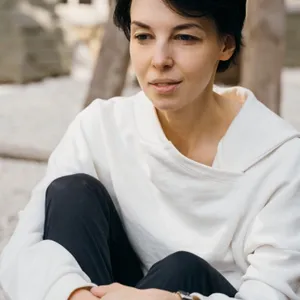
Welcome to the 44th edition of the Russian-language podcast Then & Now with me, Teresa Cherfas. Our guest today is Anna Nemzer – a journalist at TV Rain, an archivist and one of the protagonists of Julia Lokteva’s documentary My Undesirable Friends, the second part of which was recently screened at the London Film Festival. Anna Nemzer currently lives and works in London.
Our conversation was recorded on 29 October 2026. That very day, Novaya gazeta was ordered to vacate its offices by 9 November and banned from fundraising. Today its editorial staff published a statement: ‘They killed us. On November 9, we will turn off the lights in the home where we have lived for 30 years, shut down our servers, and leave. The newspaper no longer exists. Russian authorities and Russian security services forced the editorial staff to stop working.’
Questions
What was the concept behind Julia Loktev’s film the project right from the start? You were the one she first contacted about it.
Tell us a little about the process: how did you select the people who appear in the film? How did you film them? Did the director have any guiding principles that you followed while making the film?
When I watched the first part of the film, I was close to tears – I felt so sorry and upset that Russia is being deprived of such bright, talented, intelligent young people, making them feel compelled to leave. What thoughts come to mind when you think about this?
In the first part of the film, it emerges that you and your family were planning a 10-day trip; the tickets had already been bought, you were all set to fly out on 24th February. Tell us how you found out about the announcement of the so-called ‘Special Military Operation’ and what thoughts went through your mind at that moment.
By the second part of the film My Undesirable Friends, everyone is scattered across different countries. Describe how you look back on that time.
There is a very difficult scene in the film where you are talking to your father in Moscow. He is ill and you realise that you cannot help him or be by his side. He dies a couple of weeks later. How did you take this news, and how did you cope with it? Later, we see a scene in the kitchen
where there is tension between you and your husband. How did your situation affect your family relationships? Is this the human cost of exile?
The film sees some of the protagonists blaming themselves for what happened to Russia; that whilst you were enjoying a carefree, comfortable life, you weren’t paying attention to what was really happening in the country. Do you blame yourself for what happened in Russia?
You stopped working as a journalist for TV Rain. When did this happen and what was the reason?
Tell us about your new projects – first RIMA, then Kronika – both of which are linked to the preservation of archival material that you consider important.
The second part of the film My Unreliable Friends recently premiered in the US. Are you surprised that it’s been so well received there? Are there parallels to be drawn between America now and what happened to you and the other journalists in the film?
You’re currently living in London with your daughter. What brought you here, and how are you finding life in England?
What would you say to those who criticise people who have left Russia, claiming that there’s now no one left to protest and stand up to authoritarianism?
How do you see your future? Is it linked to Russia?