



State of Streaming Podcast
State of Streaming
Why Football Still Owns Television and How Shoulder Content Is Shifting CPMs | Ross Benes, Senior Analyst at EMARKETER
NOV 12, 202610 MIN
Description
Have a question? Send us a text!
Get the report from this episode here
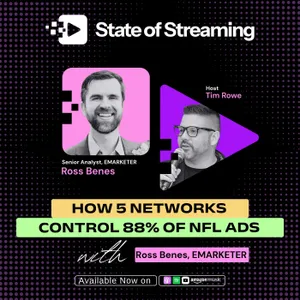
Tim sits down with Ross Benes from EMARKETER to map out the current landscape of U.S. football advertising — and why traditional broadcasters are still dominating the space despite the streaming boom. Recorded in peak football season to break down Ross's latest U.S. football advertising report.
Linear networks still control 88% of the ad revenue, and college football is becoming a mini NFL.
While streaming dominates headlines, 88% of NFL ad revenue still flows to five legacy linear companies: Fox, Paramount, Comcast, Disney, and the NFL Network. The lack of local broadcasting flexibility in the NFL keeps the big players firmly in control of the rights. Meanwhile, college football is aggressively mirroring the pro model. With massive media rights deals, rampant conference realignment, and an expanded 24-team playoff, the regional charm of college football is fading as it transforms into a highly lucrative "mini NFL".
1:58 – Why linear broadcast networks still capture the lion's share of NFL advertising revenue
2:19 – The five legacy companies that control 88% of the NFL ad market
3:56 – Conference realignments and why college football is becoming a mini NFL
Streaming's 12% slice and the escalating cost to acquire an NFL viewer.
Amazon and Netflix have carved out the remaining 12% of the NFL advertising market. Amazon's strategy focuses on consistency, successfully turning Thursday Night Football into a reliable brand, whereas Netflix has opted for one-off event viewing like Christmas games. But acquiring these viewers isn't cheap. Networks are paying an average of $4.12 per unique viewer per game, with ESPN and ABC knowingly overpaying to secure indirect benefits like exclusive access and shoulder content partnerships.
5:34 – Amazon's strategy for Thursday Night Football versus Netflix's one-off event approach
6:12 – The actual cost per unique viewer for NFL games across major networks
7:07 – Why ESPN accepts overpaying for NFL rights to fuel their broader content ecosystem
Shoulder content is driving down CPMs, but Super Bowl pricing is hitting record highs.
Connected TV eCPMs against live football actually dropped 13%. The culprit is a massive influx of shoulder content. Spin-offs, docuseries, and reality shows have flooded the market, increasing the ad supply and pushing prices down. Conversely, the Super Bowl remains immune to this dilution and is on pace to be the first billion-dollar ad spend Super Bowl. Disney sold out its inventory before August at a record asking price of $10 million per spot, and is confidently upselling backup advertisers while introducing hyper-segmented alt-casts like a Star Wars feed.
7:58 – Why a surge in shoulder content has caused connected TV CPMs to fall 13%
9:01 – Shawne Merriman's Lights Out Sports TV and capitalizing on the long tail of football
10:04 – Disney's $10 million Super Bowl spots and their strategy of adding targeted alt-casts
Connect with Ross Benes on LinkedIn