



Stay Wild, Stay Well
Wild & Organic Team
Why Fibermaxxing Needs a Fiber DIVERSITY Rebrand
OCT 4, 20267 MIN
Description
Send us Fan Mail
Your fiber total looks impressive – but is it coming from the same few foods every day? In this episode on the latest trend, we explore why getting enough fiber is only part of the picture. Different fibers have different properties, and your meals can make room for more than one kind.
We break down fiber’s overlapping jobs, unpack the “30 plants a week” idea and introduce our Fiber Portfolio Method: a practical way to rotate familiar foods without overloading your plate or turning grocery shopping into homework. We also discuss where supplements fit alongside a varied diet.
This podcast is produced by Wild & Organic. All voices are AI-generated. Scripts are written and reviewed by our team. This content is for general education only and is not medical advice.
In this episode:
Why grams alone don’t tell the whole story.
Fiber’s overlapping roles: stool bulk, gel formation and fermentation.
What microbiome research can – and cannot– promise.
Five groups to rotate: legumes, whole grains, vegetables, fruit and berries, nuts and seeds.
Manageable swaps you can make with comfort setting the pace.
How supplements can complement your fiber routine.
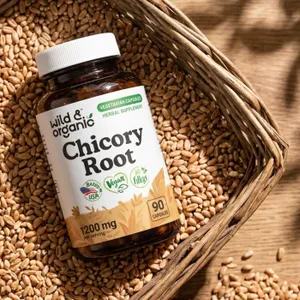
Explore Wild & Organic Chicory Root Capsules
DISCLAIMER: The Fiber Portfolio Method is a practical way to organize food choices, not a clinically validated plan. Research does not establish a universal plant-count target or guarantee that increasing fiber variety will improve microbiome diversity or digestive symptoms.
Timecodes:
[00:32] From fiber MAXXING to fiber DIVERSITY
[00:55] Different fibers, different jobs
[02:36] The research behind variety – and its limits
[03:20] The Fiber Portfolio Method
[03:51] Building variety at a comfortable pace
[06:02] Where supplements fit
[06:43] One-swap challenge and closing
Sources:
[1] U.S. FDA, Daily Value and Percent Daily Value on the Nutrition and Supplement Facts Labels, 2023 - open source
[2] NIDDK, Eating, Diet, & Nutrition for Constipation, reviewed May 2018 - open source
[3] Gill SK et al., Dietary fibre in gastrointestinal health and disease, Nature Reviews Gastroenterology & Hepatology, 2021, PMID 33208922 - open source
[4] McDonald D et al., American Gut: an Open Platform for Citizen Science Microbiome Research, mSystems, 2018, PMID 29795809 - open source
[5] Wastyk HC et al., Gut-microbiota-targeted diets modulate human immune status, Cell, 2021, PMID 34256014 - open source
[6] Lancaster SM et al., Global, distinctive, and personal changes in molecular and microbial profiles by specific fibers in humans, Cell Host & Microbe, 2022, PMID 35483363 - open source
[7] Nagy DU et al., Effect of chicory-derived inulin-type fructans on Bifidobacterium abundance and bowel function: a systematic review with meta-analyses, Critical Reviews in Food Science and Nutrition, 2023, PMID 35833477 - open source
[8] So D et al., Dietary fibres and IBS: translating functional characteristics to clinical value, Gut, 2021 - open source
[9] Wild & Organic, Chicory Root Capsules — 90 Count - open source
[10] NCCIH, National Institutes of Health, Using Dietary Supplements Wisely, updated January 2019 - open source
[11] Monash University, Dietary fibres and IBS, author summary - open source
Voices in this episode are AI-generated.