Talk That Pod

Sebastian Arciszewski

Details

Podcasters. They're an interesting bunch. On Talk That Pod, I have conversations with the most interesting podcasters in the world – what does it really take to build a podcast people can't stop listening to? Podcasters, storytellers, and the audio entrepreneurs behind the shows dominating your feed spill the secrets and stories about podcast growth, their podcasting journey, podcast marketing, content strategy, promotion tactics, and the cultural impact of podcasting in today's society. If you're passionate about the power of audio, as a creator, a listener, or both... this is your show. Want to be a guest on this podcast? Head to https://talkthatpod.net/be-on-the-show/ This podcast is also available on YouTube: https://www.youtube.com/@talkthatpodshow And if you're looking for podcast recommendations head over to Find That Pod - https://findthatpod.com

Recent Episodes

JUL 15, 2026
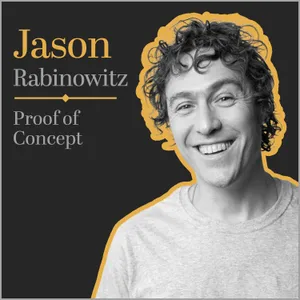
018 - Jason Rabinowitz - Proof of Concept
Jason Rabinowitz of Proof of Concept --- SUMMARY In this episode of Talk That Pod, Sebastian sits down with Jason Rabinowitz, co-host of Proof of Concept, a podcast that explores the world of beverage alcohol competitions through the stories of the founders and makers whose spirits have won at the highest level. Jason shares the personal origin story behind the show — rooted in his late father-in-law Anthony Dias Blue's founding of the San Francisco World Spirits Competition — and explains how the podcast has evolved from a simple "why did this spirit win" premise into a broader exploration of subjectivity, objectivity, and the craftsmanship behind excellence. The two dig into building a branded podcast that doesn't feel like an advertisement, the shift toward video and short-form clips in podcast discovery, cross-promotion, and how a "gatekeeper" industry might become more accessible to a wider audience. Jason also opens up about his background as a three-time Grammy-nominated musician and audio professional, and how that experience shaped the show's production. They close with a conversation about generational shifts in alcohol consumption and a rapid-fire round of podcast recommendations. --- IN THIS EPISODE 00:03 – Introduction and welcome to Jason Rabinowitz, co-host of Proof of Concept 00:34 – The origin story of Proof of Concept and the legacy of Anthony Dias Blue 02:11 – The evolution of the San Francisco World Spirits Competition and its global expansion 04:23 – Clearing up a mix-up with another Jason Rabinowitz and correcting the record on his background 05:06 – How Jason's music and audio production career shaped the podcast's production 05:48 – Why the show focuses on founders behind award-winning spirits 06:58 – The rigor, blind tasting process, and volunteer culture behind the competition 09:13 – How guests are selected and the role of co-host Toby Blue 10:00 – The show's shift toward exploring subjectivity versus objectivity in judging 13:47 – What the Tasting Alliance is and how Proof of Concept fits as a branded show 14:39 – Keeping a branded podcast from feeling like an advertisement 17:38 – Video, YouTube discovery, and treating a video podcast like a television show 19:18 – Thinking (or not) about short-form, clip-friendly content 21:06 – Tapping into existing spirits communities as a distribution channel 22:40 – Cross-promotion and going on other podcasts to grow the audience 23:18 – Defining success for Proof of Concept in the next one to two years 25:23 – Dream guests, celebrity spirit brands, and the "white whale" question 28:08 – The generational decline in alcohol consumption and why it may be cyclical 30:45 – The rise of non-alcoholic spirits and how the same judging principles apply 31:18 – Alcohol's long history and its role as a social lubricant 32:30 – Addressing the perception of gatekeeping and snobbery in the spirits world 35:14 – Developing a palate and the parallels to audio engineering vocabulary 36:52 – What makes podcasting unique as a medium 39:12 – Jason's three podcast recommendations 41:19 – Where to find Proof of Concept online --- RESOURCES & LINKS Proof of Concept Podcast The Tasting Alliance (parent organization) San Francisco World Spirits Competition History of Rock and Roll in 500 Songs (podcast recommendation) Freakonomics Radio (podcast recommendation) Heavyweight (podcast recommendation) Death, Sex & Money (podcast recommendation) A Bit Fruity with Matt Bernstein (podcast recommendation) Wow in the World (podcast recommendation) Flip and Mozi (podcast recommendation)
40 MIN
JUL 8, 2026
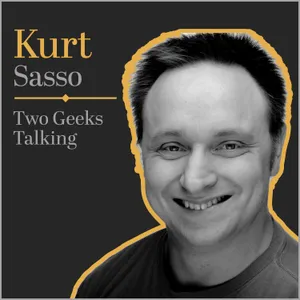
017 - Kurt Sasso - Two Geeks Talking
Kurt Sasso of Two Geeks Talking --- SUMMARY Sebastian sits down with Kurt Sasso, host of Two Geeks Talking, a pop-culture interview show that has racked up over 1,200 conversations across comics, TV, film, music, and video games over the past 18 years. The two swap stories about an unexpected overlap from Sebastian's old merchandise business before digging into Kurt's interviewing philosophy, his research process, and how the show evolved from a two-hour live call-in on TalkShoe into a full video production. Kurt walks through the growth strategies that actually moved the needle for his show, how he built a paid interview service after 15 years of doing it for free, and what he'd do differently if he launched from zero in 2026. The conversation closes with a wider-lens discussion on why long-form podcasts keep thriving in a short-attention-span world, podcasting's growing political influence, and Kurt's firm stance on AI — both in his own research process and in creative work more broadly. --- IN THIS EPISODE 00:20 — Introduction to Kurt Sasso and Two Geeks Talking 01:27 — How Kurt stumbled into podcasting through a friend's webcomics database 02:51 — An unexpected overlap: Sebastian's old merch business and Kurt's webcomic guests 04:30 — Kurt's technique for drawing stories out of shy or reluctant guests 06:58 — Kurt's research process: socials, past interviews, and avoiding repeat questions 10:20 — Looking back at early cringe-worthy interviews and lessons learned 14:21 — Has interviewing led to business or networking opportunities? 17:14 — Common traits among successful creative guests 19:55 — The moment Two Geeks Talking started to take off 23:11 — Pitching and structuring the paid interview service 25:38 — The two or three growth strategies that produced the best results (the 2010 shift to video) 33:43 — Hypothetical: launching Two Geeks Talking from scratch in 2026 39:22 — Which metrics actually matter to Kurt (and why downloads aren't one of them) 42:40 — Outdated podcasting advice Kurt and Sebastian still hear too often 49:35 — Why long-form podcasts thrive despite short-attention-span platforms 52:56 — Podcasting's growing influence on politics and culture 56:16 — AI, creativity, and why Kurt doesn't use AI in his research process 1:00:44 — Staying a fan while still asking challenging questions 1:02:54 — Kurt's podcast recommendations 1:04:22 — Where to find Kurt and Two Geeks Talking --- RESOURCES & LINKS Two Geeks Talking YouTube: youtube.com/TGTMedia Website: tgtmedia.com Social: @KurtSasso Mentioned in this episode: Webcomics.com Cyanide and Happiness (Explosm) Ctrl+Alt+Del (Tim Buckley) C2E2 (Chicago Comic and Entertainment Expo) TalkShoe (early live call-in platform) Cliff Ravenscraft, "The Podcast Answer Man" The Tim Ferriss Show Gary Vaynerchuk (content/YouTube) James Cridland, Pod News Marshall McLuhan, "the medium is the message" --- TALK THAT POD Are you a podcaster or podcast industry figure and you want to be on this podcast? Fill out this form. Watch or listen to Talk That Pod on YouTube. Follow us: Twitter / X Facebook YouTube Instagram TikTok Threads --- FIND THAT POD Discover the best podcasts in the world. - A podcast discovery newsletter bringing you 5 great podcasts to discover every week. Subscribe today.

64 MIN
JUL 1, 2026
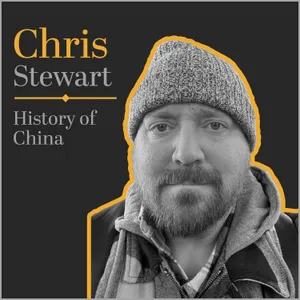
016 - Chris Stewart - The History of China
Christ Stewart of The History of China --- SUMMARY Chris Stewart is the creator and host of The History of China podcast, a show he launched in 2013 while living in Shanghai that now spans over 330 episodes covering 5,000 years of Chinese civilization. In this conversation, Chris talks about how seventeen years living and teaching in China shaped his approach to the podcast, the challenges of working with ancient and often contradictory historical sources, and how his background as an educator informs the way he scaffolds complex history for new listeners. He also discusses joining the Airwave Media network while staying fully independent creatively, his low-key approach to Patreon monetization, and his thoughts on the democratization of history podcasting and the risks of misinformation in the space. The episode wraps with his podcast recommendations and where to find his show. --- IN THIS EPISODE 00:19 — Introduction to Chris Stewart and The History of China podcast 01:15 — Chris's background, seventeen years living in China, and the show's origin story 02:07 — How his understanding of China evolved over 330+ episodes 06:05 — Living in China while podcasting: technical hurdles and internet censorship 08:15 — Navigating historical sources and deciding what to trust 13:19 — Chinese pride in 5,000 years of continuous civilization, and its nuances 15:23 — Balancing academic rigor with entertaining storytelling 21:50 — Episodes Chris would recommend for understanding modern China (the Opium War and Taiping Rebellion) 25:13 — Joining the Airwave Media network and staying creatively independent 27:37 — Collaborating with other history podcasters and the Intelligent Speech event 28:20 — Bringing new listeners into a 330-episode back catalog 31:55 — Using "scaffolding" techniques from his teaching background to make episodes accessible 34:00 — Tracking audience growth and the early lucky break that boosted listenership 37:25 — Patreon, listener support, and his philosophy on monetization 42:39 — What makes podcasting uniquely suited for teaching history 47:05 — The democratization of podcasting and the risk of misinformation 56:31 — Chris's three podcast recommendations 58:03 — Where to find Chris and The History of China online --- RESOURCES & LINKS The History of China podcast. Show email: [email protected] Airwave Media Network Revolutions podcast (Mike Duncan) - other podcasts like Revolutions PseudoPod The NoSleep Podcast - best episodes of The NoSleep Podcast Ctext.org (Chinese Text Project) Internet Archive --- TALK THAT POD Are you a podcaster or podcast industry figure and you want to be on this podcast? Fill out this form. Watch or listen to Talk That Pod on YouTube. Follow us: Twitter / X Facebook YouTube Instagram TikTok Threads --- FIND THAT POD Discover the best podcasts in the world. - A podcast discovery newsletter bringing you 5 great podcasts to discover every week. Subscribe today.

55 MIN
JUN 24, 2026
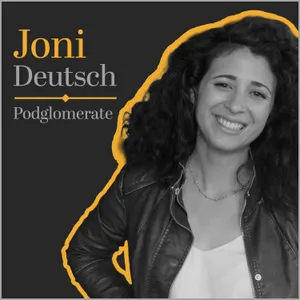
015 - Joni Deutsch - Podglomerate
Joni Deutsch of Podglomerate --- SUMMARY Sebastian sits down with Joni Deutsch, Senior Vice President of Marketing and Audience Development at the Podglomerate, an award-winning podcast agency whose clients include PBS, NPR, Netflix, Harvard, and New Hampshire Public Radio. With fifteen years in media, audio, and communications, Joni breaks down how the Podglomerate approaches podcast growth, walking through the agency's six core pillars of marketing work: publicity, marketing, cross-promotions, podcast app relationships, paid advertising, and data management. The conversation moves from practical, low-budget tactics for podcasters starting from zero to the bigger forces reshaping discovery, including the shift from traditional SEO to AI-driven "GEO" search and Google's move to surface Gemini results above the old ten blue links. Joni and Sebastian also dig into the tensions facing the industry, including the pivot to video and a shrinking podcast "middle class," the role of awards, when paid acquisition is worth it, and the heavier questions raised by the "2024 podcast election," parasocial influence, AI-generated shows, and who bears responsibility for fact-checking in an open media system. Joni closes with three podcast recommendations and where to find her work. --- IN THIS EPISODE (00:00) Intro to Joni Deutsch and the Podglomerate (00:38) Is there a universal playbook, or a custom plan for every show? (01:01) The six pillars: publicity, marketing, cross-promotions, podcast apps, paid advertising, and data management (04:16) Why industry relationships are central to executing client work (06:17) Where the data comes from: Apple Podcasts Connect, Spotify for Creators, hosting platforms, and YouTube (with a cameo from Joni's dog) (08:53) Using completion rates and consumption data to inform production, not just marketing (09:26) Evaluating a new client's growth potential and the agency's three service lines (11:05) Award recognition (The Thirteenth Step, Bearbrook) and how accolades feed the publicity funnel (15:04) Joni's take on awards that charge for entry (21:49) Whether every show should be on video, and rethinking what "video" can look like (23:01) The real tension of video: extra editing work, AI tools, and the shrinking podcast "middle class" (24:55) Starting from zero: define your audience, then cross-promo where that audience already is (27:57) Pitching local media, newsletters, and Substacks (and podcast newsletters like Find That Pod) (28:28) How podcast SEO is changing, GEO, and Google surfacing Gemini at the top of search (30:36) Optimizing metadata: listicles, podcast titles, episode titles, and YouTube thumbnails (32:45) The "death of ten blue links" and what it means for publisher traffic (34:06) Marketing the Podglomerate itself, plus the dedicated AI page on their website (36:05) Is the AI optimization actually working? What inquiry data shows (38:06) When should a podcaster invest in paid acquisition, and the risk of vanity metrics (40:55) Podcasting's place in society and the "2024 podcast election" (42:32) AI-generated podcasts, fake "experts," and the proliferation discussed at The Podcast Show London (44:43) Parasocial influence, young voters, and "with great power comes great responsibility" (45:12) Authenticity as podcasting's structural advantage against AI slop (46:12) AI as an assistant, not a full-time employee, and always fact-checking the output (47:59) The one thing Joni would change: automated fact-checking through the platforms (50:07) Whose job is fact-checking, platforms, hosts, or publishers? (51:28) Could podcasting's growing influence invite FCC regulation? (53:44) Three podcast recommendations: The Town with Matt Belloni, The Ankler Podcast, and the Seth Meyers / Lonely Island podcast (55:45) Where to find Joni and the Podglomerate online --- RESOURCES & LINKS Podglomerate Podglomerate blog Best podcast newsletters list Work with the Podglomerate (inquiries) Joni Deutsch on LinkedIn Podglomerate newsletter — free, sent every other week with resources, events, and episodes Shows mentioned Bear Brook (New Hampshire Public Radio) The Thirteenth Step (New Hampshire Public Radio) The Town with Matt Belloni (The Ringer / Spotify) The Ankler Podcast The Lonely Island and Seth Meyers Podcast People mentioned Janine Wright (AI podcast company executive, speaking at The Podcast Show London) James Cridland (Podnews) Arielle Nissenblatt (on paid advertising for podcasters) Ashley Carmen (Bloomberg podcast reporter) --- TALK THAT POD Are you a podcaster or podcast industry figure and you want to be on this podcast? Fill out this form. Watch or listen to Talk That Pod on YouTube. Follow us: Twitter / X Facebook YouTube Instagram TikTok Threads --- FIND THAT POD Discover the best podcasts in the world. - A podcast discovery newsletter bringing you 5 great podcasts to discover every week. Subscribe today.
56 MIN
JUN 17, 2026
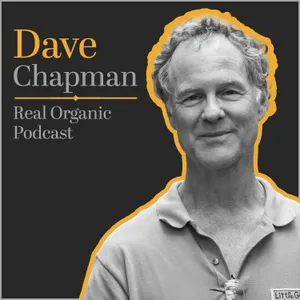
014 - Dave Chapman - Real Organic Podcast
Dave Chapman of Real Organic Podcast --- SUMMARY Sebastian sits down with Dave Chapman, a lifelong organic vegetable farmer from Vermont and creator/host of the Real Organic Podcast. Dave shares the origin story of the Real Organic Project, founded in 2018 as a response to what he sees as regulatory failures and corporate corruption within the National Organic Program. He explains how the podcast emerged almost by accident during COVID, evolving from a virtual conference into a long-running interview series that now spans over 280 episodes. The conversation explores the philosophy behind organic and "real organic" certification, the difference between organic and the increasingly popular but loosely defined "regenerative" label, and the regulatory capture that allows large corporations to influence food policy. Dave and Sebastian also discuss building an audience through grassroots community-building and email newsletters, the role of YouTube and video in podcast growth, balancing hope with realism when fighting systemic issues, and the importance of trust between podcasters and their audiences in an increasingly fractured media landscape. --- IN THIS EPISODE 0:12 – Introduction to Dave Chapman and the Real Organic Podcast 00:54 – Dave's background as an organic farmer and the founding of the Real Organic Project in 2018 03:10 – How the podcast started almost by accident during COVID, inspired by a virtual conference project 05:36 – How the show evolved from a farming-focused podcast into broader conversations about community, civilization, and integrity 08:24 – Discussion of regulatory capture and corporate influence on organic certification standards 11:46 – Dave's approach to choosing guests and topics for the podcast 13:02 – The connection between healthy soil and healthy communities, and Dave's personal history as a young organic farmer in the 1970s 15:11 – What "real organic" certification requires and the three core issues with the National Organic Program (hydroponics, animal welfare, and fraud in imported crops) 18:16 – Why organic food costs more and how institutional support for chemical agriculture distorts pricing 22:02 – Guests and interviews that have changed Dave's own thinking, including Zephyr Teachout, Seth Godin, Michael Pollan, and Paul Hawken 23:12 – Generational differences in how people view organic food, and the rise of "regenerative" as a competing term 28:00 – How Dave built his podcast audience through years of community organizing and a weekly newsletter 33:01 – The tension between sensationalism and integrity in podcast growth 34:21 – Video production, equipment setup, and why the Real Organic Podcast has always included a YouTube component 35:31 – Unexpectedly popular episodes, including an interview with Vandana Shiva and a baker from Stone Barns 38:06 – Helping farmers find and tell their stories on the podcast 39:33 – Advice for starting a mission-driven podcast without a big marketing budget 42:09 – Trust, distrust of institutions, and how that connects to podcasting's growth 46:41 – Navigating disagreements with guests and Dave's approach to "hostile" interviews 49:48 – Hope versus optimism, and an experiment illustrating the power of speaking the truth 54:18 – How future generations might view the fight for real organic agriculture 56:08 – Dave's podcast recommendations 57:14 – Where to find Dave and the Real Organic Project online --- RESOURCES & LINKS Real Organic Project Real Organic Podcast Guests and figures mentioned: Zephyr Teachout Seth Godin Michael Pollan Paul Hawken Vandana Shiva Eli Pitkin / Stone Barns Center Dan Barber Lindley Dixon: co-host, Real Organic Podcast Podcasts recommended by Dave Chapman: The Market Gardener Podcast Scene on Radio Revisionist History --- TALK THAT POD Are you a podcaster or podcast industry figure and you want to be on this podcast? Fill out this form. Watch or listen to Talk That Pod on YouTube. Follow us: Twitter / X Facebook YouTube Instagram TikTok Threads --- FIND THAT POD Discover the best podcasts in the world. - A podcast discovery newsletter bringing you 5 great podcasts to discover every week. Subscribe today.
57 MIN