The B2B CMO Podcast with Jon Miller and Sydney Sloan

Jon Miller & Sydney Sloan

Details

Welcome to The B2B CMO Podcast, a show for marketing executives who are redefining what it means to be a strategic leader. Join Jon Miller and Sydney Sloan every week as they talk with the very best Chief Marketing Officers who are navigating the modern marketing playbook and positioning themselves as strategic leaders. Each episode, we unpack what it really takes to lead through complexity, earn trust at the strategy table, and shape the future of growth. We’re building the community, research, and frameworks CMOs need to reclaim their strategic role and drive sustainable growth. For more marketing leadership resources, visit [b2bcmoproject.com](http://b2bcmoproject.com/).

Recent Episodes

NOV 16, 2026
Market Share vs. Mind Share with Kelly Cheng, CMO at Goldcast by Cvent
Kelly Cheng is the Chief Marketing Officer of Goldcast by Cvent, the AI-powered B2B video content platform now part of Cvent’s event marketing and management portfolio. Since joining in 2021, Kelly has built Goldcast’s marketing organization from the ground up, helping scale the company past $10M in ARR, and previously held marketing roles at Wistia, Dynatrace, and PagerDuty. Kelly joins Sydney Sloan to discuss why AI-generated content volume is working against brands instead of for them, the "presence premium" that real, on-camera proof commands, and why the smartest CMOs audit their workflow before buying another AI tool. She also breaks down the shift from market share to mind share, and why the best-performing distribution channel isn't a single channel at all. This episode is part of a partnership between The B2B CMO Project and Goldcast. Jump Into the Conversation (00:00) Welcoming Kelly Cheng, CMO of Goldcast by Cvent (01:41) Why AI-generated volume is working against brands (02:44) The presence premium and what AI can’t fake (04:37) Explaining market share vs. mind share (06:34) Why webinars are the strongest distribution channel (08:27) The value of repurposing AI vs. generating AI from scratch (09:59) Speed, distribution, and closing thanks to Goldcast Episode Takeaways Optimize for evidence, not output. Teams lost trust chasing AI content volume the moment everyone could produce it. Kelly argues the scarcest asset now is a real person with a real reputation standing behind the content. Presence carries a cost AI can’t pay. Kelly introduces the “presence premium” framework: showing up on camera, on a stage, or in a real conversation puts your reputation on the line. That is what earns trust, not a polished AI paragraph. Chase mind share, not just market share. Only 5% of buyers are in-market at any given time. Kelly makes the case for video as the format that builds familiarity with the other 95% before they're ready to buy. Distinguish repurposing AI from generating AI. Teams that use AI to repurpose a real moment, such as a webinar or a customer conversation, keep the human signal. Teams that generate from a blank prompt produce content Kelly calls “no soul.” Audit the workflow before you buy the tool. Kelly cites research that 81% of successful AI rollouts started with a workflow audit, not a purchase. Understand the current state before you try to evolve it. Standout Quote “You can fake a polished paragraph, but you cannot fake a person that’s willing to put their name and their face on a point of view.” — Kelly Cheng Guest Links LinkedIn: https://www.linkedin.com/in/kellyhcheng/ Goldcast Website: https://www.goldcast.io/ More from The B2B CMO Project Website: https://www.b2bcmoproject.com/ LinkedIn: https://www.linkedin.com/company/b2bcmoproject/ Jon Miller: https://www.linkedin.com/in/jonmiller2/ Sydney Sloan: https://www.linkedin.com/in/sydsloan/ More Episodes: https://www.b2bcmoproject.com/podcasts

13 MIN
NOV 9, 2026
Making the Case for Brand Spend with Michelle Cooper, CMO at NiCE
NiCE just bet nearly a billion dollars on agentic AI. Its biggest brand campaign doesn’t lead with it. Michelle Cooper has been CMO of NiCE since June 2025, after more than two decades at SAP, where she was EVP of Global Field Marketing and Brand Experiences and earlier CMO for SAP North America and the Americas. In this episode, Michelle joins Jon Miller to explain why the Create a NiCE World campaign with Kristen Bell puts the customer’s problem ahead of the technology, and why it’s beating industry benchmarks. She also shares the stat that won over her CEO and CFO on brand spend: only 5% of buyers are in market, and 95% buy from their day-one shortlist. Jump Into the Conversation (00:00) Michelle's path into tech marketing (02:38) How to drive clarity out of complexity (05:45) What it means to be a strategic CMO (08:13) Making the brand case to the CEO and CFO (10:25) The one thing NiCE wants buyers to feel (11:46) The Kristen Bell campaign (16:16) How AI-forward your messaging should be (18:27) Marketing through the Cognigy acquisition (21:38) Positioning a legacy brand against AI-native startups (26:06) Building an AI-first marketing organization (28:33) AI champions, big bets, and new roles (33:10) Life outside work, gratitude, and key takeaways Episode Takeaways Bring data to the brand budget conversation, not opinion. In a budget review with her CEO and CFO, Michelle used outside benchmarks and economics so the case for brand wasn't just her point of view. The stat that landed: only 5% of buyers are in market at any time, and 95% of the time they buy from their day one shortlist. Know who is on today's buying committee. NiCE used to sell mostly to the head of customer care. Now it's the CIO, the CTO, and the chief AI officer, which makes building brand ahead of the shortlist even more important. Lead with the human outcome instead of AI. The Create a NiCE World campaign shows celebrity Kristen Bell getting her problem solved, with NiCE's AI agents doing the work in the background. Michelle says it's performing above industry benchmark on almost every level. Let customers prove it for you. Customers learn from customers, so NiCE leans on communities and case studies, along with Cognigy brands like Lufthansa and Adidas, to show what's already working at scale. Take inventory before you place AI bets. After giving everyone the same tools early in the year, Michelle's team reviewed every AI initiative mid-year, put its weight behind the ones with the most ROI, and set 2030 targets with the board for how much work AI will automate. Standout Quote "Customers learn from customers. It is the best asset that we have in our arsenal today as marketers." — Michelle Cooper Guest Links LinkedIn: https://www.linkedin.com/in/michelleleecooper/ NiCE Website: https://www.nice.com/ Mentioned in this Episode Create a NiCE World: https://www.nice.com/nice-world Cognigy: https://www.cognigy.com/ Alicia Tillman: https://www.linkedin.com/in/altillman/ Julia White: https://www.linkedin.com/in/juliawhite2/ Alison Biggan: https://www.linkedin.com/in/alisonbiggan/ More from The B2B CMO Project Website: https://www.b2bcmoproject.com/ LinkedIn: https://www.linkedin.com/company/b2bcmoproject/ Jon Miller: https://www.linkedin.com/in/jonmiller2/ Sydney Sloan: https://www.linkedin.com/in/sydsloan/ More Episodes: https://www.b2bcmoproject.com/podcasts

38 MIN
NOV 2, 2026
The Business Hat Every CMO Needs in the Boardroom with Jessica Shapiro, CMO at LiveRamp
Jessica Shapiro is the Chief Marketing Officer of LiveRamp, where she has led the company into the data collaboration category since joining in 2022. Before LiveRamp, she ran marketing at SAP Concur, held marketing leadership roles at Icertis, launched Starbucks VIA at Starbucks, and spent eight years at Microsoft. In this episode, Jessica joins Sydney Sloan and Jon Miller to share how she earned the right to reposition the LiveRamp brand by fixing the demand waterfall first and cutting cost per opportunity in half. She explains what it takes for a new category to stick, and why she sees governance and agent autonomy as additive instead of in conflict. Jessica also walks through the offsite where her whole team built their own AI agents, and how LiveRamp now brings one combined brand number to every board meeting. Jump Into the Conversation (00:00) Jessica’s path from pre-med to marketing (03:51) Curiosity and perseverance as marketing superpowers (05:36) Wearing the business hat as a strategic CMO (07:29) Why the CRO relationship comes first (09:11) Earning credibility before repositioning the brand (13:03) Building the data collaboration category at LiveRamp (16:56) Setting expectations for category creation with the board (19:20) Balancing data governance with agent autonomy (22:49) The ups and downs of LiveRamp’s AI transformation (27:05) Measuring brand with a composite score (29:15) What brand metrics to bring into the boardroom (30:23) Gratitude, mentors, and key takeaways Episode Takeaways Earn the brand conversation with pipeline first. When her CEO told her not to start with a repositioning, Jessica rebuilt the demand waterfall, put attribution on everything, and took cost per opportunity from $6,000 to $3,000. That credibility is what got her back to the brand. Build the category story from what customers actually say. Customer interviews showed people knew the LiveRamp name but each described the company differently, and that gap became the case for the data collaboration story. Tell one category story in different versions. Customers hear time savings and protection, and the board hears a bigger TAM. Every version has to ladder up to the same place. Treat governance as what lets agents move faster. Jessica sees autonomy and governance as additive. When the right data and governance are built in, agents have guardrails and can do their work with less friction. Give the board one brand number they can follow. LiveRamp blends share of voice, message pull-through, AI visibility, web traffic, and AEO/GEO into a single trend line, introduced as a spotlight topic and reported at every board meeting. Standout Quote “I feel like the CRO and CMO need to be locked at the hip. If we do not share the same goals and the same vision, everything falls apart.” — Jessica Shapiro Guest Links LinkedIn: https://www.linkedin.com/in/jessicamshapiro/ LiveRamp Website: https://liveramp.com/ Mentioned in this Episode RampUp by LiveRamp: https://www.rampedup.us/ Play Bigger: https://www.playbigger.com/ Icertis: https://www.icertis.com/ SAP Concur: https://www.concur.com/ Brady Brewer: https://www.linkedin.com/in/brady-brewer-64a2034 Elena Donio: https://www.linkedin.com/in/elenadonio/ Scott Howe: https://www.linkedin.com/in/schowe/ More from The B2B CMO Project Website: https://www.b2bcmoproject.com/ LinkedIn: https://www.linkedin.com/company/b2bcmoproject/ Jon Miller: https://www.linkedin.com/in/jonmiller2/ Sydney Sloan: https://www.linkedin.com/in/sydsloan/ More Episodes: https://www.b2bcmoproject.com/podcasts
34 MIN
OCT 26, 2026
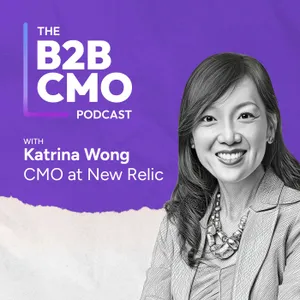
Building a Movement Instead of Chasing Demand with Katrina Wong, CMO at New Relic
Katrina Wong is the Chief Marketing Officer of New Relic, the intelligent observability platform, where she has led brand, demand, and communications. Before taking on the CMO role, she started her career as a consultant at PwC. She later on became Divisional CMO and VP of Marketing at Twilio Segment and held marketing and go-to-market leadership roles at Hired, Zuora, Salesforce, and SAP. In this episode, Katrina joins Sydney Sloan and Jon Miller to share how New Relic repositioned its category as intelligent observability and turned that into an AI story told chapter by chapter. She explains why she reports new business and post-sale pipeline separately in a consumption business, and why one marketing team owns both. Katrina also walks through how her marketing engineering and AI team rebuilt reporting on Gemini, the 85 agents running competitive intel every morning, and what happened when an agency sent her team 200 variations to review. Jump Into the Conversation (00:00) Katrina’s path from consulting to marketing (05:21) Being a strategic CMO and redefining observability for AI (09:13) Telling the AI story like chapters of a book (11:48) How marketing proved AI modernization to the board (14:18) Separating new business and post-sale pipeline (16:21) Customer hackathons and the link between engagement and revenue (18:01) Building a trusted BI layer with vibe coding (20:53) Humans in the loop and the problem of too much AI content (23:18) Gemini gems for sales and 85 daily competitive agents (25:12) The pillars of a superhuman marketing team (27:05) Gratitude, mentors, and key takeaways Episode Takeaways Take a bold stance on your category before someone else sets it for you. New Relic repositioned observability as intelligent observability, was first to claim it, and Gartner recognized the company for its AI vision the following year. Tell your AI story in chapters. Chapter one explained why AI matters in observability. Chapter two named the problem: code volume growing beyond human scale. That led to the brand campaign, Welcome to the Superhuman Era. Measure pipeline the way your business makes money. In a consumption business, new business pipeline is a leading indicator, but revenue comes from usage. New Relic tracks both, and one marketing team owns both. Keep humans in the loop, even when AI can produce more. When an agentic agency sent back 200 variations, Katrina's team realized more output wasn't the answer if no one could review it. Remove the bottlenecks between marketing and the field. Gemini gems for competitive and value selling replaced last-minute Slack asks, and 85 daily agents now draft most competitive updates before a human fact-checks them. Standout Quote "Sometimes the move to be strategic is to take a bold stance and see if it pays off." – Katrina Wong Guest Links LinkedIn: https://www.linkedin.com/in/katrinawong11/ New Relic Website: https://newrelic.com/ Mentioned in this Episode Zuora: https://www.zuora.com/ Gartner: https://www.gartner.com/ Klaviyo: https://www.klaviyo.com/ Tien Tzuo: https://www.linkedin.com/in/tientzuo/ Sue Barsamian: https://www.linkedin.com/in/suebarsamian/ Carilu Dietrich: https://www.linkedin.com/in/carilu/ Tom Hartman: https://www.linkedin.com/in/tom-hartman/ Jennifer Covington: https://www.linkedin.com/in/covingtonjennifer/ More from The B2B CMO Project Website: https://www.b2bcmoproject.com/ LinkedIn: https://www.linkedin.com/company/b2bcmoproject/ Jon Miller: https://www.linkedin.com/in/jonmiller2/ Sydney Sloan: https://www.linkedin.com/in/sydsloan/ More Episodes: https://www.b2bcmoproject.com/podcasts
32 MIN
OCT 19, 2026
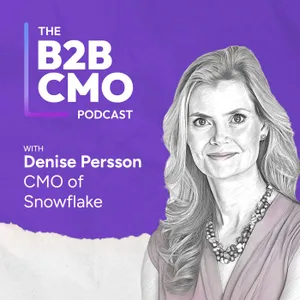
Snowflake’s CMO Reinvents Her Playbook Every Year. Here’s How.
Denise Persson is the Chief Marketing Officer of Snowflake, the AI Data Cloud company. With over 10 years in the role, one of the longest CMO tenures in enterprise tech, she has helped take Snowflake from roughly $1 million in revenue to more than $4 billion. She now leads a marketing team of about 700 people responsible for 40 to 50% of the company's growth, and this year marks her 30th in tech marketing. Denise shares why a new CMO's first team is the leadership team, not the marketing org, and why she throws out her own playbook every year. She also walks through how Snowflake's brand team became its most AI-forward function, how her morning brief replaced waiting on dashboards, why Snowflake moved its SDRs back into sales, and why her team is already working next quarter's pipeline two quarters out. Denise shares the one thing she says builds brand trust above all else: consistency. Jump Into the Conversation (00:00) Welcoming Denise Persson, CMO of Snowflake (01:56) From Commodore to 30 years in tech marketing (05:52) Why the CMO's first team is the leadership team (10:47) Throwing out the playbook every year (14:49) Moving marketing from AI fluency to agentic workflows (19:22) Growing 40 to 50% without adding headcount (21:35) Replacing dashboards with a daily AI brief (24:25) Why Snowflake moved SDRs back into sales (25:59) Fixing a soft quarter two quarters out (29:53) How AI adoption differs across regions (32:02) Why consistency builds brand trust (36:03) Closing gratitude and the leaders who see potential first Episode Takeaways Treat the leadership team as your first team. Denise says the day you become CMO, you are a business leader. That means understanding finance, having empathy for the sales craft, partnering with product, and bringing data and customer proof, not opinion, when you push a point of view. Rebuild your playbook every year and hire for your gaps. Over 10 years at Snowflake, Denise has thrown out her playbook annually. Her survival tactic is self-awareness: know your strengths, then hire people with the superpowers you don't have. Move AI from individual experiments to your top three workflows. Snowflake's top marketing AI user sits on the brand team, which is now building an agentic workflow so regional marketers can self-serve campaign assets instead of waiting 5-10 days. Work pipeline two quarters out. There is no magic campaign that fixes a soft quarter in a long sales cycle. Denise's team uses signals to see a weak quarter six months early, then drills down to territories as small as eight reps to find what's in the red. Build brand trust through consistency. Denise points to McDonald's and Coke as proof that trust comes from never delivering surprises. Her challenge now: keeping the brand consistent when anyone in the company can generate their own branded content. Standout Quote "When you get that CMO role, you need to understand that that’s the day you are a business leader." — Denise Persson Guest Links LinkedIn: https://www.linkedin.com/in/denisepersson/ Snowflake Website: https://www.snowflake.com/ Mentioned in this Episode The Five Dysfunctions of a Team by Patrick Lencioni: https://www.tablegroup.com/topics-and-resources/teamwork-5-dysfunctions/ Frank Slootman: linkedin.com/in/frankslootman Maria Pergolino: https://www.linkedin.com/in/mariapergolino/ Latané Conant: https://www.linkedin.com/in/latane-conant/ Demandbase: https://www.demandbase.com/ More from The B2B CMO Project Website: https://www.b2bcmoproject.com/ LinkedIn: https://www.linkedin.com/company/b2bcmoproject/ Jon Miller: https://www.linkedin.com/in/jonmiller2/ Sydney Sloan: https://www.linkedin.com/in/sydsloan/ More Episodes: https://www.b2bcmoproject.com/podcasts
40 MIN