



Failed Back Surgery: What Do You Do Now?
OCT 1, 202611 MIN
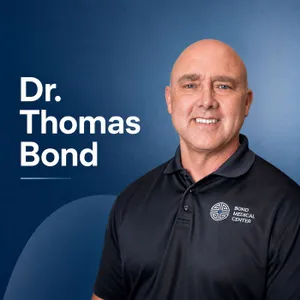
Description
📌 Learn more about IROM procedures at https://www.BondMedicalCenter.com
You had the surgery. You did the rehab. You followed every instruction your surgeon gave you. And you are still in pain, maybe even worse than before. If this sounds familiar, you are not alone, you are not imagining it, and you are not stuck with this for the rest of your life.
In this episode, I'm going to explain what failed back surgery syndrome really is, why it happens so often, and what options you have if you find yourself dealing with pain after your back surgery.
⏱️ TIMESTAMPS
0:00 Failed Back Surgery: What Do You Do Now?
0:50 What is failed back surgery syndrome
1:09 How common is this problem really
1:40 When the surgeon says everything looks fine
2:41 Why the surgery only fixed part of your pain
3:36 How fusion overloads the segments around it
4:56 How we find the real pain generators
6:02 The opioid problem no one talks about
7:22 A dancer's story of multiple failed surgeries
9:50 How we helped him get back to dancing
❓ QUESTIONS ANSWERED
What is failed back surgery syndrome?
Failed back surgery syndrome is when a patient still has persistent back pain after a lumbar surgery like a discectomy, laminectomy, or fusion. It is considered a syndrome, meaning a cluster of symptoms, not a final diagnosis you are stuck with. Many patients are told their scans look fine, even though their pain is very real and often traceable to a specific, identifiable source.
How common is failed back surgery syndrome?
Studies show it affects somewhere between 10 percent and 40 percent of patients who undergo lumbar surgery. That means up to 4 in 10 patients may still have pain after their procedure, which makes this far more common than most patients are led to believe before going under the knife.
Why does back pain return years after a spinal fusion?
Fusing one segment forces the segments above and below it to do extra work they were not designed for. Over 5 to 10 years, this overload often leads to adjacent segment disease, which causes new pain and instability nearby. This is why some patients feel great for a few years after fusion, only to find the pain creeping back in a different location.
RESOURCES
Website: https://www.BondMedicalCenter.com
🔔 If this helped you understand your MRI report, subscribe for more episodes on spinal pain, orthopedic pain, and regenerative alternatives to surgery.
💬 Have you dealt with pain after back surgery? Tell me your story in the comments. I read every one and I may be able to point you toward help.
ABOUT DR. THOMAS BOND
Dr. Thomas Bond, MD, MS, is a board certified sports medicine and regenerative medicine physician with over 20 years of experience treating chronic back, neck, and joint pain. After being told he needed multi level spinal fusions himself, he sought out alternatives and became one of the first five physicians in the Regenexx Physician Network. He was the first physician in Louisiana to perform ultrasound guided PRP and BMAC procedures, has treated over 100,000 patients, and has trained physicians in a dozen countries across three continents. He created the IROM (Interventional Regenerative Orthopedic Medicine) approach to help patients heal and avoid unnecessary surgery whenever possible.
#DegenerativeDiscDisease #BackPainRelief #RegenerativeMedicine #SpineHealth #AvoidSurgery