The Doctor's Beard Podcast

Lucky Shot Productions

Details

A Whovian (John S. Drew) and a Newvian (writer/editor Jim Beard) walk into a TARDIS and retrace the journey of the Doctor and his companions from the very beginning.

Recent Episodes

OCT 17, 2026
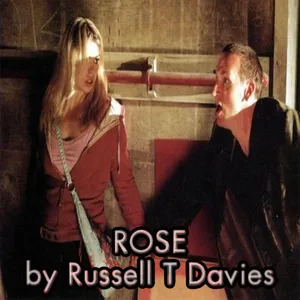
Wilson's Dead - "Rose"
A new era begins. After the long march through the Wilderness Years, the podcast crosses into New Who — and we start, fittingly, with a Rose. A Whole Different Ballgame Every rose has its thorns, and so does this one. The hosts open the modern era with the 2005 episode that brought Doctor Who roaring back — and with a confession: this is a stretch of the show John has actually seen before, though it's been 21 years, and Jim is coming at it nearly fresh. The big question hanging over the whole conversation is the one Jim keeps circling: after everything that came before, does this even feel like Doctor Who? The dynamic you know is still intact — John with the history, Jim with the questions — but the ground has shifted, and both hosts feel it immediately. The Title Says Everything For the first time ever, a companion's name is the title — and John argues that's no accident. The entire episode is told from Rose's point of view; the strange man in the leather jacket drifts in and out of her life, and we never cut away to the Doctor on his own. The hosts trace how this makes Rose the template for every modern companion to come, and find a surprising ancestor for it all the way back in An Unearthly Child. (How many minutes before the Doctor grabs her hand and says "run"? John's got the timestamp.) How the Sausage Got Made A rich tour through the making of the revival: why it landed at BBC Wales and Cardiff, the switch to single-camera filming, shooting in blocks out of order, and the budget that got famously lavished on a later episode. The hosts dig into the great 45-minute format debate — a genuine bugaboo for both of them — plus the "next time" trailers RTD bolted on to pad the runtime, a clever bit of anagram security that would later become the name of a whole spin-off show, the rough cut that leaked online with the wrong theme music, and a broadcast-night glitch that bled a certain talk-show host's audience laughter into Rose's first brush with the Autons. Four Days Later... Here's the gut-punch that landed right as the show was trying to build goodwill for a new era: the announcement that came mere days after Rose aired. The hosts get into the whole tangled business — the BBC's statement, the retraction, what the leading man himself has said since about why he walked and the one condition under which he'd ever return. John and Jim weigh how it all squares with the man cheerfully promoting the show in those early interviews, and what it might mean now that things are changing again. The Man in the Leather Jacket Both hosts clock the echoes of Doctors past in this new one — a little crankiness, a little softness, a flash of that wacky Tom Baker energy — and the "nice to meet you, now run" abruptness that won John over on the spot. But Jim has a bone to pick with the look: it's too ordinary, a Doctor who could walk down any London street unnoticed, and he makes the case (with a certain famously flamboyant Sixth Doctor as his witness) that the costume needed one eccentric touch. Also under discussion: the Doctor's startling new bedside manner, his habit of calling humanity "stupid apes," and whether that's a bit speciesist coming from someone who looks an awful lot like us. The Earth Is Turning John singles out the Doctor's "I can feel the turn of the earth" speech as one of the best monologues in all the Who he's watched — and spins off into a genuinely vertiginous riff on why it works. Elsewhere the hosts turn over the supporting cast: Mickey (pathetic now, but redemption's coming), Jackie and one deeply uncomfortable bedroom scene, and Clive the conspiracy man — the Doctor as a figure glimpsed throughout history — which sparks a delightful tangent and a brand-new BBC tender pitch the boys would like on the record: the Church of the Doctor. Odds, Ends, and Anti-Plastic The war that's only ever called "the war." A vial of anti-plastic that arrives with zero explanation. A console room that prompts John's recurring "just because you can doesn't mean you should." The theme music — which, miracle of miracles, both hosts actually like. The "Doctor Who" vs. "the Doctor" credit question. And the climax that makes good on the title, because when it all looks bleak, it isn't the Doctor who saves the day. As Jim puts it — well, you'll see. It's okay, though. Wilson's dead. Coming Up Next: Saturday (Main Feed): One last trip through the Wilderness Years — Whatever Happened to Susan Foreman?, the hosts' look at the radio mockumentary. Some fun was had. Monday (Patreon Exclusive 192): Music, the Memory TARDIS, and the comics Endgame and The Keep — beginning the Paul McGann era of comics. Friday (Patreon): Episode two — The End of the World. How does the Doctor impress Rose on their first date? He takes her to watch the Earth get destroyed. Hashtags: #DoctorWho #Rose #NewWho #NinthDoctor #ChristopherEccleston #BilliePiper #RussellTDavies #Autons #NesteneConsciousness #ANewEra #RunForYourLife #ClassicWho #DoctorWhoPodcast
107 MIN
OCT 10, 2026
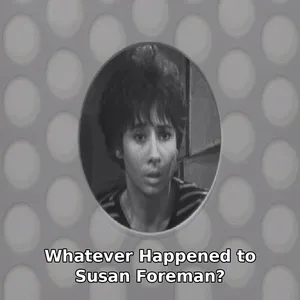
French Is a Universal Language - Whatever Happened to Susan Foreman?
Note: This is a hiatus episode from our Wilderness Years coverage. Love the podcast? Consider joining us on Patreon for early access, exclusive episodes, and the option to commission your own Doctor Who story. For their next stop in the Wilderness Years, John and Jim dig up a genuine oddity: Whatever Happened to Susan Foreman?, a 1994 BBC Radio mockumentary that catches up with the Doctor's granddaughter decades after the TARDIS doors closed on her. Neither host had heard it before, and both come away distinctly of two minds—admiring the sharp writing and committed performances while wrestling with everything the piece is willing to sacrifice for a laugh. A Mockumentary, Not a Continuation The hosts lay out the crucial context up front: this was the fifth of a six-part BBC series revisiting fictional characters after their stories ended, and the producers deliberately never approached Carole Ann Ford or any of the original cast. It's satire, not canon—and the hosts are emphatic that no one should try to make it fit. That framing sets up the episode's central tension: are the story's many "errors" deliberate jokes, sloppy research, or the vagaries of in-universe news reporting? The hosts turn that question over from several angles. A Beatles Connection You Won't See Coming The biggest jaw-dropper is who voices Susan: Jane Asher—actress, and famously Paul McCartney's serious girlfriend through the Beatles' heyday, the muse behind more than one song you know by heart. The hosts spin off into the tangled Asher-McCartney history, note Jane's later Doctor Who universe connection in The Sarah Jane Adventures (and the eerie coincidence of that episode's title), and clock a couple of other notable voices in the cast, including a Fawlty Towers alumnus and a real-life advice columnist playing herself. When Satire Cuts Too Deep Here's where the hosts part ways with the piece. They can appreciate the cleverness—Susan skewering her grandfather as a failed Time Lord who preached non-interference without practicing it, the deadpan insistence that French is a universal language—but they bristle at what gets thrown away for the sake of jokes. The treatment of two beloved original companions draws real objection (one portrayal in particular the hosts consider close to a slap in the face, given the timing), and the deconstruction of a certain bittersweet farewell gets pulled apart in ways that sting. There's a recurring British-education-system running gag that sails past the American hosts, a Thal turning up in the unlikeliest of places, and a couple of moments the hosts feel wander somewhere the material didn't need to go. Both agree it's worth hearing—as a curiosity for the casual viewer more than a treat for the diehard—and both are clear-eyed about the difference between a gentle parody and a genuine satirical evisceration. The Documentary That Might Have Been One of the episode's most interesting threads: what Jim wishes this had been. He makes a case for a straight, unsolved-mystery-style treatment—a cold-case investigation into a girl who vanished from a Totter's Lane junkyard, tracking down the people who knew her, ending on genuine ambiguity—rather than a half-hour comedy that dissects the show purely for yucks. Production Details: Broadcast: BBC Radio, July 9, 1994 Writer: Adrian Mourby | Producer/Director: Brian King (produced in Bristol) Format: Fifth of a six-part radio series revisiting fictional characters after their stories Susan: Jane Asher | Ian: James Grout Also Featuring: June Barry, Eva Haddon, Andrew Sachs, Peter Woodthorpe, Becky Harrison, and Claire Rayner as herself Status: Deliberately non-canonical satire; original cast intentionally not approached Note: No incidental music, sound effects, or TARDIS cues—almost certainly a deliberate (and telling) choice Key Discussion Points: Whether the story's "errors" are deliberate jokes, faulty research, or in-universe reporting Jane Asher's Beatles connection and her later Doctor Who universe role Satire vs. parody, and what the piece sacrifices for its jokes The objectionable treatment of the original companions The deconstruction of Susan's farewell, and what Big Finish later made of it The British-education-system humor that doesn't cross the Atlantic Jim's pitch for the straight, cold-case documentary this might have been Why the total absence of music and sound effects speaks volumes Coming Up Next: Saturday (Main Feed): Wartime—the fan-produced, BBC-sanctioned Benton video (John Levene as Johnny Benton facing the ghosts of his past), from the Patreon vault. Monday (Patreon Exclusive 184): A reggae version of the Doctor Who theme, the Memory TARDIS, and the comics "Memorial," "Cat Litter," and "Pureblood." Friday (Patreon): The last stop before the TV Movie—the fan video Downtime, featuring Elisabeth Sladen, Nicholas Courtney, and Deborah Watling, plus the first appearance of Kate Lethbridge-Stewart. Hashtags: #DoctorWho #SusanForeman #JaneAsher #ClassicWho #WildernessYears #BBCRadio #Mockumentary #FirstDoctor #DoctorWhoPodcast
45 MIN
OCT 3, 2026
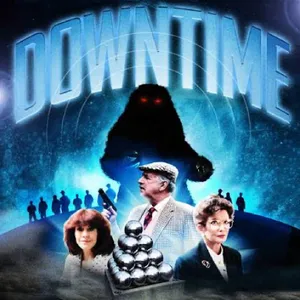
A Third Time I Ask, What Do You Seek? - "Downtime"
Note: This is a hiatus episode from our Wilderness Years coverage—the last original review of the first half before we reach the TV Movie. Love the podcast? Consider joining us on Patreon for early access, exclusive episodes, and the option to commission your own Doctor Who story. For the final Wilderness Years review before the 1996 TV Movie, John and Jim take on Downtime, the 1995 Reeltime Pictures video that reunited a remarkable roster of classic Doctor Who faces without the Doctor himself. It's a bigger, more ambitious cousin to Wartime—more cast, more plot, and a production that, in the hosts' estimation, punches well above its fan-made weight. Both come away pleasantly surprised, and one host lands on it as one of the better vehicles the Brigadier ever got. A Story That Teeters Between Professional and Amateur Written by Marc Platt (Ghost Light) and directed by Christopher Barry (whose Who credits reach all the way back to The Power of the Daleks), Downtime pits the Great Intelligence against Earth by way of the emerging computer age—brainwashed students, a corrupted university, and a plan to conquer the world through the global network. The hosts admire how much of it plays as well as anything the BBC managed (better, they argue, than Ghost Light), while flagging the rougher patches—echoey sound, broad performances, and a first scene that had one host bracing for the worst before the whole thing found its feet. The Rights Maze (and a Sarah Jane Mystery) A signature Doctor's Beard deep dive: how a fan production assembled the Brigadier, the Yeti, Professor Travers, Victoria, and Sarah Jane Smith by negotiating a tangle of rights held by everyone but the BBC—and the lingering question of how Sarah Jane came to be included at all. The hosts weigh competing accounts, a later refusal that speaks volumes, and the delicious irony that a non-sanctioned video birthed a character the BBC would go on to embrace. The First-Ever Kate Lethbridge-Stewart Here's the real headline: Downtime marks the debut of Kate Stewart, decades before Jemma Redgrave made her a fixture of New Who. The hosts trace the strange, wonderful path by which a character created for an unofficial video leapt to the mothership—complete with a grandson named Gordy, a pointed bit of parentage, and an unnamed second child whose reference turns up in the unlikeliest of places. It's a conversation about canon, continuity, and how a piece of apocrypha quietly reshaped the franchise. A Tour de Force for Nicholas Courtney Above all, this is an Alistair Gordon Lethbridge-Stewart story, and the hosts are moved by how much heart Courtney brings to it—an elevator scene they single out, the recruitment of an unexpected ally, and a grandfather-grandson beat in the closing minutes that neither host saw coming. They rank it alongside Battlefield as a showcase for the character, and make a heartfelt case for the ongoing UNIT series that never was. Companions, Old and New Elisabeth Sladen takes her role seriously even when the script gives her surprisingly little to do (and asks her to disown a certain sharpshooting reputation—the hosts cry foul, Pyramids of Mars in hand). Deborah Watling gets a rare chance to stretch Victoria beyond one note, and the hosts find the character's melancholy, left-on-the-outside ending genuinely affecting. Plus: the warmth between Sarah and Kate, and where (and whether) that thread continues. And keep an ear out for a very familiar voice as the university DJ—one that'll ring a bell for anyone who remembers a certain Revelation of the Daleks character. A Snapshot of the Dawning Computer Age The hosts note how vividly Downtime captures its exact moment—rooms of humming PCs, clacking keyboards, and an almost cautionary unease about where all this personal-computer business might be heading. There are little nods throughout to The Web of Fear and beyond, from production-code Easter eggs to the Dalek sound effect buried in the mix. A Possible Fourth Stop? The hosts float whether to cover Reeltime's sequel, Deimos Rising (2004)—a follow-up to The Daemons and another Kate Stewart appearance—and turn the decision over to a Patreon poll. Have thoughts? Let them know. Production Details: Release: September 2, 1995 (direct-to-video, Reeltime Pictures) Runtime: ~70 minutes Writer: Marc Platt (Ghost Light) | Director: Christopher Barry (The Power of the Daleks) Producers: Keith Barnfather, Ian Levine, Paul Cuthbert-Brown, Andrew Beech Returning Cast: Nicholas Courtney (the Brigadier), Elisabeth Sladen (Sarah Jane Smith), Deborah Watling (Victoria Waterfield), Jack Watling (Professor Travers, his final role) Debut: Kate Lethbridge-Stewart, later brought into New Who (recast as Jemma Redgrave) Also Featuring: John Leeson (the DJ), Geoffrey Beevers, James Bree Status: Not BBC-sanctioned; rights secured directly from individual character owners; later novelized by Virgin Books Legacy: Spawned the Candy Jar Lethbridge-Stewart novel line and, indirectly, Kate Stewart's New Who run Key Discussion Points: Why Downtime outshines Wartime (and Ghost Light) The rights tangle behind assembling this cast without the BBC's blessing The Sarah Jane permission mystery and a telling later refusal Kate Lethbridge-Stewart's apocryphal origin and leap to canon Nicholas Courtney's warmth and why writers always served the Brigadier well The ally role originally written for Sergeant Benton Sarah Jane's out-of-character "rotten shot" line Deborah Watling stretching Victoria beyond one note, and her poignant ending The Sarah/Kate connection and whether it continues Downtime as a snapshot of the early computer age Whether to cover Deimos Rising next (a Patreon poll) Coming Up Next: Saturday (Main Feed): Doctor Who and the Seven Keys to Doomsday—the Big Finish adaptation of the 1970s stage play with Trevor Martin, from the Patreon vault. Monday (Patreon Exclusive 185): A Wilderness Years theme (a Jameson suggestion) from the Virgin New Adventures/McCoy era, the Memory TARDIS, and the complete comics "Emperor of the Daleks" and "Evening's Empire" (part one covered ages ago—now the whole thing, two years later). Friday (Patreon): It's finally here—the 1996 TV Movie. Hashtags: #DoctorWho #Downtime #TheBrigadier #NicholasCourtney #SarahJaneSmith #KateStewart #Victoria #Yeti #GreatIntelligence #ClassicWho #WildernessYears #DoctorWhoPodcast
90 MIN
SEP 26, 2026
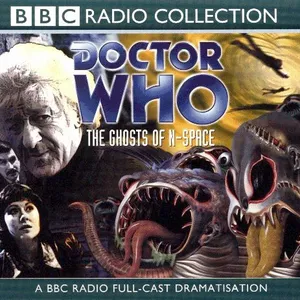
Oh, How the Ghost of You Clings - "The Ghosts of N-Space"
Note: This is a hiatus episode from our Wilderness Years coverage. Love the podcast? Consider joining us on Patreon for early access, exclusive episodes, and the option to commission your own Doctor Who story. For the next stop in the Wilderness Years, John and Jim take on The Ghosts of N-Space, the 1996 BBC Radio serial that stands as Jon Pertwee's final official, BBC-sanctioned turn as the Doctor before his passing that May. Reuniting Pertwee with Elisabeth Sladen and Nicholas Courtney, it's a follow-up (emphatically not a sequel) to The Paradise of Death—and this time, the hosts find themselves on strikingly opposite ends of the spectrum. One arrives braced for the worst and finds unexpected things to admire; the other has a genuine, visceral reaction unlike anything he's felt for any Doctor Who, good or bad. You'll want to stick around for where they each land. A Sequel Born From a Scheduling Mistake The hosts trace the odd path to production: adequate-but-unspectacular listenership for Paradise of Death, three years of foot-dragging, and the strange twist that a rerun aired with its episodes out of order—and the flood of complaints proved people were actually paying attention. Barry Letts and Phil Clark returned to write and direct, Letts himself novelized it (published a year before broadcast), and the story slots into the Pertwee TV era between Death to the Daleks and Monster of Peladon. Pertwee, Courtney, and the Sarah Jane Problem Where the hosts firmly agree: Pertwee is superb, with barely a trace of age in his voice, and Courtney's Brigadier is the heart of the thing—never more so than in a castle-defense sequence that showcases his decades of military strategy rather than played for laughs. Elisabeth Sladen gives it her all, but the hosts take real issue with how the script writes Sarah Jane—a savvy journalist who somehow doesn't know the word "synchronicity," reduced too often to a weeping, quaking Nervous Nellie rather than the headstrong reporter they love. The supporting cast is another matter entirely, and the hosts hold nothing back about a parade of broad accents and grating characters (the uncle, Maggie, and the eternally useless Jeremy chief among them). Ideas Worth Loving in a Story That Tests the Patience Both hosts find genuine merit in the concept: a ghost story handed a science-fiction backbone, with N-Space as a dimension where the earthbound dead accumulate into hostile fiends. There's out-of-body time travel the hosts wish the show had done more of, a heavy dose of Dark Shadows DNA (walled-up villains, essences sent back through time), and callbacks to the Doctor's criminal past, his mysterious teacher, and even a pinch of "mandragora." But it's also, by common agreement, a six-parter with the padding to match—tedious stretches, scenes that bleed together with no transitions, and page after page of characters narrating the action aloud because radio gave them no other choice. Not Your Grandfather's Doctor Who One thing genuinely startles both hosts: the language. This is a decidedly more permissive, adult-leaning production than the TV era it's set in, with some rough dialogue that lands especially oddly given the classic cast and 1970s setting. The hosts wrestle with who, exactly, this was aimed at. A Final Bow for the Third Doctor Underneath it all is the weight of finality. Plans for a third Pertwee radio series never came to be; he died on May 20, 1996, making this his last official performance as the Doctor. The hosts reflect on what it means that this is the send-off, how it stacks against The Five Doctors and even Dimensions in Time, and the feelings that surface when a beloved Doctor's final innings doesn't quite measure up to the actor who gave it everything. Production Details: Broadcast: BBC Radio 2, January 20 – February 24, 1996 (six half-hour episodes) Writer: Barry Letts | Director/Producer: Phil Clark (both returning from The Paradise of Death) Starring: Jon Pertwee (the Doctor), Elisabeth Sladen (Sarah Jane Smith), Nicholas Courtney (the Brigadier) Also Featuring: Richard Pierce (Jeremy Fitzoliver), Stephen Thorne (Max Vilmio), Sandra Dickinson (Maggie), Harry Towb (Mario), Deborah Berlin (Louisa) Music: Peter Howell of the BBC Radiophonic Workshop Timeline: Set in the TV era between Death to the Daleks and The Monster of Peladon Novelization: By Barry Letts, published 1995 (a year before broadcast) Significance: Jon Pertwee's final official BBC-sanctioned performance as the Doctor; he passed away May 20, 1996 Cast Connections: Stephen Thorne (Azal in The Dæmons, Omega in The Three Doctors, Eldrad in The Hand of Fear), Harry Towb (The Seeds of Death, Terror of the Autons), and Sandra Dickinson (Trillian in the BBC's Hitchhiker's Guide, and Peter Davison's first wife) Key Discussion Points: Why this is a follow-up, not a sequel, to The Paradise of Death The scheduling-error rerun that greenlit the whole production Pertwee and Courtney at their best (and the Brigadier's tactical showcase) The mishandling of Sarah Jane Smith's character The parade of grating supporting characters The strong central concept: ghosts given a science-fiction explanation The heavy Dark Shadows influence The surprising rough language and who the production was for Six episodes of padding and the challenge of exposition-by-narration on radio The weight of this being Pertwee's final bow as the Doctor Coming Up Next: Saturday (Main Feed): The 1996 TV Movie—already available here on the Patreon feed. Monday (Patreon Exclusive 187): Jim finally gets his Oompa theme, the Memory TARDIS, and the comics "Uninvited Guest," "Victims," and "The Lunar Stranger." Friday (Patreon): Steven Moffat's very first Doctor Who script—the Comic Relief spoof The Curse of Fatal Death. A lighter, funnier one, for a change. Hashtags: #DoctorWho #ThirdDoctor #JonPertwee #SarahJaneSmith #Brigadier #BBCRadio #WildernessYears #TheGhostsOfNSpace #DoctorWhoPodcast

70 MIN
SEP 19, 2026
The Backseat Brig and the Theme Park of Doom - "The Paradise of Death"
Note: This is a hiatus episode, part of our Wilderness Years series for Patreon subscribers. Love the podcast? Consider joining us on Patreon for early access to episodes, exclusive content, and the option to commission your own Doctor Who story. Show Notes: Nostalgia, Recorded at 5:45 in the Morning For their first dip into the 1990s Wilderness Years, John and Jim take on The Paradise of Death—the five-part BBC Radio serial that brought Jon Pertwee, Nicholas Courtney, and Elisabeth Sladen back together in 1993 for Doctor Who's 30th anniversary. It's a lavishly produced piece of nostalgia with everyone slipping effortlessly back into their roles, and Jim surprises himself by having far more to say about it than he expected. But it's also, both hosts agree, a real mixed bag—one that runs long enough to test even a devoted listener's attention. A Theme Park That Predicted the Future Space World, London's flashy new amusement park, runs on "ER"—Experienced Reality, a full-immersion virtual experience that the hosts note eerily anticipates where technology sits today. The opening episode earns near-universal praise from both hosts, complete with a sound effect for entering VR that somehow just works. From there, the story spirals out to an alien world, a corporation with sinister motives, gladiatorial games, and a plant with a very dark secret. When You Bring Back the Legends But Don't Give Them Much to Do Here's where the hosts wrestle with the production. Jon Pertwee shines and the female guest character, Onya, nearly steals the whole thing—but the Brigadier spends most of the story, as Jim dubs him, the "backseat Brig," and Sarah Jane is saddled with more victim duty (and with the widely loathed new photographer Jeremy Fitzoliver) than the fans would have liked. There's a debate about whether leaning on nostalgia alone is enough when the beloved characters aren't given real material, and a discussion of the ways Barry Letts's script reaches for a more "mature" register than classic TV Who ever did—some of it landing, some of it distinctly uncomfortable. A Continuity Snag Only a Barry Letts Could Introduce In a move that baffled fandom, the script stages a first-time introduction between two characters who had already met on screen. The hosts dig into exactly where and when that introduction really happened, why nobody in the room caught the error, and what it reveals about how much (or how little) oversight this side project got. There's a running argument that a Terrance Dicks-style continuity person could have saved the production from itself. Reverse the Polarity of the What Now? One creative choice genuinely sours Jim: the story pauses to deconstruct a certain beloved Third Doctor catchphrase, explaining away something that never needed explaining. It sparks a lively debate about which Doctor catchphrases should simply be left alone (Allons-y, my giddy aunt, brave heart) and whether taking the Mickey out of Pertwee's signature line crosses a line of its own. There's a happier callback later, too—a Venusian lullaby and a fondly remembered name from the Pertwee era that the hosts were delighted to hear. A Death That Actually Lands Amid the mixed feelings, the hosts single out a genuinely affecting moment of grief in the final episode—the kind of heartfelt reaction to a character's death that earlier Doctor Who so often skipped right past. It's a reminder of what the production gets right even as the hosts find their attention wandering through the sprawling later episodes. Production Details: Broadcast: BBC Radio 5, August 27 – September 24, 1993 (five 30-minute episodes) Writer: Barry Letts | Director: Phil Clark (who would return for the sequel) Starring: Jon Pertwee (the Doctor), Nicholas Courtney (Brigadier Lethbridge-Stewart), Elisabeth Sladen (Sarah Jane Smith), Jane Slavin (Onya) Villains: Harold Innocent (Freeth), Peter Miles (Tragan) Also Featuring: Maurice Denham (the President), Richard Pierce (Jeremy Fitzoliver), Jonathan Tafler (Captain Waldo Rudley) Title Music: Ron Grainer, arranged by Peter Howell; additional music by Peter Howell of the BBC Radiophonic Workshop Doctor Who Veterans in the Cast: Peter Miles (Dr. Lawrence in Doctor Who and the Silurians, Professor Whitaker in Invasion of the Dinosaurs, Nyder in Genesis of the Daleks), Maurice Denham (Professor Edgeworth in The Twin Dilemma), and more Context: Produced to give Doctor Who a presence for its 30th anniversary, alongside the success of the Virgin novels; the sequel The Ghosts of N-Space would air in 1996, shortly before Pertwee's death Novelization: By Barry Letts (a faithful transcription with little added) Key Discussion Points: Why the first episode is the strongest and how VR/ER anticipates modern technology The "backseat Brig" problem and Sarah Jane's reduced role The uselessness of Jeremy Fitzoliver The baffling on-air "introduction" of two characters who'd already met The more mature/edgy touches (the death penalty debate, Tragan's menace, political commentary) and whether they belong The decision to deconstruct a classic Pertwee catchphrase Which Doctor catchphrases should be left untouched Why even the biggest names (Barry Letts, Stephen King) still need an editor Could this have been a story for a different Doctor and companion team? The heartfelt handling of a character death in the finale Coming Up Next (Patreon): Monday (Patreon Exclusive 182): Music, the Memory TARDIS wheel, and two single-part Doctor Who Magazine comics—"A Glitch in Time" and "Evening's Empire" (though there's a tale behind that second one). Wednesday (Main Feed): Shada—already available here on the Patreon feed, now shared with the main feed to mark its VHS-era timing. Friday (Patreon): Dimensions in Time—the Children in Need multi-Doctor special. Jim finally sees what all the fuss is about, with guest podcaster JB Anderton joining the discussion. Hashtags: #DoctorWho #ThirdDoctor #JonPertwee #SarahJaneSmith #Brigadier #BBCRadio #WildernessYears #TheParadiseOfDeath #DoctorWhoPodcast
81 MIN