



The Mattachine Podcast
Brad Dunshee
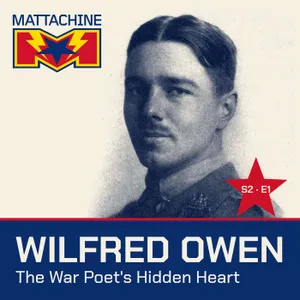
Wilfred Owen: The War Poet's Hidden Heart
OCT 31, 202632 MIN
Description
Wilfred Owen wrote the defining poems of the First World War, and the love his family tried to erase is part of that story.
He is the most widely read poet of the war. His lines "the pity of War" and "the old Lie" changed how the world talks about combat. In 1917, while he was being treated for shell shock at Craiglockhart War Hospital in Edinburgh, he met Siegfried Sassoon. Their intense bond, which Owen described in a letter as "I love you, dispassionately, so much, so very much," shaped his greatest poems and drew him into a circle of queer writers around Oscar Wilde's friend Robbie Ross. He was killed on November 4, 1918, one week before the Armistice, and his family learned of his death as the church bells rang for peace.
In this episode we follow the poet his brother later tried to edit out with scissors and ink, and we look honestly at what the evidence about his inner life shows and where it runs out.
Poems read (all public domain): Anthem for Doomed Youth, Dulce et Decorum Est, Shadwell Stair, Futility, Strange Meeting, Greater Love, and the Preface.
Researched, written and narrated by Brad Dunshee. Cover photo: frontispiece of Poems (1920), public domain.