The Media Odyssey

Evan Shapiro & Marion Ranchet

Details

Each week, two of media’s most influential thinkers, Evan Shapiro & Marion Ranchet, take on the hottest media topics with their hottest takes, helping their audience chart a course through the maelstrom that is today’s Media Odyssey. Based in the US, Evan Shapiro is the Media Industry’s official Cartographer, known for his well-researched and provocative analysis of the entertainment ecosystem in his must read treatises on Media’s latest trends and trajectories. Marion Ranchet, French expat based in Amsterdam, has become the industry’s go-to expert in all things streaming, building a following for turning even the most complex problems into easily digestible and actionable insights. Ranchet and Shapiro are known for their sharp-yet-accessible content on Media consumption, audience trends, and the shifting fundamentals of the business itself. Even during the toughest of topics, they each make talking about Media fun. Together every week, these two will offer entertaining, often humorous, and always educational content on today’s Media Odyssey.

Recent Episodes

OCT 15, 2026
FINDING YOUR AUDIENCE FROM THE COUCH TO THE TOILET
Premium streaming lost 89% of the subscribers that signed up for new subscriptions last year, and the audience it’s chasing is watching video in the bedroom, on the bus, and on the toilet. Evan Shapiro’s keynote makes the case that media has to redefine broadcast and follow the whole consumer. In this keynote episode of the Media Odyssey Podcast, recorded on stage at Jupiter Festival in Miami, Evan Shapiro unveils the newest Media Universe map and the Creator Ecosphere map. He walks through cross-screen attention data from 23 regions, including why YouTube, TikTok, and vertical video are winning the phone-first audience, how the creator economy is shifting toward the affinity economy, and why the “cannibalization” fear is a myth, using World Cup viewership as proof. He also covers streaming retention, the rise of advertising over subscriptions, vertical premium television, employee-generated content, and how brands and media companies can win by thinking like creators in the user-centric era. Key Takeaways: 1. The User-Centric Era Is Here, and the Phone Is the Remote Control 81% of the world’s population is 54 or younger, and phones beat television sets for video time by more than two to one in the US and more than three to one in Brazil and Mexico. In the 23 regions surveyed, the bedroom was the top place to watch video, and 75% of the Indian Premier League cricket final was watched on phones. 2. YouTube Wins by Serving the Whole Consumer The new de-duplicated cross-screen attention index (index.eshap.tv) puts YouTube first in the US because it is the only platform on both television sets and phones, with a vertical product. Among under-55s TikTok ranks second, and among under-25s TikTok wins total attention in the US. 3. Premium Streaming Is Plateauing as Advertising Overtakes Subscriptions In the past year SVOD added 175 million subscribers and lost 156 million, a net retention of just 11%. PwC data shows advertising surpassing subscriptions in global revenue for the first time in a long time, which explains why premium streamers are rushing into ads. 4. The Cannibalization Myth Doesn’t Hold Up During the World Cup, CazéTV in Brazil hit 24 million concurrent YouTube streams for the final while 70 million people watched on broadcast at the same time. RTL in Germany reports a 26% increase in paid subscriptions and a 126% increase in sampling from audiences reached on YouTube, and BBC Studios’ Jasmine Dawson says that in every case studied, social distribution is additive. 5. Think Like a Creator Indie creators on the Affinity 100 list showed three to five times better engagement quality than mega creators. Heinz drove about $45 million in earned media and a 12% sales lift by mocking FIFA’s stadium branding rules, and Kit Kat’s stolen-truck posts reached 128 million people and $224 million in earned media. World of Wonder’s WOW Presents, built on its Drag Race fandom, reports 96% retention. Interested in sponsorship? https://forms.gle/2LCWfX2HBNT8mtpx8 Connect with us on Linkedin: Evan Shapiro - https://www.linkedin.com/in/eshap-media-cartographer/ Marion Ranchet - https://www.linkedin.com/in/marionranchet/ The Media Odyssey Podcast - https://www.linkedin.com/company/the-media-odyssey-podcast (00:00) - Opening Banter (00:07) - Mapping the Media Universe (01:12) - User Centric Era Begins (02:30) - Creator Ecosphere Shift (02:59) - Who the Consumers Are (04:25) - Streaming vs Social Video (06:39) - Where People Watch Video (09:38) - Phone First Attention Index (14:31) - Affinity Economy Explained (17:51) - Bluey and No Cannibalization (20:08) - Sports Second Screen Fandom (22:58) - Vertical Video Explosion (24:27) - Brands Acting Like Creators (27:18) - Employee Generated Content Wins (29:25) - Drag Race Creator Mindset (31:27) - Final Takeaways and Close

33 MIN
OCT 8, 2026
HOW TO FIX KIDS CONTENT
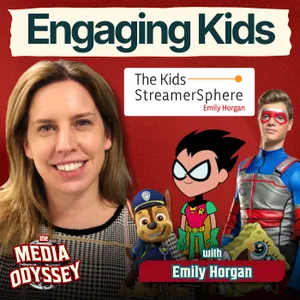
YouTube built the kids content economy, then broke its own monetization pipeline. Now it's time to fix kids content. This episode of the Media Odyssey Podcast features hosts Evan Shapiro and Marion Ranchet with kids media analyst Emily Horgan (The Kids Streamersphere), breaking down her latest Netflix Kids Content Performance Report. They dig into why Netflix isn't building new kids IP, YouTube's broken monetization pipeline for children's content, and how what's actually working for creators and franchises in a brutally competitive kids' content landscape can be the roadmap to fixing kids content. Key Takeaways: 1. Netflix Is the Stage, Not the Lab Netflix's recent kids hits (Gabby's Dollhouse, Creature Cases) mostly originated five-plus years ago, and newer breakouts like Ms. Rachel and the digital-first animation flooding Netflix (Sheriff Labrador, ChuChu TV) were built elsewhere, mainly on YouTube. Emily Horgan argues Netflix is "North Starred on streaming" rather than franchise-building, licensing proven IP (Paw Patrol, Peppa Pig, Miraculous Ladybug) rather than developing new characters from scratch. 2. YouTube's Kids Monetization Pipeline Is Broken Advertising revenue for kids content on YouTube has collapsed over the past five years following FTC regulation (COPPA enforcement) and cooling advertiser appetite even though kids content represents roughly 15% of platform usage. This has throttled the pipeline that once produced hits like Cocomelon, making it far harder for "the next Ms. Rachel" to emerge. 3. Old IP Still Dominates (But Legacy Live-Action Is Resurging) Decade-old Nickelodeon live-action shows like The Thundermans and Sam & Cat continue to perform strongly on Netflix, a trend Emily Horgan's team began tracking closely around the Paramount-Warner Bros merger. Shows like SpongeBob and Bluey show that durable franchises, often 20+ years old, dominate the kids top 10. New entries can take 28 months or more to build an audience. 4. AI's Double-Edged Role in Kids Animation Studios like Toonstar are using AI-assisted animation to cut production costs to roughly 5% of traditional costs, enabling profitable, creator-led shows and faster turnaround. But the same efficiency is flooding YouTube with low-quality "AI slop," which erodes parental trust that is already weakened among Gen Z parents. 5. The Playbook: Build the Audience, Then the Business The winning model is audience-first, not commission-first. Success shows now need to build direct relationships with fans via YouTube, live events, and merch before pursuing traditional distribution deals. Examples include Steven and Parker (now reaching 30 million weekly viewers across six languages) and Sesame Street's multi-platform windowing strategy between Netflix and YouTube. Thank you to Emily Horgan for joining the pod! Emily Horgan - https://www.linkedin.com/in/emohorgan/ Kids Media Club Podcast - https://kids-media-club-podcast.captivate.fm/listen The Kids Kids StreamerSphere - https://thekidsstreamersphere.substack.com/ Interested in sponsorship? https://forms.gle/2LCWfX2HBNT8mtpx8 Connect with us on Linkedin: Evan Shapiro - https://www.linkedin.com/in/eshap-media-cartographer/ Marion Ranchet - https://www.linkedin.com/in/marionranchet/ The Media Odyssey Podcast - https://www.linkedin.com/company/the-media-odyssey-podcast (00:00) - Welcome and Dublin Banter (03:10) - Inside the Netflix Kids Report (05:36) - Live Action Surprise Hits (07:23) - YouTube IP Flood Returns (09:35) - Why Netflix Licenses More (12:55) - Kids Strategy and Pipeline (16:57) - YouTube as the Lab (17:56) - Kids Monetization Collapse (19:15) - Regulation and Ad Chill (22:35) - Co-Viewing and Nostalgia Wins (23:28) - Fixing YouTube Kids (25:18) - Monetization and Prominence (27:57) - Regulation and Responsibility (29:46) - Netflix Engagement Shift (34:15) - New IP and Revenue Models (36:41) - AI Animation Promise and Slop (40:01) - Mini SVOD and Superfan Subscriptions (43:49) - Creator Entrepreneur Mindset (47:16) - Wrap Up and MIPCOM Plans
49 MIN
OCT 1, 2026
THE END OF THE PARAMOUNT SAGA AND THE TECH-BROS OF THE APOCALYPSE
An Anthropic engineer warned AI could destroy humanity, but Silicon Valley's sudden AI "safety" panic looks a lot like a marketing campaign. This episode of the Media Odyssey Podcast with Evan Shapiro and Marion Ranchet breaks down how California's attorneys general settled in the Paramount-Warner Bros Discovery merger, what the deal's mandates actually require, and why the AI industry's sudden doomsday messaging conveniently coincides with OpenAI and Anthropic's IPO troubles. Plus a look at how Europe is positioning itself in the AI race. Key Takeaways 1. The AI "Safety Panic" Marketing Campaign A former Anthropic engineer's viral tweet warning that AI companies were racing toward "recursive self-improvement" was quickly echoed throughout Sillicon Valley. But the timing argues the timing (right as OpenAI delayed its IPO citing cash problems and Anthropic prepared to raise at a $2 trillion valuation) makes the warnings look more like hype-driven marketing than genuine risk. 2 Meta's Muse Shows the Gap Between Hype and Reality Meta's new AI app Muse became the top downloaded app in app stores days after launch, despite requiring access to users' email, texts, and banking information. But within a single day, security researcher Patrick Wardle hacked his own instance of Muse and planted malware. 3. Europe's AI Position: Enterprise Over Frontier Models Mistral has pivoted away from competing directly with OpenAI and Anthropic on frontier models, focusing instead on enterprise distribution and infrastructure. Marion Ranchet notes Mistral's most recent $3 billion funding round, led by Samsung, values the company at $21 billion, a fraction of Anthropic's and OpenAI's valuations, but Europe is still finding places for its own AI. 4. The Paramount-Warner Bros Deal's Mandates Attorney General Rob Bonta settled the merger under political pressure, securing commitments including 30-32 theatrical film releases per year, a $25 million independent film fund, mandatory separate operation of Paramount and Warner Bros, keeping studio lots, and an independent oversight board to monitor editorial interference at at CNN. 5. Massive Layoffs Are Coming With $81 billion in combined debt against roughly $12 billion in declining EBITDA, and a plan requiring $6 billion in synergies plus 50% EBITDA growth in 36 months, Evan Shapiro estimates around 20,000 layoffs at Warner Bros and Paramount over the next few years. Interested in sponsorship? https://forms.gle/2LCWfX2HBNT8mtpx8 Connect with us on Linkedin: Evan Shapiro - https://www.linkedin.com/in/eshap-media-cartographer/ Marion Ranchet - https://www.linkedin.com/in/marionranchet/ The Media Odyssey Podcast - https://www.linkedin.com/company/the-media-odyssey-podcast (00:00) - Welcome (00:32) - Evan Was Wrong (01:56) - Regulators Deal Mandates (02:11) - Theatrical Quotas and Studio Separation (05:08) - News Oversight (08:40) - Pluto TV and Ad Strategy (12:04) - Job Cuts (17:39) - Why Workers Weren't Protected (22:34) - AI Doom Tweets (27:09) - China Models and Reality Check (28:01) - Self Regulation Spin (29:07) - Free Models Threat (31:32) - Muse Privacy Disaster (33:37) - Europe AI (40:59) - Hype Versus Reality (46:34) - Using AI Wisely (49:07) - Commoditized AI Future (52:31) - Next Week
53 MIN
SEP 24, 2026
THE AFFINITY 100: THE MOST IMPACTFUL CREATORS OF 2026
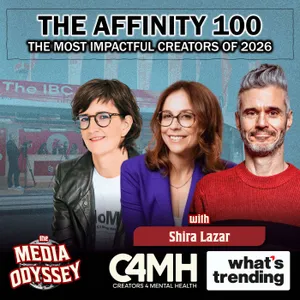
Blair Imani just beat MrBeast on a brand-new ranking of creator influence and and the metric behind it could change how brands spend their money on YouTube, TikTok, and Instagram. This episode of The Media Odyssey Podcast, recorded outside at IBC, features hosts Evan Shapiro and Marion Ranchet with special guest Shira Lazar. They unpack the newly released Affinity 100, a ranking of the most impactful creators of 2026 built on a new metric called the Affinity Quotient, developed with Whalar Group and Foam. Key Takeaways: 1. A New Way to Measure Influence The Affinity Quotient weighs likes and comments, adds shares at double weight, and divides by views to measure engagement per view rather than engagement per post. It captures depth of impact rather than raw reach. 2. Blair Imani Tops the List, MrBeast Ranks 85th Educator and historian Blair Imani (fewer than 1 million total followers) ranked #1, while MrBeast, the world's biggest creator with half a billion followers, landed at 85. The list shows a shift from "creator economy" to the "affinity economy," where depth of engagement matters more than scale. 3. Indie and Expert Creators Are Rising The list highlights "indie creators" and niche experts (a finance guru, a film reviewer, a makeup artist turned inclusivity consultant) showing that creators with as few as 10,000-50,000 highly engaged fans can build sustainable, meaningful businesses. 4. Brands Still Chase Follower Counts Despite the Shift Even as the industry talks about quality over quantity, brand briefs still specify minimum follower counts (e.g., "250K-plus"). Shira Lazar argues B2B and knowledge creators are starting to shift that mindset, since the people following niche experts are often the ones making purchasing decisions. 5. The Creator Ecosphere Map Returns in October Evan Shapiro will unveil the second edition of the Creator Ecosphere Map on October 8th at the inaugural Jupiter Festival in Miami, sponsored by YouTube. The new version will rank roughly 800 creators using the Affinity Quotient across all major platforms, with all underlying data made publicly available for validation. Thank you to Shira Lazar for joining the pod! Shira Lazar - https://www.linkedin.com/in/shiralazar/ Interested in sponsorship? https://forms.gle/2LCWfX2HBNT8mtpx8 Connect with us on Linkedin: Evan Shapiro - https://www.linkedin.com/in/eshap-media-cartographer/ Marion Ranchet - https://www.linkedin.com/in/marionranchet/ The Media Odyssey Podcast - https://www.linkedin.com/company/the-media-odyssey-podcast (00:00) - Live at IBC Intro (00:46) - Affinity Quotient Explained (02:34) - Top Creators and MrBeast Context (05:08) - Why the List Matters (08:08) - Sustainable Creator Playbooks (10:43) - Scale vs Trust Debate (13:39) - Expert Economy and Diversity (15:22) - Next Map and Jupiter Festival (16:59) - YouTube Views and Monetization (18:59) - Wrap Up and Banter
20 MIN
SEP 22, 2026
80% WEEKLY REACH, SHRINKING BUDGETS: EUROPE'S PUBLIC SERVICE MEDIA
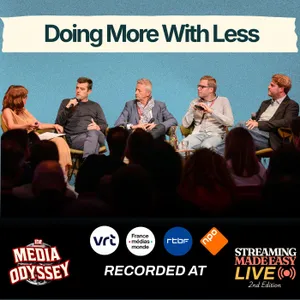
Europe's public broadcasters are losing over 5% of their funding on average, and some budgets are being slashed by up to 70%. It's not because of economics, but ideology. This bonus episode, recorded live at SME Live 2026 in Amsterdam, features Marion Ranchet with Serge Schick (France Medias Monde), Lieven Vermaele (VRT), Christophe Chantraine (RTBF), and Bastiaan Toering (NPO), discussing the funding pressures and strategic countermeasures reshaping European public service media. Key Takeaways 1. Public Service Media Reach Is Massive, But Funding Is Shrinking PSM reaches over 80% of Europeans weekly (close to 70% among 15-24 year-olds) at a cost of just €3.60 per citizen per month. At the same time, average funding fell more than 5% between 2019 and 2024, with some countries like Switzerland cutting budgets by 70% despite no public deficit, reflecting political and ideological pressure rather than economics alone. 2. Broadcasters Are Cutting Costs to Protect Content RTBF is reducing its workforce by 10% over four years mainly through attrition, cutting a radio station, and some sports rights. VRT is rationalizing its brand portfolio down to three core digital platforms (news, sport, audio-visual) while keeping 65% of its budget tied to content production. 3. SVOD and Partnerships Are New Revenue Levers NPO's NPO+ SVOD service, launched in 2016, has driven a decade of added revenue, and its co-production "Wolven" with Disney+ shows public broadcasters increasingly open to streamer partnerships. This mindset shift wouldn't have happened five years ago, contrasting with France's failed Salto SVOD venture. 4. YouTube Strategy Varies by Broadcaster France Médias Monde treats YouTube as essential reach across 18 markets it can't cover alone, RTBF uses release-window delays to protect its own platform while benefiting from a large audience halo effect outside Belgium, and NPO/VRT build YouTube-native content designed to funnel viewers back to their own platforms. 5. Collaboration Across PSM Remains Limited European public broadcasters still rarely share technology or infrastructure the way commercial groups like RTL or Bedrock do across markets, despite recognizing the need for scale. Efforts like the EBU-backed Public Space Incubator offer a small but promising start. Thank you to all the panelists: Serge Schick - https://www.linkedin.com/in/serge-schick-447019104/ Lieven Vermaele - https://www.linkedin.com/in/lievenvermaele/ Christophe Chantraine - https://www.linkedin.com/in/christophechantraine/ Bastiaan Toering - https://www.linkedin.com/in/bastiaan-toering/ Interested in sponsorship? https://forms.gle/2LCWfX2HBNT8mtpx8 Connect with us on Linkedin: Evan Shapiro - https://www.linkedin.com/in/eshap-media-cartographer/ Marion Ranchet - https://www.linkedin.com/in/marionranchet/ The Media Odyssey Podcast - https://www.linkedin.com/company/the-media-odyssey-podcast
26 MIN