The Metal Guys Talk Business

Comton Group

Details

Peter Comerford and Mike Bolton are The Metal Guys! Both have worked in the metal sector for almost 20 years, a huge global industry that produces more than a billion tonnes of material annually and affects every industry and walk of life. Together they run a successful recruitment agency Engineered for Metal and Manufacturing Businesses. Their combined industry know how and position in the sector ideally places them to provide impartial, independent insight into the industry. Under the moniker of The Metal Guys, the pair have candid conversations, often asking the difficult questions to the decision makers and technical experts that you won't often hear on other podcast. If you produce, work with with or supply metal, then tune in and join the conversation.

Recent Episodes

OCT 20, 2026
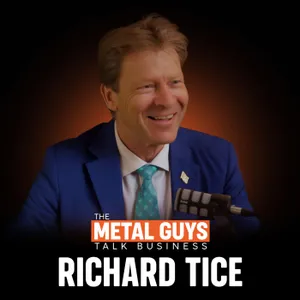
S04E12 | Reindustrialising Britain featuring Richard Tice of Reform UK
Reindustrialising Britain. This episode was recorded at the first Reindustrialising Britain event featuring key note speaker Richard Tice from Reform UK. Satwat Nawabzada (Pro Enviro Ltd) is a CBAM expert and ex chief of Staff in UK Government. After a two year stint in the Steel Sector with Meridian Steel he set up a think tank to assist the UK steel sector in discussing the impact to the industry after the UK imposition of new Quotas and Tariffs built around the UK Steel Strategy. The Metal Guys, Pete and Mike sat down with Satwat and Richard Tice before the event to capture the reasons this think tank exists, how it will move forward and how people in the Steel Sector can get involved with voicing their opinions to the policy and decision makers in the UK. Pete and Mike then reflect on the event and add some context from the people they are speaking to day to day. Enjoy the podcast. SEASON FOUR of The Metal Guys Talk Business is sponsored by: NERO Pipeline Connections, a trusted UK stockholder of stainless steel valves, fittings, and pipeline products, supporting industries from process to precision. Comton Group, Recruitment Engineered for Metal and Manufacturing. The Metal Guys Talk Business is created and produced by Comton Group. Contact us via our social media channels to discuss the podcast and recruitment solutions for your business. Social Media Accounts LinkedIn: Michael Bolton - Mike Peter Comerford - Pete Comton Group - Comton Group TikTok: Mike - @comtonmike Pete - @comtonpete Instagram: Mike - @comtonmike Pete - @comtonpete
34 MIN
JUN 4, 2026
S4E11 | Inside the UK Steel Quota Debate with Carrie Bone of Kallanish Commodities
Episode Title: Inside the UK Steel Quota Debate Host: Peter Comerford Guest: Carrie Bone Organisation: Kallanish Commodities Episode Summary In this episode of The Metal Guys Talk Business, Pete is joined by Carrie Bone to continue the discussion around the proposed UK steel quotas and tariffs, and the wider implications for the steel, stainless and engineering sectors. Carrie provides an overview of: Why the UK steel market has reached this point Global steel overcapacity The difference between UK quotas and EU tariffs Why UK mills have struggled to compete internationally The risks facing downstream manufacturers Concerns around supply chains, pricing and loopholes The conversation also explores whether the UK is now at a tipping point where government intervention has become unavoidable. “We’re at a Knife Edge” One of the strongest themes throughout the episode is the concern that the UK steel industry may have reached a critical moment. Pete openly questions whether the government now feels forced to act aggressively in order to prevent further decline in UK steelmaking capacity. Carrie explains that: UK steel production has been falling for years Energy and operating costs remain extremely high Global overcapacity continues to pressure prices Imported material is often significantly cheaper The discussion highlights the difficult balance between protecting domestic production and maintaining competitive manufacturing costs. Quotas vs Tariffs – What’s Actually Happening? A major part of the episode focuses on the difference between: EU tariff systems UK quota systems Safeguard measures Carrie explains how Europe has operated with various protection measures for years, while the UK is now attempting to introduce its own framework following Brexit. The discussion also explores: Why some businesses were caught off guard How stainless and alloy markets became affected Why many downstream manufacturers didn’t initially realise they could be impacted The Speed of Change Both Pete and Carrie repeatedly return to the issue of timing. While many agree that UK steel requires support, there are concerns that: The changes are happening too quickly Domestic mills cannot ramp up production fast enough Recruitment and restarting mothballed facilities takes time Supply chains cannot adjust overnight Pete compares the situation to replacing a supermarket with a corner shop: There is simply less availability and less flexibility within the system.Finished Product “Loopholes” A particularly important discussion centres around the concern that tariffs and quotas could unintentionally encourage more overseas fabrication. The pair discuss how: Raw steel imports may become prohibitively expensive Fabricated products can still be imported more easily Overseas manufacturers may gain an advantage UK businesses could shift production abroad Pete references concerns from industry contacts that some manufacturers may eventually relocate fabrication operations overseas if UK production costs rise too sharply. The Pressure on UK Manufacturing The episode explores the knock-on impact for: Engineering companies Fabricators Stockholders Processors OEM manufacturers Carrie explains that many businesses are now struggling with: Unclear pricing Uncertain future costs Long-term contract exposure Changing import terms and delivery responsibilities The discussion also touches on DDP and DAP Incoterms and how some suppliers may now be forced to renegotiate pricing agreements due to the scale of the proposed changes. Can UK Production Be Rebuilt Quickly Enough? A recurring theme throughout the conversation is realism around UK production capability. Pete questions whether: Mothballed facilities can realistically restart quickly Skilled labour is available Mills can secure raw materials fast enough Capacity can return within weeks rather than years Both acknowledge that while supporting UK steel is important, rebuilding lost industrial capability is not an overnight process. Brexit, Strategy & Long-Term Thinking The discussion also moves into the wider strategic picture following Brexit. Topics include: Global steel overcapacity The cost of maintaining domestic virgin steel production Government subsidies and intervention Long-term industrial strategy Pete argues that while the government clearly wants to protect UK steelmaking, the implementation may have benefited from a more gradual roadmap over several years rather than a rapid adjustment within weeks. The Bigger Concern: Market Uncertainty Toward the end of the episode, Pete summarises the core concern: Businesses can adapt to higher prices, but uncertainty is far harder to manage. The speed of implementation has left many companies: Rushing orders Stockpiling material Delaying decisions Struggling to quote accurately The conversation reinforces how quickly uncertainty alone can destabilise manufacturing supply chains. Key Takeaway This episode explores a difficult reality: The UK may need to protect domestic steel production, but if the transition happens too aggressively, there is a risk of damaging the wider manufacturing and engineering sectors that rely on stable, competitive supply chains. The question throughout the discussion is not necessarily whether change is needed… …but whether the current pace and structure of that change is sustainable. Learn More Kallanish Commodities UK Steel Confederation of British Metalforming (CBM) SEASON FOUR of The Metal Guys Talk Business is sponsored by: SteelBuy, a digital platform revolutionising the way businesses trade metal products online. NERO Pipeline Connections, a trusted UK stockholder of stainless steel valves, fittings, and pipeline products, supporting industries from process to precision. Comton Group, Recruitment Engineered for Metal and Manufacturing. The Metal Guys Talk Business is created and produced by Comton Group. Contact us via our social media channels to discuss the podcast and recruitment solutions for your business. Social Media Accounts LinkedIn: Michael Bolton - Mike Peter Comerford - Pete Comton Group - Comton Group TikTok: Mike - @comtonmike Pete - @comtonpete Instagram: Mike - @comtonmike Pete - @comtonpete
64 MIN
MAY 28, 2026
S04E10 | Steel Quotas, Tariffs & The Future of UK Manufacturing with Nick Whitehouse of Swiss Steel
Episode Title: Steel Quotas, Tariffs & The Future of UK Manufacturing Hosts: Peter Comerford and Michael Bolton Guest: Nick Whitehouse Organisation: Swiss Steel Group UK Episode Summary In this episode of The Metal Guys Talk Business, Pete and Mike sit down with Nick Whitehouse to discuss one of the biggest threats currently facing the UK steel, stainless and nickel alloy markets: the proposed UK steel quotas and tariff changes. The discussion explores: The proposed quota reductions Why many businesses believe the timeline is dangerously rushed How the changes could impact UK manufacturing supply chains The risk of artificial demand and overstocking Why specialist steel products cannot simply be “bought elsewhere” The wider implications for aerospace, defence, nuclear and engineering sectors The episode also tackles the difficult balancing act between protecting domestic steel production and maintaining a competitive manufacturing sector in the UK. The Core Concern: “This Feels Too Quick” One of the strongest themes throughout the discussion is the speed at which the proposed changes are being introduced. Nick explains that while the quotas are technically still “provisional”, businesses are already having to make commercial decisions immediately because of the uncertainty surrounding what happens from July onwards. Pete highlights the wider concern: “There could be significant harm done rapidly… decisions could be made that could be damaging for the UK for decades.”The conversation explores how many companies are now scrambling to bring material into the UK before the changes potentially come into effect. Fake Demand & The Risk of Market Distortion A major issue discussed is the creation of what Pete describes as “fake demand”. Because businesses fear future quota restrictions, many are placing orders earlier than they normally would simply to secure stock before July. The concern is that: Companies could become massively overstocked Demand could collapse later in the year Businesses may tie up millions in inventory Market pricing could become distorted The episode explores how quickly uncertainty alone can destabilise supply chains, even before legislation officially changes. Why Specialist Steel Supply Chains Are Different Nick explains that businesses like Swiss Steel Group UK operate in specialist markets where supply chains cannot simply be shifted overnight. The discussion covers: Long production lead times Customer-specific material requirements Accreditation and testing standards Reliance on multiple specialist mills across Europe Unlike commodity steel products, many of these materials are engineered for highly specific applications in sectors such as: Aerospace Defence Nuclear Energy High-performance engineering The group discuss how changing approved suppliers in these industries is often a lengthy and heavily regulated process. 34,000 Tonnes to 11,500 Tonnes One of the biggest talking points in the episode is the scale of the proposed quota reduction for certain product groups. Nick discusses how imports in his sector previously totalled around: 34,000 tonnes annually …with proposed quotas potentially reducing this to: 11,500 tonnes annually The concern is not just the reduction itself, but how businesses are expected to compete for increasingly limited allocation windows. The Bigger Question: How Do We Protect UK Steel Properly? The discussion becomes particularly balanced when Pete challenges the situation from the opposite side. The episode openly acknowledges: UK steel production has fallen dramatically Domestic producers face huge energy and operating costs Global competition is fierce Some imported steel can arrive at prices UK mills simply cannot compete with The conversation references: The closure pressures around British Steel The mothballing of UK production assets Government intervention and renationalisation discussions Rather than simply criticising quotas, the episode explores a deeper question: How do we create a fair and sustainable long-term strategy for UK steel production without crippling downstream manufacturing businesses?Aerospace, Defence & Nuclear: Why This Matters The episode also explores why specialist alloy markets behave differently to more commodity-driven sectors. Pete highlights that sectors such as: Aerospace Defence Nuclear …operate under extremely strict quality and certification standards. In many of these industries: Material approvals can take years Product traceability is critical Switching suppliers is highly complex Material cost is often a relatively small percentage of the overall project cost The discussion suggests these industries may be less price-sensitive than general engineering markets — but also more vulnerable to supply disruption. A Call for a Strategic Pause Toward the end of the episode, the discussion moves toward solutions. Nick argues that businesses are not necessarily opposing reform itself, but rather the speed and structure of implementation. The group discuss: Pausing implementation timelines Gathering wider industry consultation Creating sector-specific quota strategies Better alignment between UK steel strategy and manufacturing realities The overall message is that policy decisions need to consider the entire industrial supply chain — not just steel production alone. Industry Collaboration & Lobbying The episode finishes by discussing how businesses are trying to get their voices heard. Nick explains the importance of: Industry associations Collaboration between manufacturers and distributors Trade bodies such as the Confederation of British Metalforming (CBM) Media engagement and public discussion The conversation reinforces that many businesses feel these decisions could have long-term consequences for UK manufacturing competitiveness. Key Takeaway This episode isn’t simply about “protecting steel”. It’s about the unintended consequences that can occur when industrial policy moves faster than the supply chains that rely on it. The central question raised throughout the discussion is: Can the UK protect domestic steel production without severely damaging the wider manufacturing and engineering sectors that depend on global specialist supply chains?Learn More Swiss Steel Group UK UK Steel Confederation of British Metalforming (CBM) SEASON FOUR of The Metal Guys Talk Business is s...
51 MIN
MAY 27, 2026
S04E09 | AI, Business and The Next Industrial Revolution
Episode Title: AI, Business & The Next Industrial Revolution Hosts: Peter Comerford and Michael Bolton Guest: Alan King Organisation: ITAA – AI Your Org Community Episode Summary In this episode of The Metal Guys Talk Business, Pete and Mike are joined by AI strategist, author and community founder Alan King to discuss one of the biggest technological shifts businesses have faced since the arrival of the internet. Alan shares his thoughts on: What AI actually is Why ChatGPT changed everything How businesses should be preparing for the future Why “doing nothing” could be the biggest risk of all The dangers of poor AI governance How organisational structures may fundamentally change over the next decade The conversation explores AI through the lens of the metal, manufacturing and engineering sectors, looking at everything from sales and recruitment to automation, supply chains and decision-making. About Alan King Alan King previously worked with the Institution of Mechanical Engineers on global strategy initiatives before founding the AI-focused community “AI Your Org” in 2022. He is also: Host of the AI Evolution podcast Author of Harnessing the Power of AI in Your Organization Preparing to release his next book: Future State: Reimagining Organizational Logic Through the Lens of AI Key Topics Covered What Actually Is AI? Alan breaks down the history of AI in simple terms, tracing the evolution from early neural networks through to modern large language models like ChatGPT. The discussion covers: AlexNet and the breakthrough in image recognition Google’s “Attention Is All You Need” paper The rise of transformer models Why ChatGPT felt like a “10-year leap overnight” Alan explains how modern AI differs from older systems like Siri and why today’s models can now reason, maintain context and hold meaningful conversations. Why AI Changes Business Structures A major part of the episode focuses on what Alan calls “organisational logic” — the idea that AI will fundamentally reshape how businesses operate. The conversation compares AI to: The Industrial Revolution The arrival of the internet The rise of mobile technology Alan argues that many businesses are still trying to apply AI to old systems rather than redesigning how they operate from the ground up. The “Blockbuster” Warning Throughout the episode, Blockbuster is repeatedly used as an example of what happens when established businesses fail to adapt to technological change. Key discussion points include: Why legacy companies often struggle to change The danger of protecting outdated structures How AI-native businesses could outperform incumbents Why some organisations may become the “Blockbusters of AI” The discussion also references Nokia, Kodak and traditional banks versus fintech disruptors. AI in Manufacturing & Engineering Pete and Mike steer the discussion toward the metal and engineering industries, asking how AI could realistically impact manufacturing businesses. Alan discusses: Supply chain optimisation Automated purchasing decisions AI-driven ERP systems Intelligent inventory management Faster operational decision-making The group also explore whether large steel and manufacturing businesses are protected from disruption due to the massive capital barriers involved in entering those markets. Human + AI Collaboration One of the strongest themes throughout the episode is that AI should enhance humans rather than simply replace them. Alan introduces the concept of: Humans AI systems Data …working together as a connected triangle. The discussion covers: AI governance Staff training Responsible implementation The importance of clean data Where humans still outperform AI systems AI Agents, Bots & The Future of Sales The conversation becomes particularly interesting when discussing AI-powered sales and communication tools. Pete discusses: AI sales bots Automated cold calling Real-time call coaching AI analysing buying signals during conversations Alan explains that while the technology is not fully mature yet, businesses should already be preparing for a future where AI agents become integrated into customer communication and sales workflows. Why Businesses Need AI Policies A major warning from Alan centres around businesses banning AI tools entirely. The discussion explores: Employees secretly using AI tools GDPR and data security risks Intellectual property concerns Why banning AI could actually increase business risk Alan argues that companies should instead create controlled environments and governance frameworks for staff to safely use AI tools. Jobs, Careers & Reskilling The episode also addresses one of the biggest concerns around AI: jobs. Topics include: Which roles may be most vulnerable Why junior administrative roles could be impacted first The rise of AI-assisted working Why people should begin learning AI tools now Alan’s view is that AI will change jobs rather than simply eliminate them — but people who learn to work alongside AI will have a significant advantage. The Most Exciting AI Tools Right Now To finish the episode, Alan shares some of the AI tools and developments he finds most exciting. The discussion includes: ChatGPT voice mode Grok Sora Ideogram AI-generated music tools like Suno AI agents and browser automation The future of AI-powered operating systems The group also discuss how future AI systems may remove friction entirely from tasks like ordering products, booking services or managing workflows. Key Takeaway This episode is less about “AI tools” and more about business transformation. Alan’s core message is clear: Businesses that ignore AI completely may face the same fate as companies that ignored the internet. Learn More ITAA – AI Your Org Community OpenAI Google DeepMind SEASON FOUR of The Metal Guys Talk Business is sponsored by: SteelBuy, a digital platform revolutionising the way businesses trade metal products online. NERO Pipeline Connections, a trusted UK stockholder of stainless steel valves, fittings, and pipeline products, supporting industries from process to precision. Comton Group, Recruitment Engineered for Metal and Manufacturing. The Metal Guys Talk Business is created and produced by Comton Group. Contact us via our social media channels to discuss the podcast and recruitment solutions for your business. Social Media Accounts LinkedIn: Michael Bolton -

82 MIN
MAY 26, 2026
S04E08 | The Original Metal Guys with Graham Comerford and Chris Price
Episode Title: Lessons from the Old School of Stainless Steel Hosts: Peter Comerford and Michael Bolton Guests: Graham Comerford and Chris Price Release Date: 20th May 2026 Episode Summary: In this episode of The Metal Guys Talk Business, Pete and Mike are joined by two long-standing figures from the stainless steel industry, Graham Comerford and Chris Price. The conversation explores how the industry used to operate, from commercial apprenticeships and learning the fundamentals of stainless steel, through to the rise of specialist distribution, manufacturing, international sourcing and major mergers within the sector. Chris and Graham share stories from RGB Stainless, Avesta, Valen Fittings and Stock Services, discussing everything from relationship-driven selling and technical product knowledge to redundancies, importing material from China and the changing nature of the UK metals industry. A nostalgic but honest conversation about how the trade has evolved over the last 40 years. Key Topics Covered Starting Out in the Stainless Steel Industry Chris explains how failing his 11-plus ultimately led him into a commercial apprenticeship within the steel industry before progressing into stainless steel distribution. Graham shares his own route into the sector after leaving the army and joining RG Brand Stainless Steel with no prior knowledge of the industry. The discussion highlights how apprenticeships and hands-on learning created strong technical grounding for many people entering the trade during that era. RGB Stainless & Industry Training A major part of the episode centres around RGB Stainless and the level of technical product knowledge expected within the business. The group discuss: Product training and technical specifications Understanding grades and applications Why specialists commanded higher margins The importance of learning manufacturing processes The conversation contrasts this with today’s market, where many salespeople operate transactionally without deep technical understanding, and Graham reflects on moving from stainless steel distribution into manufacturing with Valen and the operational lessons that came with it. Topics include: Quality systems and process control The realities of factory operations Learning from engineering-led businesses Why manufacturing knowledge improved commercial understanding The discussion reinforces how valuable operational exposure can be for commercial teams within metal businesses. The episode also explores how recruitment within the industry historically relied heavily on reputation and networks rather than formal recruitment processes. Chris discusses: Being approached directly for senior roles The dangers of hiring purely based on customer contacts Why curiosity and technical understanding mattered more than a “black book” The conversation naturally moves into how recruitment and retention have changed across the sector. One of the more serious sections of the episode focuses on industry mergers and the difficult process of redundancies following consolidation within the stainless market. Graham reflects candidly on: Closing branches Managing redundancies The emotional impact on employees and families Why many mergers failed to deliver expected results The group discuss how customer loyalty often sat with individuals rather than large organisations. The conversation also covers the shift from UK and European manufacturing dominance towards imported material from Asia. Topics include: Japanese imports entering the market Technical prejudice around overseas products Chinese pipe imports in the 2000s Anti-dumping tariffs Margin erosion within distribution Pete also shares stories from Stock Services importing stainless pipe during the mid-2000s and the realities of quality control when sourcing internationally. The episode finishes with reflections on how technology transformed the sector: Reduced staffing requirements Computerised stock systems Faster pricing and quoting Less technical interaction with customers The group question whether modern distribution businesses still develop product specialists in the same way they once did. This episode is a look back at: Traditional apprenticeships Technical selling Relationship-driven business The evolution of stainless steel distribution How globalisation reshaped the sector A fascinating conversation for anyone who has worked within the metals, manufacturing or engineering industries over the last few decades. SEASON FOUR of The Metal Guys Talk Business is sponsored by: SteelBuy, a digital platform revolutionising the way businesses trade metal products online. NERO Pipeline Connections, a trusted UK stockholder of stainless steel valves, fittings, and pipeline products, supporting industries from process to precision. Comton Group, Recruitment Engineered for Metal and Manufacturing. The Metal Guys Talk Business is created and produced by Comton Group. Contact us via our social media channels to discuss the podcast and recruitment solutions for your business. Social Media Accounts LinkedIn: Michael Bolton - Mike Peter Comerford - Pete Comton Group - Comton Group TikTok: Mike - @comtonmike Pete - @comtonpete Instagram: Mike - @comtonmike Pete - @comtonpete

58 MIN