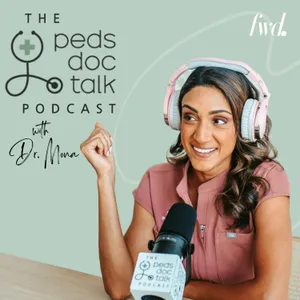
The PedsDocTalk Podcast: Child Health, Development & Parenting—From a Pediatrician Mom

Dr. Mona Amin

Details

The PedsDocTalk Podcast is your go-to parenting resource, hosted by Dr. Mona Amin, a trusted pediatrician, parenting expert, and mom of two. As a top 30 Parenting Podcast in the U.S., this show delivers expert-backed guidance on child development, health, illness, behavior, feeding, and sleep—giving parents the confidence to navigate every stage from baby to teen. Each episode dives into real-life parenting challenges, featuring conversations with specialists in pediatrics, child psychology, nutrition, and parental well-being. From potty training and sleep training to tackling tantrums, picky eating, discipline, screen time, postpartum recovery, and developmental milestones, Dr. Mona provides practical, science-backed advice that actually works. Tune in on Mondays and Wednesdays for actionable insights, mindset shifts, and expert interviews that empower you to raise healthy, resilient, and happy kids—while thriving as a parent yourself!


Recent Episodes

OCT 21, 2026
ADHD Masking Explained: School Success, Home Struggles, and the Emotional Toll
I know how heartbreaking and confusing it can be when a child seems fine and compliant at school only to experience meltdowns the moment they step foot at home. Today, I sit down with Meredith Carder, an ADHD coach, to dive deep into masking in ADHD. Meredith shares her own journey of being diagnosed later in life and sheds light on the immense mental and physical toll that trying to fit in takes on kids and adults. We explore how masking leads to late diagnoses (especially in girls) and discuss practical strategies to help our kids feel safe enough to drop the mask and get their regulatory needs met. We discuss: Meredith Carder shares her experience as a late-diagnosed adult and parent advocate How children exert so much mental energy masking at school that they experience meltdowns once safely home That many girls especially mask their symptoms, leading to missed or delayed diagnoses How chronic masking can lead to adult perfectionism, people-pleasing habits and burnout cycles Indicators of masking like extreme rigidity, hair twirling, leg bouncing, excessive apologizing and school refusal To connect with Meredith Carder follow her on Instagram @Hummingbird_adhd and check out all her resources at https://meredithcarder.com/. Buy her book It All Makes Sense Now: Embrace Your ADHD Brain to Live a Creative and Colorful Life https://link.amazon/B0fwsM6F9 (paid link) Our podcasts are also now on YouTube. If you prefer a video podcast with closed captioning, check us out there and ⁠subscribe to PedsDocTalk⁠. Get trusted pediatric advice, relatable parenting insights, and evidence-based tips delivered straight to your inbox—join thousands of parents who rely on the PDT newsletter to stay informed, supported, and confident. ⁠⁠⁠⁠Join the newsletter⁠⁠⁠⁠! Shop Dr. Mona’s favorite products: https://shopmy.us/shop/pedsdoctalk (paid link) And don’t forget to follow ⁠⁠⁠⁠@pedsdoctalkpodcast⁠⁠⁠⁠ on Instagram—our new space just for parents looking for real talk and real support. We love the sponsors that make this show possible! You can always find all the special deals and codes for all our current sponsors on the ⁠PedsDocTalk Podcast Sponsorships⁠ page of the website. Learn more about your ad choices. Visit podcastchoices.com/adchoices
45 MIN
OCT 14, 2026
Milestones and Myths: The Truth About Tummy Time, Crawling, and More with a Pediatric Physical Therapist
⁠Many videos make you panic because your baby skipped crawling or didn’t get enough tummy time today. Social media can make motor milestones scarier than they need to be. I sat down with Jena Schultz, a pediatric physical therapist and mom of two to cover tummy time, crawling, W sitting and toe walking. Jena also shares two areas where she says don’t wait, act early. My hope is that you walk away calmer and more confident in your mom gut. We discuss: Why fear-based posts spread so fast online How pediatricians and therapists can work as a team Where tummy time came from and why Grandma never did it Army crawling, butt scooting and the slippery floor favor Head flattening and why early referral matters Why development happens in a sequence, not a stopwatch How to tell your intuition apart from fear To connect with Jena Schultz follow her on Instagram @drivingdevelopment and check out all her resources at https://www.drivingdevelopment.org/ Our podcasts are also now on YouTube. If you prefer a video podcast with closed captioning, check us out there and ⁠subscribe to PedsDocTalk⁠. Get trusted pediatric advice, relatable parenting insights, and evidence-based tips delivered straight to your inbox—join thousands of parents who rely on the PDT newsletter to stay informed, supported, and confident. ⁠⁠⁠⁠Join the newsletter⁠⁠⁠⁠! Shop Dr. Mona’s favorite products: https://shopmy.us/shop/pedsdoctalk (paid link) And don’t forget to follow ⁠⁠⁠⁠@pedsdoctalkpodcast⁠⁠⁠⁠ on Instagram—our new space just for parents looking for real talk and real support. We love the sponsors that make this show possible! You can always find all the special deals and codes for all our current sponsors on the ⁠PedsDocTalk Podcast Sponsorships⁠ page of the website. Learn more about your ad choices. Visit podcastchoices.com/adchoices
51 MIN
OCT 7, 2026
The Sensory Code: What Your Child's Behavior Is Trying to Tell You with Occupational Therapist Laura Petix
⁠I’m joined by Laura Petix, pediatric occupational therapist and the founder of The OT Butterfly, to unpack your child’s sensory processing differences. Behaviors like meltdowns, crashing, restlessness or selective eating often stem from their unique “sensory code”. Recognizing these underneath-the-surface needs allow us to move away from reactive power struggles and toward proactive connection. We discuss: The three hidden internal systems: vestibular, proprioceptive, and interoceptive Oversensitivity to internal sensations during moments of distress or embarrassment Kids who constantly climb, crash or spin and what needs they need met Sensory overload in environments like school cafeterias Adults who accommodate their own sensory preferences daily How dysregulation is usually a gradual buildup Simple sensory tools like cooling items, fidgets and crunchy foods To connect with Laura Petix follow her on Instagram @theOTbutterfuly and find all her resources at https://theotbutterfly.com/. Buy her new book, “The Sensory Code: Understanding Sensory Processing Differences to Support Your Child’s Unique Needs”: https://link.amazon/B0fDglrrK (paid link) Our podcasts are also now on YouTube. If you prefer a video podcast with closed captioning, check us out there and ⁠subscribe to PedsDocTalk⁠. Get trusted pediatric advice, relatable parenting insights, and evidence-based tips delivered straight to your inbox—join thousands of parents who rely on the PDT newsletter to stay informed, supported, and confident. ⁠⁠⁠⁠Join the newsletter⁠⁠⁠⁠! Shop Dr. Mona’s favorite products: https://shopmy.us/shop/pedsdoctalk (paid link) And don’t forget to follow ⁠⁠⁠⁠@pedsdoctalkpodcast⁠⁠⁠⁠ on Instagram—our new space just for parents looking for real talk and real support. We love the sponsors that make this show possible! You can always find all the special deals and codes for all our current sponsors on the ⁠PedsDocTalk Podcast Sponsorships⁠ page of the website. Learn more about your ad choices. Visit podcastchoices.com/adchoices
61 MIN