


The Resilient Writers Radio Show
Rhonda Douglas Resilient Writers
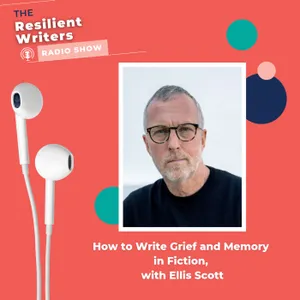
How to Write Grief and Memory in Fiction, with Ellis Scott
NOV 5, 202627 MIN
Description
Send us a text! We'd love to hear your thoughts on the show.
Writing about grief can leave you wondering where to begin. How do you tell a painful story without letting the loss overwhelm everything else? And how do you give readers room to connect with lives different from their own?
In this episode of The Resilient Writers Radio Show, I’m joined by Ellis Scott, author of Night Terminus, to explore those questions through his experience of writing his first novel.
Our conversation offers insight into novel structure, character development, research, and finding your way into emotionally difficult material.
Ellis’s novel follows an unnamed narrator across three continents and four decades, exploring the lives of gay men who survived the AIDS crisis. Having lost partners and close friends himself, Ellis felt an urgency to preserve experiences that could disappear as his generation grows older.
When I asked whether revisiting those losses had been devastating, his answer surprised me. He described the writing as healing, a labour of love that allowed him to honour people he had known.
What interested me was his focus on the aftermath. Ellis is drawn to the lives people build around what they have lost: the friendships, journeys, memories, and conversations that continue long after a catastrophe.
For writers working with grief or historical trauma, that offers a useful question: where are the emotional consequences still unfolding?
We also talk about how a novel can begin with images rather than a complete plan. Ellis started with two: an encounter in a Paris train station and an older man walking through Brussels at midnight. Those images helped him begin discovering the people and stories that would become the book.
His research opened possibilities. While investigating the history of Gare du Nord, he discovered the photographs of Édouard Baldus. Their traces of human presence became a recurring motif, connecting the novel’s historical setting with its exploration of absence and memory.
I loved hearing how something found during research could become woven into the emotional life of a book.
In our conversation, we explore:
Moving from publishing short stories to writing a first novel.
Using an unnamed narrator to connect different characters and settings.
Thinking about backstory through encounters, travel, and conversation.
Allowing research discoveries to deepen a novel’s themes.
Finding an ending through attention to the place around you.
Ellis also shares how a residency in Provence helped him finish the final chapter, and why he gives new ideas time to percolate before beginning another project.
What I took from our conversation is the value of staying curious about the material that keeps returning to you. An image, a remembered encounter, or an unexpected discovery may offer a way into a story you have carried for years.
If you’re writing literary fiction, drawing on personal experience, or wondering how to shape connected stories into a novel, I think you’ll find much to reflect on.
Listen to my conversation with Ellis Scott, and consider which image or unanswered question might help you return to your manuscript.