The Science of Motherhood

Dr Renee White

Details

Knowledge is power and we are all about empowering the mothers of the world! In each episode we will unravel and interpret the latest research and evidence-based practices for pregnancy, postpartum and motherhood.

Recent Episodes

NOV 23, 2026
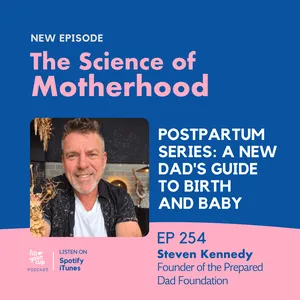
Ep 254. Postpartum Series: A New Dad's Guide to Birth and Baby
Most appointments, classes and checklists in pregnancy are built around you and your baby. Meanwhile your partner may be standing on the edge of the frame, quietly wondering what their role is and how they'll cope once the baby comes home. Wanting your partner to feel ready and included is a caring thing to want, and there's plenty you can build together before the baby arrives. Dads carry their own mix of pride, pressure and uncertainty through pregnancy, birth and the early weeks, and the preparation on offer rarely matches the role they step into. Understanding what that transition looks like helps you both move through it as a team. In this episode of The Science of Motherhood, Dr Renee White chats with Steven Kennedy, founder of the Prepared Dad Foundation and trained Lamaze childbirth educator, to explore how dads can prepare for birth and the early weeks of parenthood. Together they unpack how dads can support the person giving birth, look after their own mental health and build a strong team at home. This is Part 4 of the Postpartum Series. You'll Hear About: Why dads benefit from preparing for birth How dads can support you through labour What the fourth trimester looks like for dads How to protect your relationship after baby arrives How dads can look after their mental health Parenthood is a transition you and your partner can learn your way through together. With preparation, honest conversations and a shared sense of being on the same team, you can step into the early months feeling supported and connected. Share the episode with an expecting partner, friend or family member who's wondering where dads fit in. And subscribe so you don't miss an episode of The Science of Motherhood. Timestamps 00:00 Introduction: Supporting Dads in the Postpartum Series 02:41 Steven's Story: Birth Trauma and Fatherhood 08:51 Why Preparing Dads Matters 11:47 Men, Birth and Speaking Up 17:54 Inside the Prepared Dad Programme 19:13 Week One: Thinking Like a Dad in Pregnancy 22:08 Week Two: Birth Hormones and Supporting Labour 25:19 Week Three: Bringing Baby Home 27:39 Staying Involved in the Early Months 30:45 Sleep, Time Out and Settling Baby 33:24 Protecting Your Relationship After Baby 38:43 Dads' Mental Health and Self-Care 40:29 Setting Boundaries with Grandparents 43:01 Three Tips for Expecting Dads 46:16 Dads, Doulas and Midwives Working Together 50:11 How to Join the Prepared Dad Programme Resources & Links Connect with Renee Connect with Renee on Instagram: @fillyourcup_ Connect with Renee on LinkedIn: Renee White Learn more about Dr Renee White and explore Fill Your Cup Doula services Treat yourself with our Chocolate + Goji lactation cookies Connect with Steven Kennedy Prepared Dad Foundation: preparedad.org.au Instagram: @preparedadfoundation This episode is proudly supported by Fill Your Cup, Australia's first doula village, with doulas available across Melbourne, Geelong, Sydney, Newcastle, Brisbane, Gold Coast, Hobart and Perth. Disclaimer The information on this podcast presented by Fill Your Cup is not a substitute for independent professional advice. Nothing contained in this episode is intended to be used as medical advice and it is not intended to be used to diagnose, treat, cure or prevent any disease, nor should it be used for therapeutic purposes or as a substitute for your own health professional's advice.
51 MIN
NOV 16, 2026
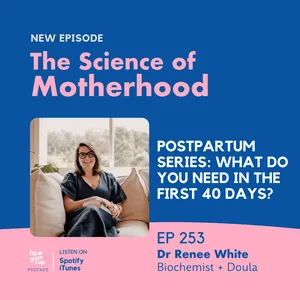
Ep 253 Postpartum Series: What Do You Need in the First 40 Days?
Labour lasts about a day, while recovery, feeding and getting to know your baby stretch across weeks and months. Yet the birth plan gets the research, the playlist and the hospital tour, and life after birth gets an afternoon and a lasagna in the freezer. The weeks you plan for the least are the weeks you'll need the most support. A plan, even an imperfect one, changes how those weeks feel. In this episode of The Science of Motherhood, Dr Renee White explores the first 40 days, from where the tradition began to what the science says about why this window matters. She then gets practical, covering how to build your village, what you need on hand, how to handle visitors and how to feed yourself while your baby feeds around the clock. This is Part 3 of the six-part Postpartum Series. You'll Hear About: Why the first 40 days matter for recovery How to build your village before baby arrives What you actually need in the early weeks How to handle visitors and set boundaries How to nourish yourself between feeds You planned for your birth, and you deserve the same care for what comes after. Rest, nourishing food and people who show up for you are what recovery is made of, and you're allowed to ask for all of it. Even an imperfect plan puts you in a steadier place on day five at 3am. Send this to a friend who's expecting or newly postpartum and would love a plan for the weeks ahead. And subscribe so you don't miss an episode of The Science of Motherhood. Timestamps 00:00 Introduction: Planning for Life After Birth 03:07 Where the First 40 Days Comes From 05:51 Why the First 40 Days Matter 09:49 Building Your Village 13:30 Asking for Help 16:40 What You Actually Need 23:11 Visitors and Boundaries 28:02 Feeding Yourself 32:43 Your Postpartum Plan Resources & Links Connect with Renee on Instagram: @fillyourcup_ Connect with Renee on LinkedIn: Renee White Learn more about Dr Renee White and explore Fill Your Cup Doula services Treat yourself with our Chocolate + Goji lactation cookies Explore The Full Cup Village membership Download The Quickie - Postpartum Planning Guide Try Yoga Nidra on the Insight Timer app Reach out to PANDA on 1300 726 306 for perinatal anxiety and depression support Find breastfeeding support with the Australian Breastfeeding Association on 1800 686 268 This episode is proudly supported by Fill Your Cup, Australia's first doula village, with doulas available across Melbourne, Geelong, Sydney, Newcastle, Brisbane, Gold Coast, Hobart and Perth. Disclaimer The information on this podcast presented by Fill Your Cup is not a substitute for independent professional advice. Nothing contained in this episode is intended to be used as medical advice and it is not intended to be used to diagnose, treat, cure or prevent any disease, nor should it be used for therapeutic purposes or as a substitute for your own health professional's advice.
34 MIN
NOV 9, 2026
Ep 252. Postpartum Series: Baby Blues or Postpartum Depression?
You've prepared for the birth, the nursery and the hospital bag, yet hardly anyone prepares you for what happens to your mental health after birth. If the tears, the worry or the heaviness have stayed longer than you expected, there's a reason behind it. Understanding what's happening is the first step to feeling supported, and you deserve that support early. Baby blues, postpartum anxiety and postpartum depression can feel similar in the middle of a sleepless night, yet each one calls for a different kind of care. Knowing the difference helps you, or someone you love, reach out sooner. In this episode of The Science of Motherhood, Dr Renee White sits down with Frances Bilbao, clinical psychologist and founder of Mums Matter Psychology, to unpack what's happening in your body and mind during the early postpartum weeks and how to protect your postpartum mental health. Together they explore how baby blues, postpartum depression and anxiety differ, the early signs that are easy to miss, and practical ways to ask for support. This is Part 2 of the Postpartum Series. You'll Hear About: Why baby blues happen and when they ease How postpartum depression and anxiety can look different Why so many mums delay asking for support What to put in place before baby arrives How self-compassion makes asking for help easier Whatever this season looks like for you, support is there, and reaching out is one of the kindest things you can do for yourself and your baby. You're enough, and you deserve to feel held through it. Send it to a mum, partner or friend who could use a gentle nudge to reach out. And subscribe so you don't miss an episode of The Science of Motherhood. Timestamps 00:00 Welcome to Part 2 of the Postpartum Series 03:26 Meet Frances Bilbao 07:06 What new mums struggle with most 13:43 Baby blues and your hormones 17:06 Postpartum depression and anxiety 21:15 Why mums put off getting help 26:16 Preparing for postpartum before birth 31:42 Asking for help and self-compassion 34:58 Medication, breastfeeding and your first step 37:52 A final message for mums Resources & Links Connect with Renee on Instagram: @fillyourcup_ Connect with Renee on LinkedIn: Renee White Learn more about Dr Renee White and explore Fill Your Cup Doula services Treat yourself with our Chocolate + Goji lactation cookies Connect with Frances Bilbao Website: mumsmatterpsychology.com Instagram: @mumsmatterpsychology PANDA National Helpline: 1300 726 306 This episode is proudly supported by Fill Your Cup, Australia's first doula village, with doulas available across Melbourne, Geelong, Sydney, Newcastle, Brisbane, Gold Coast, Hobart and Perth. Disclaimer The information on this podcast presented by Fill Your Cup is not a substitute for independent professional advice. Nothing contained in this episode is intended to be used as medical advice and it is not intended to be used to diagnose, treat, cure or prevent any disease, nor should it be used for therapeutic purposes or as a substitute for your own health professional's advice.
40 MIN
NOV 2, 2026
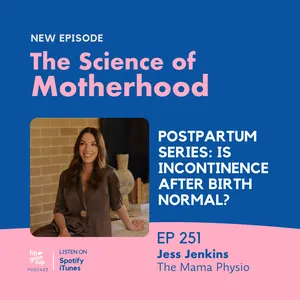
Ep 251. Postpartum Series: Is Incontinence After Birth Normal?
Your pelvic floor supported your baby for months, and the aftercare plan was a quick "do your Kegels". With so many experiencing leaking and prolapse, postpartum recovery deserves a far bigger conversation. From protecting your body in pregnancy and birth to rebuilding strength afterwards, there’s evidence-based guidance that can change how recovery feels. Knowing what’s common, what’s treatable, and when to ask for support helps you feel steady and supported. In this episode of The Science of Motherhood, Dr Renee White chats with Jess Jenkins, women’s and pelvic health physiotherapist, founder of the Move App, and known as The Mama Physio, to explore what an informed relationship with your pelvic floor looks like. Together they cover pelvic floor relaxation, perineal massage, prolapse and pessaries, and the postpartum myths that delay support. This is Part 1 of the six-part Postpartum Series. You’ll Hear About: How to relax and strengthen your pelvic floor What the evidence says about perineal massage Why a second trimester physio visit helps What prolapse feels like and how pessaries help Why leaking and pain after birth are treatable Your pelvic floor responds to the right care, and you’re allowed to ask for that care at any stage. Whether you’re pregnant, newly postpartum, or further along in your recovery, support is available and there’s nothing to feel embarrassed about. Send this to a friend who’s pregnant or newly postpartum and would love clear answers about her pelvic floor. And subscribe so you don’t miss an episode of The Science of Motherhood. Timestamps 00:00 Welcome to Part 1 of the Postpartum Series 03:06 Meet Jess Jenkins, The Mama Physio 04:53 Kegels and the Role of Relaxation 07:29 When Your Pelvic Floor Can’t Relax 12:21 Pelvic Floor and Bowel Health in Pregnancy 16:56 Perineal Massage, the Evidence, and What to Use 23:30 Diastasis Recti and Those Burning Ribs 26:46 How Common Prolapse Is and What Stage One Means 31:28 Prolapse Symptoms and Perimenopause 33:39 Prolapse Rehab and Pessaries 38:09 Pelvic Floor Myths, Leaking, and Painful Sex 43:15 How Motherhood Changed Jess’s Practice 48:23 Jess’s Final Takeaway and Where to Find Her Resources & Links Connect with Renee on Instagram: @fillyourcup_ Connect with Renee on LinkedIn: Renee White Learn more about Dr Renee White and explore Fill Your Cup Doula services Treat yourself with our Chocolate + Goji lactation cookies Connect with Jess Jenkins Website: themamaphysio.com.au Instagram: @the.mama.physio Move App Instagram: @movewiththemamaphysio This episode is proudly supported by Fill Your Cup, Australia’s first doula village, with doulas available across Melbourne, Geelong, Sydney, Newcastle, Brisbane, Gold Coast, Hobart and Perth. Disclaimer The information on this podcast presented by Fill Your Cup is not a substitute for independent professional advice. Nothing contained in this episode is intended to be used as medical advice and it is not intended to be used to diagnose, treat, cure or prevent any disease, nor should it be used for therapeutic purposes or as a substitute for your own health professional’s advice.

52 MIN
OCT 26, 2026
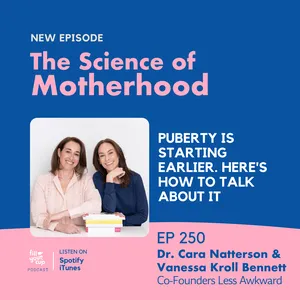
Ep 250. Puberty Is Starting Earlier. Here's How to Talk About It
Puberty is arriving earlier for our kids than it did for most of us, and it can catch you off guard before you've worked out what to say. Feeling unprepared is a normal place to start, and small conversations are enough to get going. The conversations that help most can begin well before the big questions arrive. This conversation gives you the words, the timing and the reassurance to begin. In this episode of The Science of Motherhood, Dr Renee White sits down with Dr Cara Natterson and Vanessa Kroll Bennett, co-founders of Less Awkward and co-hosts of the This Is So Awkward podcast. Cara is a Harvard and Johns Hopkins trained paediatrician and the author of the bestselling Care and Keeping of You series, which has guided a generation of kids in the US through puberty. Vanessa is a bestselling author and educator who founded Dynamo Girl, a programme that builds girls' self-esteem through sport and body literacy. Together they wrote This Is So Awkward: Modern Puberty Explained, and they now bring the same science and warmth to classrooms through a health and sex education curriculum for kindergarten through to 12th grade. In this conversation they cover the first signs to look for, what researchers think is driving the shift, and easy ways into the talk, from car rides to bath time. You'll Hear About: What the first signs of puberty look like Why puberty is starting earlier for kids today When to start the puberty conversation How to circle back when the moment passes Why staying connected supports wellbeing into adulthood A short chat in the car, a pause during a movie, or a second try after the supermarket all count as starting. Small conversations add up to a child who knows they can come to you. Share this with a friend who has a child heading towards puberty and isn't sure where to start. And subscribe so you don't miss an episode of The Science of Motherhood. Resources & Links Connect with Dr Renee White Connect with Renee on Instagram: @fillyourcup_ Connect with Renee on LinkedIn: Renee White Learn more about Dr Renee White and explore Fill Your Cup Doula services Treat yourself with our Chocolate + Goji lactation cookies Connect with Dr Cara Natterson and Vanessa Kroll Bennett Learn more about their work at Less Awkward Connect with Less Awkward on Instagram: @less.awkward Explore Less Awkward's digital health and sex education curriculum for kindergarten through to 12th grade, That Health Class, which blends science with joy. Find out more in the curriculum kit and read testimonials from schools. A parallel parent curriculum sits in The Hub, so the lessons are fully transparent and adults can catch up on what they may never have learned. Books mentioned in this conversation This Is So Awkward: Modern Puberty Explained by Dr Cara Natterson and Vanessa Kroll Bennett Teenhood: Confessions & Lessons for the Trickiest Phase of Parenting by Vanessa Kroll Bennett (releases 19 January 2027) The Care and Keeping of You series by Dr Cara Natterson Untangled by Dr Lisa Damour The Curse of the Good Girl by Rachel Simmons The New Puberty: How to Navigate Early Development in Today's Girls by Dr Louise Greenspan and Dr Julianna Deardorff This episode is proudly supported by Fill Your Cup, Australia's first doula village, with doulas available across Melbourne, Geelong, Sydney, Newcastle, Brisbane, Gold Coast, Hobart and Perth. Disclaimer The information on this podcast presented by Fill Your Cup is not a substitute for independent professional advice. Nothing contained in this episode is intended to be used as medical advice and it is not intended to be used to diagnose, treat, cure or prevent any disease, nor should it be used for therapeutic purposes or as a substitute for your own health professional's advice.
62 MIN