



The Vultus Podcast
VULTUS
Why Overthinking Is the WORST Thing You Can Do - Machiavelli
OCT 22, 202631 MIN
Description
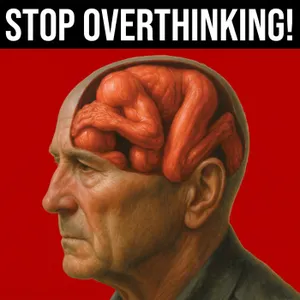
You've been told your whole life to think it through, to be careful, to plan for every scenario, to second-guess every move — but Machiavelli would tell you this is a trap. As he said, he who deliberates too much will never act. In this episode you'll learn why overthinking is a fatal weakness, Machiavelli's ruthless warning about hesitation, how the best strategists think simply and act decisively, the real difference between planning and paralysis, and how to become dangerous through action. Overthinking is not intelligence; it's fear wearing the mask of wisdom, the habit of the man who wants certainty instead of victory. Most people call it caution, but Machiavelli would call it surrender, because while you think your enemy moves, while you plan your rival attacks, while you wait the world changes around you. The cost of overthinking is missed opportunities, shattered confidence, predictability, weakness others exploit, and a reputation for inaction. Machiavelli understood that the man who hesitates is lost, because power does not wait for perfection — it rewards decisiveness, it belongs to those willing to risk. Most people lose not because they were wrong, but because they never chose; they waited for a guarantee, they refused to be uncomfortable, they wanted safety more than success. As he said, fortune favors the bold. Fortune is chaotic, outcomes are uncertain, power is messy, control is partial at best, and the man who cannot accept that will forever be ruled by the man who can. Complexity slows your reaction time, clouds clear vision, creates fear of mistakes, signals weakness to rivals, and destroys your authority, because the overthinker telegraphs insecurity — he shows he can be rattled, he reveals he doubts himself, he trains the world to wait for him, and in that delay he loses the game. Machiavelli's simple truth is to decide faster than your enemy, act before he expects you, accept that no plan survives contact, adjust on the fly, and win through movement rather than certainty. The world respects clarity, boldness, simplicity, and speed, because these traits create certainty for others even when the future is uncertain. People don't follow the man with the best plan; they follow the man with the most conviction. They don't need guarantees, they need someone willing to make a call. While you second-guess, they commit; while you wait, they gather power; while you hesitate, they own the outcome. Stop trying to control everything — control what you can, accept what you can't, and move anyway. As Machiavelli said, it is better to act and regret than not act and regret. Cut complexity, make the choice, own the risk, move, and adapt. Machiavelli taught rulers to accept imperfection, to appear certain even when they weren't, to make decisions even without all the information, to create outcomes instead of predicting them, because perfection is unattainable and the quest for it destroys the man who tries. The overthinker lives in the realm of what if — what if it fails, what if I look foolish, what if I'm wrong — while the strategist asks one question: how do I make it work? Stop thinking and start moving: embrace mistakes as tuition, learn faster than your rivals, adjust with precision, strike with confidence, and win before they realize they've lost. The world doesn't reward thoughts, it rewards outcomes; you won't be remembered for what you planned, you'll be remembered for what you did. This is the difference between the overthinker and the conqueror: the overthinker asks permission, the conqueror takes what is his. To stop overthinking now, set deadlines for decisions, reduce choices to essentials, accept the risk, commit publicly, and act before you feel ready — and watch the world adjust to you, because people trust decisive leaders, they fear the man who doesn't hesitate, they follow the one who moves. Your choice is clear: be the man who plans forever, or be the man who wins. Because in the end, Machiavelli wouldn't care about your intentions — he'd care about your results, he'd watch what you built, he'd measure what you claimed. Fortune is a woman. She favors the bold.