



The Wall Street Skinny
Kristen and Jen
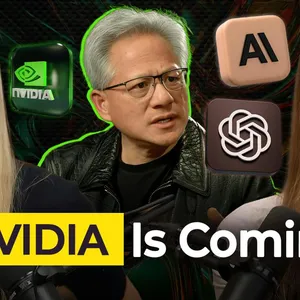
How Nvidia's Recent Acquisition Changes the AI Game Feat. Morgan Stanley's Head of US Thematic Research
SEP 27, 202659 MIN
Description
Go to groundnews.com/skinny for a better way to stay informed. Subscribe through our link for 40% off unlimited access to world-wide coverage.
NVIDIA just agreed to buy Hugging Face, and the deal won't add a cent to its earnings per share. So why do it? In this episode we dig into what NVIDIA really gets from owning the home of open-weight AI, and whether this is a threat to OpenAI and Anthropic that the market hasn't priced in yet. What's the actual difference between open source and open weight, and why does almost everyone (yes, even us included) mix them up? If Amazon, Google, and the frontier labs are all building their own inference chips, where does NVIDIA's next wave of customers come from? And if the free "Temu version" of AI gets good enough for most people, who keeps paying for the Prada bag?
Then we bring on Michelle Weaver, Head of US Thematic Equity Research at Morgan Stanley, to ask the questions everyone in finance is worried about. Which companies are actually seeing AI show up in their margins, and which are just burning tokens so they can say "AI" on the earnings call? Is AI already showing up in the jobs data for young workers? What happens to the traditional Wall Street analyst class if the org chart stops being a pyramid? Does the Jevons Paradox of economic theory help or hurt the frontier model companies? And why are American companies nervous about building on Chinese open-weight models?
We also get into the growing fight over AI data centers. Why has this become one of the few issues uniting voters on both the left and the right? What do power bills, water use, and old brownfield sites have to do with it? How big is a 57-gigawatt power shortfall, really? And what does Oracle declaring force majeure on its New Mexico Stargate site tell us about where the AI build-out is headed?
00:00 Intro: Revisiting our early episodes
03:00 Life updates: Flying, dogs & kids
06:10 Our Yahoo Finance Market Hang recap
07:50 Why NVIDIA bought Hugging Face
11:10 Training vs. inference: Where AI compute is headed
14:15 CUDA and NVIDIA's software moat
15:50 Open source vs. open weight, explained
19:20 Is NVIDIA a threat to OpenAI & Anthropic?
21:25 Meta's Muse and why easy AI wins
25:00 Why companies struggle with AI adoption
27:20 Oracle's Stargate force majeure (Ground News)
28:45 Michelle Weaver joins: What is thematic research?
30:15 AI enablers vs. AI adopters
35:05 Open vs. closed models and Jevons paradox
37:25 The risks of Chinese open-weight models
39:45 Pricing security risk in AI adoption
42:15 Token budgets and the end of token maxing
44:00 Is AI already costing jobs?
46:55 What AI means for Wall Street analysts
49:25 Data centers: People, power & politics
53:00 Tax breaks, brownfields & state moratoriums
55:35 The 57-gigawatt power shortfall
57:35 US vs. China: Chips, power & the AI race
59:20 Where to find Michelle's research