


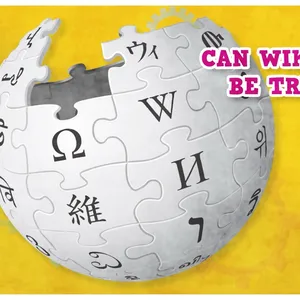
728. What Can Wikipedia Teach Us about Decentralization of Knowledge?
OCT 1, 202610 MIN
Description
What if the internet's biggest experiment in trusting ordinary people with knowledge actually solved a problem economists once said could never be solved?
As Wikipedia turns 25 years old, let's take a minute to appreciate what the website did for decentralizing information. In this solo episode, Brittany revisits one of her favorite ideas from economist F.A. Hayek: the "knowledge problem," the argument that no single government planner in Washington, D.C. could ever have enough information to meet the needs of every single person in the country. She connects that idea to Ludwig von Mises's theory of praxeology and the concept that value is subjective, then asks a simple question: what does any of this have to do with an online encyclopedia?
It turns out, quite a lot. Brittany walks through how Wikipedia, launched on January 15, 2001, solved a small piece of the knowledge problem by decentralizing the job of gathering facts to millions of ordinary contributors instead of a single editor or panel of experts. She explains how Wikipedia's built-in correction system lets users challenge and fix entries, why that "self-correcting" quality matters even though the site isn't perfect, and why she still leans on primary sources over any single summary, human or AI. Along the way she compares Wikipedia's decentralized model to newer tools like ChatGPT, including a very specific gripe about AI confidently inventing quotes from Patrick Henry.
The bigger point: Wikipedia's 25-year experiment shows that you don't need a central authority to build something valuable. You need a system that lets everyday people contribute their piece of the puzzle and lets other people check their work.
What You'll Learn in This Episode What Friedrich Hayek's "knowledge problem" is, and why no single planner could ever have enough information to meet everyone's needs
Why Ludwig von Mises's theory of praxeology, and the idea that value is subjective, matters for understanding decentralized knowledge
How Wikipedia, launched on January 15, 2001, works as a decentralized encyclopedia built by thousands of everyday contributors
Why Wikipedia's built-in correction process functions as a kind of quality assurance program for facts
How AI tools like ChatGPT are changing the way people do research, and where they still get things wrong, including inventing quotes from Patrick Henry
Why Wikipedia isn't always neutral, using a hypothetical Ron Paul example, and how its open-editing model still lets people challenge biased entries
Why primary sources, like reading John Adams's own writing on taxation, beat secondhand summaries
Why Wikipedia contributors aren't paid, and what actually motivates people to donate their time and money to the platform
How Wikipedia's 25th anniversary is a chance to reflect on the promise of decentralized information
Why letting knowledge flow from everywhere, without one controlling authority, mirrors how a free market works
Timestamps 0:00 Introduction: Hayek and the Knowledge Problem 0:40 Why Central Planning Can't Meet Everyone's Needs 1:19 Value Is Subjective: Mises and Praxeology 1:48 ChatGPT vs. Wikipedia as Research Tools 2:45 What Wikipedia Actually Is and How It Works 3:53 Wikipedia's 25th Anniversary (Launched January 15, 2001) 4:24 How Decentralized Contribution Built Wikipedia 4:49 Wikipedia's Built-In Fact-Checking System 5:38 Wikipedia Isn't Perfect: Political Slant and Bias 6:59 Why You Should Still Use Primary Sources 7:45 Solving Part of Hayek's Knowledge Problem 8:35 Why People Contribute to Wikipedia for Free 9:47 Celebrating 25 Years of Decentralized Knowledge
Shop Resources The Tuttle Twins Guide to the Constitution https://www.tuttletwins.com/products/the-tuttle-twins-guide-to-the-constitution
The Tuttle Twins and the Creature from Jekyll Island https://www.tuttletwins.com/products/the-tuttle-twins-and-the-creature-from-jekyll-island
Get Tuttle Twins books and homeschool resources: https://tuttletwins.com