Unleashed 101

Jeremy Hanson

Details

Welcome to Unleashed 101, where every episode uncovers a story worth remembering. We investigate history's greatest scams, overlooked crimes, forgotten heroes, corporate deception, government failures, extraordinary survival stories, unsolved mysteries, and the moments that changed the world—but somehow slipped from public memory. These aren't breaking news stories. They're timeless true stories that reveal how people manipulate, survive, innovate, and overcome. Every episode combines immersive storytelling, meticulous research, and cinematic narration to bring remarkable events back to life. From billion-dollar frauds and legendary con artists to forgotten historical mysteries and unbelievable acts of courage, Unleashed 101 explores the stories you've probably never heard—but will never forget. If you love investigative documentaries, true stories, history, mystery, and edge-of-your-seat storytelling, you're in the right place. Welcome to Unleashed 101—where the stories you never knew become the ones you'll never forget.

Recent Episodes

APR 2, 2026
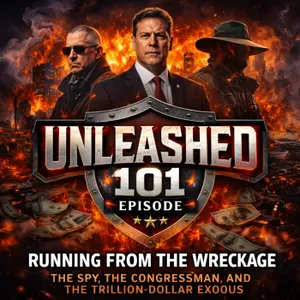
"Running From the Wreckage: The Spy, the Congressman, and the Trillion-Dollar Exodus"
Eric Swalwell is thirty-four days from California voters beginning to cast ballots in the gubernatorial primary. He is leading in the polls. And he is threatening to sue the FBI. The subject of that lawsuit threat: investigative files compiled by federal law enforcement regarding his relationship with Christine "Fang Fang" Fang — a suspected Chinese intelligence operative who fundraised for Swalwell's 2014 campaign, placed an intern in his congressional office, and maintained a personal relationship with him before departing the United States in 2015 after the FBI alerted Swalwell to the suspected influence campaign. FBI Director Kash Patel is reportedly considering releasing those records. Swalwell's attorneys sent a cease-and-desist letter warning of "significant legal liability." His allies in Congress called it "plain weaponization." His campaign framed it as election interference. What no one is explaining is why a man with nothing to hide would spend his own money trying to make sure the files stay hidden. In this episode of Unleashed 101, Jeremy Hanson walks through the full Swalwell-Fang Fang timeline — what is known, what has never been answered, what it means that a man with this history sat on the House Intelligence Committee for years and is now running for governor of one of the most powerful states in the nation. And then Jeremy connects it to the other story happening in parallel: the mass exodus of American capital from the cities and states that keep electing people like Swalwell. Apollo Global Management is scouting second headquarters locations in Texas and South Florida. Goldman Sachs is building a $500 million campus in Dallas. Citadel left Chicago for Miami. Palantir relocated to Denver. Charles Schwab left San Francisco for Texas. AllianceBernstein moved from New York to Nashville. Between 2020 and early 2023, more than 370 investment companies relocated, bringing $2.7 trillion in assets with them. These are not impulsive decisions. They are rational responses to governance failure. To tax environments that punish productivity. To regulatory regimes that treat business as a problem to be managed. To urban dysfunction that makes cities uncompetitive and unlivable. And the states doing the attracting — Texas, Florida, Tennessee, North Carolina — are not offering elaborate ideological frameworks. They are governing competently and letting the results speak. The connection between Swalwell and Apollo is not coincidental. It is structural. The political class has exempted itself from accountability. The financial class has responded with the only tool available to it: departure. Jeremy Hanson closes with a direct challenge to the people watching this happen and wondering what they are supposed to do about it. Unleashed 101 does not tell you what to think. It asks the questions the official channels are designed to prevent you from asking. Subscribe wherever you get your podcasts. Share this episode with someone who is ready to stop pretending the system is working. Jeremy Hanson | Unleashed 101 | Contact: [email protected] Eric Swalwell Chinese spyFang Fang files FBIKash Patel SwalwellChristine Fang spy CaliforniaApollo Global Management Texascorporate headquarters migration Floridablue state capital flightDemocrat accountability machineSwalwell governor CaliforniaFBI files political candidatefinancial firms leaving New Yorkinvestment firms moving to TexasTucker Carlson style commentaryChina espionage CongressSwalwell FBI cease and desistblue state exodus businessesApollo second headquarters Dallasfreedom states business migrationSwalwell mortgage fraud referralUnleashed 101 Jeremy Hanson why is Eric Swalwell threatening to sue the FBI over Fang Fang fileswhat did Fang Fang do in Eric Swalwell's congressional officewho is Christine Fang and what was her relationship with SwalwellKash Patel releasing Swalwell FBI investigative records 2026how many companies have left New York for Texas and FloridaApollo Global Management second headquarters Texas Florida Nashvillehow much money has left California since 2020blue state capital flight 2.7 trillion assets relocatedwhy are investment firms moving to Florida and TexasGoldman Sachs Dallas campus 500 millionCharles Schwab moved from San Francisco to TexasCitadel headquarters move Chicago to Miami 2022AllianceBernstein moved to Nashville from New Yorkwhy is capital leaving New York and CaliforniaEric Swalwell House Intelligence Committee Chinese spySwalwell residency questions California governor raceEric Swalwell mortgage fraud DOJ referralDemocrat immunity machine political accountabilitywhat does Fang Fang spy story mean for national securityconservative commentary podcast corporate migration freedom statesJamie Raskin FBI weaponization Swalwell commentSwalwell Fang Fang cease and desist letter Kash Patelwhy are financial firms choosing Texas over New Yorkaccountability gap between political class and private sectorUnleashed 101 Eric Swalwell Chinese spy episode Who is Christine Fang and what was her connection to Eric Swalwell? Christine "Fang Fang" Fang is a suspected Chinese intelligence operative who cultivated relationships with California politicians over multiple years. She fundraised for Eric Swalwell's 2014 congressional re-election campaign, placed at least one intern inside his congressional office, and maintained a personal relationship with him. The FBI briefed Swalwell about Fang's suspected ties to Chinese intelligence, after which he ended contact with her. She departed the United States in 2015 and has not returned. No criminal charges were filed against Swalwell, and the House Ethics Committee concluded its investigation in 2023 without finding violations. Why is Eric Swalwell threatening to sue the FBI over the Fang Fang files? Swalwell's attorneys sent a cease-and-desist letter to FBI Director Kash Patel after reports emerged that Patel is considering releasing investigative records related to Swalwell's relationship with Christine Fang. The attorneys argued that disclosure would violate federal privacy law and DOJ policy prohibiting public investigatory actions against political candidates within sixty days of an election. They characterized the potential release as a politically motivated attempt to interfere with Swalwell's California gubernatorial campaign. Critics argue that threatening legal action to suppress national security investigative records raises questions about what those records actually contain. What are the Fang Fang files and what might they contain? The Fang Fang files are FBI investigative records documenting the bureau's inquiry into Christine Fang's suspected Chinese intelligence activities and her relationships with American political figures, including Eric Swalwell. The specific contents have not been publicly disclosed. The records could potentially include details about the nature and scope of Fang's relationships with political figures, her fundraising activities, her recruitment of intern staff for congressional offices, and any counterintelligence conclusions drawn by the FBI during the investigation. Swalwell's legal efforts to prevent their release have drawn attention to what those records might reveal. How much money has left New York and California for other states? Between 2020 and early 2023, more than 370 investment companies relocated their headquarters to new states, bringing approximately $2.7 trillion in assets under management with them. New York and California each lost an estimated $1 trillion in assets during this period. The primary destination states were Florida, Texas, Tennessee, and North Carolina, which collectively attracted the bulk of the relocating capital. Major firms involved include Goldman Sachs, Fidelity, Vanguard, Charles Schwab, Citadel, AllianceBernstein, and Apollo Global Management, which announced a second headquarters search in 2026. Why is Apollo Global Management opening a second headquarters outside New York? Apollo Global Management, which manages hundreds of billions in assets, announced in 2026 that it is scouting second U.S. headquarters locations in Texas, South Florida, and potentially Nashville, while maintaining its New York City flagship office. The decision reflects a broader trend of financial firms seeking lower tax environments, more business-friendly regulatory climates, competitive talent pools, and reduced operating costs in Sun Belt states. Apollo's announcement follows similar moves by Goldman Sachs, Citadel, Charles Schwab, and AllianceBernstein, all of which have relocated significant operations from high-tax northeastern and California locations to southern and mid-southern states. What is the connection between Eric Swalwell's situation and corporate migration from blue states? Both stories reflect a breakdown of accountability in Democratic-governed cities and states. Swalwell represents a political class that has developed institutional mechanisms — media framing, ethics committee procedures, and legal threats — that protect members from the consequences that would end careers in other contexts. Corporate migration represents the private sector's equivalent response: capital has no access to the same immunity structures, so when governance quality deteriorates, it exercises the only option available and relocates. Both phenomena reflect the same underlying condition — a governing class that has exempted itself from the standards it applies to others, and the resulting erosion of trust in institutions. Has Eric Swalwell been charged with any crimes related to Fang Fang? No. The Justice Department did not pursue criminal charges related to Swalwell's relationship with Christine Fang. The House Ethics Committee opened an investigation and concluded it in 2023 without issuing findings of violation against Swalwell. Swalwell has consistently denied any wrongdoing and has said he fully cooperated with the FBI after being briefed about Fang's suspected intelligence connections. Separately, Swalwell has been criminally referred to the Department of Justice for alleged mortgage fraud — a distinct matter unrelated to the Fang Fang investigation. Which major companies have relocated from New York and California to Texas and Florida? Several major financial and corporate firms have relocated or significantly expanded in Texas and Florida in recent years. Goldman Sachs is building a $500 million campus in Dallas. Charles Schwab moved its headquarters from San Francisco to Westlake, Texas in 2021. Citadel relocated from Chicago to Miami in 2022. AllianceBernstein moved from New York to Nashville in 2021. Fidelity and Vanguard have expanded substantially in Texas. Miami has attracted Palantir, D-Wave Systems, GFL Environmental, ServiceNow, Playboy, and Wells Fargo. Apollo Global Management announced in 2026 it is scouting Texas and South Florida for a second headquarters location. EPISODE TAGS (Platform Tagging — Spotify, Apple, YouTube) Eric Swalwell, Fang Fang, Kash Patel, FBI files, Christine Fang, Chinese spy, California governor race, Apollo Global Management, corporate migration, blue state exodus, capital flight, Tucker Carlson, conservative commentary, political accountability, national security, FBI investigation, Florida business, Texas headquarters, Unleashed 101, Jeremy Hanson, Fuzzy Life Entertainment "A man with nothing to hide does not threaten lawsuits to make sure the files stay hidden.""The absence of charges is not the same thing as the absence of questions that deserve answers.""Two point seven trillion dollars in assets moved across state lines. Not because of a crisis. Because people did a rational cost-benefit analysis of different governance models. And that analysis is a verdict.""The political class has exempted itself from accountability. The financial class responded with the only tool available to it: departure.""The money has already figured this out. I wonder how long it will take everyone else." 0:00 — Cold Open: Two Stories, One Thread3:30 — Segment 1: Who Is Fang Fang and Why It Still Matters11:00 — Segment 2: The Democratic Immunity Machine18:30 — Segment 3: The Exodus — When Money Votes With Its Feet27:00 — Segment 4: What the Establishment Doesn't Want You to Connect34:00 — Close: The Verdict SERIES POSITIONING STATEMENT Unleashed 101 with Jeremy Hanson is the podcast for Americans who are done pretending the system is working. Each episode identifies the stories the official channels are designed to prevent you from connecting — and connects them. No spin. No corporate filter. No political loyalty to anyone. Conservative-leaning cultural and political commentary for people who think for themselves. See Privacy Policy at https://art19.com/privacy and California Privacy Notice at https://art19.com/privacy#do-not-sell-my-info.

40 MIN
MAR 26, 2026
The Body Knows: Peptides, Suppressed Medicine, and the Industry That Profits From Your Ignorance
What if the most effective healing tools available to you have been sitting in the published medical literature for thirty years — and the system you trust with your health has been quietly, systematically, and deliberately keeping them out of reach? In this episode of Unleashed 101, host Jeremy Hanson examines the growing body of research behind therapeutic peptides — specifically BPC-157, TB-500, and KPV — and confronts the institutional machinery responsible for their suppression in American healthcare. This is not fringe science. This is peer-reviewed research published across multiple countries, documenting measurable outcomes in tissue repair, inflammation reduction, gut healing, neurological protection, and cellular regeneration. The evidence base is real. The suppression is equally real. What Jeremy covers in this episode: The pharmaceutical industry's fundamental business model — why a patient who recovers is a lost customer, and why chronic disease management is the most profitable product the healthcare system has ever built. The FDA's structural conflict of interest — how the Prescription Drug User Fee Act created an agency that is substantially funded by the companies it regulates, and what that funding relationship produces in practice for treatments that have no industry sponsor. The approval pathway as a financial filter — why the absence of FDA approval for peptide compounds reflects the absence of pharmaceutical industry economics, not the absence of clinical evidence. BPC-157 in depth — derived from human gastric protein, studied in over a hundred peer-reviewed publications, demonstrating accelerated healing of tendons and ligaments, neuroprotective properties, gastrointestinal repair outcomes, and anti-depressant effects with a safety profile that puts most approved alternatives to shame. TB-500 and musculoskeletal recovery — the documented outcomes in muscle fiber repair, tendon regeneration, and inflammatory response reduction that have driven widespread adoption in athletic communities and produced real-world results that mirror the controlled research. KPV and anti-inflammatory applications — why a three-amino-acid peptide that outperforms approved biologics for certain inflammatory bowel conditions in animal studies has generated no pharmaceutical development interest, and exactly what that tells you about the system's priorities. The suppression playbook — how dismissal, demonization, and regulatory capture operate in sequence to eliminate access to compounds that threaten pharmaceutical revenue, with specific reference to the FDA's escalating enforcement actions against compounding pharmacies supplying peptide therapy to legitimate medical practices. Delivery method advances — how developments in oral bioavailability and intranasal administration are narrowing the access barriers that the regulatory environment depends on to contain peptide use, and why the enforcement response has followed the accessibility research. The physicians and patients at the margin — the gastroenterologists, neurologists, and orthopedic practitioners incorporating these compounds into practice under institutional pressure, and the patients who found measurable functional recovery after years of dependence on approved treatment pathways that produced symptom management but not resolution. The liberty argument — in plain terms, why the government's authority to prevent you from accessing compounds your own body already produces, with a documented safety record and decades of supporting research, should concern anyone who takes the concept of individual autonomy seriously. This episode is not asking you to reject medicine. It is asking you to reject the framing that positions an industry-funded regulatory apparatus as a neutral guardian of public health. The evidence does not support that framing. The outcomes do not support it. The incentive structure does not support it. Unleashed 101 exists to ask the questions that the official channels are designed to prevent. Subscribe wherever you get your podcasts. Share this episode with someone whose health depends on information the system is trying to keep from them. peptide therapyBPC-157TB-500KPV peptidenatural healing compoundsFDA suppressed treatmentspharmaceutical industry corruptioncompounding pharmacy peptidestissue repair peptidesanti-inflammatory peptidesgut healing peptidepharmaceutical business modelhealthcare suppressionmedical freedomalternative medicine suppressedpeptide bioavailabilitybody natural repairFDA conflict of interestchronic disease dependencyhealing without pharmaceuticals what is BPC-157 and why is it not FDA approveddoes BPC-157 actually heal tendons and ligamentsTB-500 peptide for muscle recovery and injury repairKPV peptide anti-inflammatory inflammatory bowel diseasewhy won't my doctor prescribe peptide therapyFDA user fee funding pharmaceutical conflict of interestpharmaceutical industry profits from chronic diseaseBPC-157 research peer reviewed studies summarycompounding pharmacy peptide therapy availabilitypeptide therapy oral bioavailability advances 2024how peptides work with the body natural healing mechanismsFDA enforcement actions against peptide compounding pharmaciesTucker Carlson style political commentary podcast health freedomsuppressed medical treatments that workdoes the FDA approve treatments that aren't profitablephysicians losing licenses for prescribing peptidesBPC-157 neuroprotection traumatic brain injury researchwhy is TB-500 not available in the United Statespharmaceutical revolving door FDA industry executivespeptide therapy for leaky gut and Crohn's diseasenatural compounds blocked by FDA approval processbody protection compound 157 healing properties explainedwho decides what medical treatments Americans can accessalternative medicine suppression playbook dismissed demonizedmedical freedom podcast conservative commentary health liberty What is BPC-157 and what does it do? BPC-157, or Body Protection Compound 157, is a 15-amino-acid peptide derived from a protein found in human gastric juice. It has been studied in over a hundred peer-reviewed publications and is documented to promote angiogenesis in damaged tissue, activate growth hormone receptors in tendons and ligaments, modulate the nitric oxide pathway to reduce inflammation without suppressing immune function, and demonstrate neuroprotective properties in animal models. It is not FDA-approved in the United States because no pharmaceutical company has sponsored it through the approval process — not because the evidence for its efficacy is absent. Why isn't peptide therapy FDA approved? Peptide therapy compounds like BPC-157, TB-500, and KPV cannot be patented because they occur naturally in the human body. Without patent protection, no pharmaceutical company can recoup the hundreds of millions of dollars required to take a compound through the FDA's formal approval pathway. The FDA's review process is substantially funded by pharmaceutical industry user fees, creating a structural incentive to prioritize patentable, commercially sponsored compounds. The absence of approval reflects a financial barrier, not an evidentiary one. Is BPC-157 safe to use? The safety profile of BPC-157 is among the most documented in the peptide research literature. Decades of animal studies and growing human data have identified no mechanism for serious adverse events at therapeutic doses. The compound is derived from a sequence already present in human gastric protein, meaning the body recognizes and responds to it through familiar biological pathways rather than treating it as a foreign agent. The regulatory barriers to BPC-157 access in the United States are not based on safety concerns — they reflect the compound's commercial unattractiveness to pharmaceutical sponsors. What is the pharmaceutical industry's incentive to suppress natural treatments? The pharmaceutical business model depends on ongoing patient engagement rather than resolution of underlying conditions. A patient who achieves full recovery represents a lost revenue stream; a chronic patient requiring lifelong management generates continuous prescription income, regular clinical visits, and periodic interventions. Compounds that are affordable, unpatentable, and demonstrably effective at addressing root causes rather than symptoms represent a direct competitive threat to this model. The institutional response — discrediting research, limiting physician access, targeting compounding pharmacies — follows logically from that financial reality. What is TB-500 used for? TB-500, or Thymosin Beta-4, is a 43-amino-acid peptide naturally present in virtually every cell in the human body. Its primary therapeutic applications involve musculoskeletal injury recovery — specifically muscle fiber repair, tendon regeneration, and reduction of acute inflammatory response duration. Research and real-world outcomes documented in athletic communities have consistently shown faster return to function and improved structural integrity of repaired tissue compared to standard rehabilitation alone. It is not available by prescription in the United States despite this documented evidence base. What is the FDA conflict of interest with pharmaceutical companies? The Prescription Drug User Fee Act of 1992 established a system in which pharmaceutical manufacturers pay application fees directly to the FDA to fund faster drug review timelines. A meaningful portion of the FDA's drug review budget now comes from the companies it regulates. This funding relationship creates a structural incentive to prioritize compounds that pharmaceutical sponsors submit for approval and a structural indifference toward treatments that exist outside the commercial development pipeline. The revolving door between FDA leadership positions and pharmaceutical industry employment compounds this dynamic, producing an institutional culture that functions more as a partnership than an oversight relationship. Can you still access peptide therapy in the United States? Access to therapeutic peptides in the United States currently requires navigating a legally complex landscape. Compounding pharmacies operating under FDA oversight can prepare peptide compounds for physician-prescribed use, though enforcement actions have increased against suppliers of injectable formulations. Advances in oral bioavailability research have produced formulations of BPC-157 that demonstrate systemic therapeutic effect without injection, which may expand access outside traditional pharmacy channels. Physicians willing to incorporate these compounds into practice typically do so carefully, given the professional risk associated with recommending treatments outside approved formularies. Patient access remains possible but requires active research and navigation of a system not designed to facilitate it. peptide therapy, BPC-157, TB-500, KPV peptide, natural healing, FDA suppressed treatments, pharmaceutical industry, medical freedom, compounding pharmacy, tissue repair, anti-inflammatory, gut healing, neurological protection, FDA conflict of interest, Prescription Drug User Fee Act, pharmaceutical lobby, suppressed medicine, Tucker Carlson style, political commentary, health liberty, chronic disease, body natural healing, Jeremy Hanson, Unleashed 101, Fuzzy Life Entertainment, alternative medicine, healthcare reform, pharmaceutical suppression, healing peptides, conservative commentary Unleashed 101 with Jeremy Hanson occupies a distinct position in the political commentary and investigative podcast landscape — combining the confrontational directness of Tucker Carlson's delivery style with deep-research journalism and a consistent focus on the structural forces shaping American life. This episode anchors the show's growing catalog of healthcare and institutional accountability content, sitting alongside episodes on dollar devaluation, geopolitical conflict, and the collapse of institutional trust. For listeners navigating the gap between official narratives and documented reality, Unleashed 101 provides the analysis they are not finding in mainstream media. Available on all major podcast platforms. Contact: [email protected] | jeremyhanson.pro See Privacy Policy at https://art19.com/privacy and California Privacy Notice at https://art19.com/privacy#do-not-sell-my-info.

49 MIN
MAR 19, 2026
"The Return to the Bible: Why Young Men Are Searching for Meaning Again"
Something is happening in America that almost no one in the mainstream press is willing to talk about. Young men — the generation that was supposed to permanently abandon religion — are returning to the Bible in numbers that are reshaping what we know about faith, culture, and the future of the country. According to data from the Barna Group, 54% of Gen Z men and 57% of Millennial men now report reading the Bible on a weekly basis. A decade ago, those numbers barely reached the mid-thirties. That is a twenty-point swing in a single generation — and the media is silent. On this episode of Unleashed 101, Jeremy Hanson breaks down exactly why this is happening, what it reveals about the catastrophic failure of secular progressive alternatives, and why this quiet cultural shift may be the most important story in America right now. Jeremy covers the hard data on the male crisis — collapsing college enrollment, declining workforce participation, skyrocketing loneliness, and the epidemic of purposelessness that the progressive institutional project created and then refused to acknowledge. He prosecutes the secular replacement frameworks — therapy culture, political identity, social media, government dependency — and explains why every single one of them failed to deliver what they promised. Then he makes the affirmative case: what the Bible actually provides that nothing else does, the public health research proving that faith community is measurably good for human beings, and why the return to traditional values among young men is not a regression — it is a civilizational correction. This is the story the gatekeepers don't want told. We're telling it. Topics covered:Barna Group data on Gen Z and Millennial Bible reading ratesThe collapse of male college enrollment, workforce participation, and social connectionWhy secular culture's replacement frameworks all failedWhat the Bible provides that modern culture refuses toHarvard and JAMA research on faith, community, and public health outcomesAlexis de Tocqueville and the civic foundation of American lifeWhat the return to faith means for the future of the country 54% of Gen Z men now read the Bible weekly. The media won't cover it. Jeremy Hanson breaks down why young men are returning to faith — and what it means for America. young men and religionGen Z faithBible reading statisticsreturn to Christianitymale loneliness epidemictraditional values Americafaith and masculinityreligious revival Americamen and the BibleAmerican ChristianityMillennial faithconservative podcastmeaning and purpose menmasculinity crisismale identity why are young men returning to the BibleGen Z men reading Bible statistics 2024Barna Group Gen Z faith datawhy young men are leaving secular culturemale loneliness epidemic statisticswhat the Bible says about masculinityfaith community and mental health researchwhy young men are rejecting progressive cultureconservative podcast on faith and masculinityreturn to traditional values young mensecular alternatives to religion that failedHarvard study religious attendance civic engagementJAMA study religion and suicide preventionwhy male college enrollment is decliningAlexis de Tocqueville religion American democracyfaith and family outcomes researchwhy young men are losing purposemen without community crisisGen Z rejecting secular culturewhat does the Bible say about being a man Why are young men returning to the Bible? A: Young men are returning to the Bible in response to a crisis of meaning, identity, and community produced by decades of institutional decline. With male college enrollment falling, workforce participation dropping, and loneliness at record levels, many young men are finding that secular alternatives — therapy culture, political identity, social media — have failed to provide the structure and purpose they need. The Bible offers a concrete framework for masculinity, a theology of suffering, and access to faith communities that research consistently links to better mental health and civic outcomes. What percentage of Gen Z men read the Bible weekly? A: According to data from the Barna Group, 54% of Gen Z men report reading the Bible on a weekly basis. Among Millennial men, that number is 57%. A decade ago, both figures were in the mid-thirties — representing a roughly twenty-point increase in weekly Bible reading among young men in a single generation. Is Christianity growing among young men? A: Recent data suggests yes. The Barna Group reports that weekly Bible reading among Gen Z men has increased roughly twenty percentage points over the past decade, reaching 54%. The Survey Center on American Life found that religious disaffiliation among young adults — which had been rising for decades — plateaued in the early 2020s. This contradicts the long-held projection that Gen Z would be the most secular generation in American history. What is causing the male loneliness epidemic? A: The male loneliness epidemic is driven by several converging factors: the decline of traditional community institutions including churches, fraternal organizations, and stable marriages; cultural messaging that undermined traditional male identity and purpose; the collapse of male workforce participation; declining marriage rates; and the replacement of in-person community with social media connection, which research shows increases loneliness rather than alleviating it. A 2021 survey found 15% of American men reported no close friends, up from 3% in 1990. Does religious attendance improve mental health outcomes? A: Yes. Research consistently links religious attendance to better mental health outcomes. A study published in JAMA Internal Medicine found that people who attended religious services at least weekly were significantly less likely to die by suicide. Harvard's T.H. Chan School of Public Health found that regular religious attendance is associated with higher rates of social engagement, civic participation, volunteering, and reported life meaning and purpose. Why are young men leaving college? A: Male college enrollment has been declining for decades. Women now outnumber men on American college campuses by roughly 60 to 40. Researchers point to several causes including cultural messaging that discouraged male ambition, lack of academic support programs tailored to male learning patterns, declining perceived return on investment for degree programs, and a campus environment that many young men report as unwelcoming to traditional male identity. What did Alexis de Tocqueville say about religion and American democracy? A: Tocqueville, writing in the 1830s, observed that America's strength lay not in its government but in its voluntary associations — the civic communities where citizens gathered around shared purpose. He identified religion as central to these associations and argued that faith was indispensable to democratic self-governance because it produced the moral character and civic obligation without which democracy cannot function. What are the benefits of faith community for families? A: Research from the Institute for Family Studies and other institutions shows that regular religious attendance is associated with higher marriage rates, lower divorce rates, lower rates of domestic violence, greater financial stability, and higher rates of reported life satisfaction. Children raised in intact families with religious involvement show significantly better educational, economic, and health outcomes than those without such environments. Why did secular culture fail to replace religion? A: Secular culture proposed a series of replacements for the functions religion once served — therapy for community, political identity for moral identity, government programs for charity, social media for belonging. Each of these replacements has underperformed. Therapy addresses symptoms rather than causes and remains inaccessible to many. Political identity has polarized rather than united. Social media has measurably increased loneliness. Government programs have not replicated the dense social fabric of faith communities. Meanwhile, rates of depression, loneliness, and what researchers call "deaths of despair" have increased alongside the decline in religious participation. What does the Bible say about masculinity? A: The Bible provides an extensive framework for male identity, covering work (Proverbs 14:23), fatherhood (Ephesians 6:4), courage (Joshua 1:9), self-control, honesty, protection of the vulnerable, and loyalty. For many young men raised in a culture that characterized traditional masculine instincts as dangerous or pathological, the Bible's affirmation of strength, leadership, and responsibility as sacred obligations has been profoundly countercultural — and deeply appealing. faith revival, young men Bible, Gen Z Christianity, male loneliness, masculinity crisis, traditional values, Barna Group, religious attendance data, Jeremy Hanson, Unleashed 101, conservative podcast, men and meaning, return to faith, secular culture failure, family values, Bible and masculinity, American Christianity, faith and mental health, male identity, purpose and meaning, culture war, Gen Z faith, Millennial men religion, civic culture America, Harvard religion study, JAMA faith mental health, male college enrollment, workforce participation men, social capital, Tocqueville religion democracy, deaths of despair, male disengagement, faith community benefits, America traditional values, political polarization religion Unleashed 101 is the show that says out loud what the cultural establishment works overtime to suppress. Each episode takes a single question — about men, about America, about faith, about freedom — and answers it without apology, without hedging, and without asking permission from the people who have spent thirty years getting the answers wrong. If you are a man looking for signal in a world built to give you noise, this is the show. Hosted by Jeremy Hanson — broadcaster, entrepreneur, husband, father — Unleashed 101 is where you come when you are done being managed and ready to be unleashed. The Return to the Bible: Why Young Men Are Searching for Meaning Again | Unleashed 101 54% of Gen Z men. 57% of Millennial men. Reading the Bible weekly. The mainstream media won't touch this story. We will. Jeremy Hanson breaks down the data, the failure of secular culture's replacement frameworks, and why the quiet return of young American men to faith may be the most important cultural shift of our time. Topics covered: 00:00 — Cold Open: The data they won't report 05:00 — The generation that was supposed to bury faith 12:00 — What happened to young men 20:00 — The collapse of the secular alternatives 28:00 — What the Bible actually provides 36:00 — The institutions that tried to replace it 43:00 — Why this matters for America 50:00 — The cultural conversation nobody wants to have 57:00 — What the return to traditional values means for the future See Privacy Policy at https://art19.com/privacy and California Privacy Notice at https://art19.com/privacy#do-not-sell-my-info.
50 MIN