



We Do Science
Dr Laurent Bannock
Can Muscle Adapt When You're Eating Less? | Dr Jose Areta
OCT 16, 202672 MIN
Description
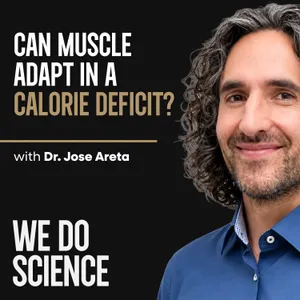
What happens to your muscles when you exercise in a calorie deficit? In this episode of We Do Science, I’m joined by Dr José Areta, Associate Professor in Exercise Metabolism and Nutrition at Liverpool John Moores University, to explore how muscle responds when energy intake is reduced—and why muscle size is only part of the picture.
José takes us through his research examining five days of low energy availability alongside aerobic exercise in men. Looking beyond body weight and lean mass, his team tracked changes in individual muscle proteins to understand how the muscle was adapting.
We discuss what they found, including changes in proteins involved in energy production, and explore the distinction between muscle quantity and quality. We also consider how the body prioritises energy, the role of protein intake, and the relevance of these findings to athletes managing their body composition.
Throughout, we address the study’s limitations and why short-term changes shouldn’t be taken as evidence that prolonged energy restriction improves performance. For practitioners, coaches, athletes and students, this conversation offers a closer look at the relationship between nutrition, exercise and muscle adaptation.
CHAPTERS
00:00 Introduction and José’s background
06:43 Understanding energy availability
11:40 Why study muscle during an energy deficit?
22:23 How the body prioritises energy
35:36 The study: diet, exercise and muscle measurements
45:02 Key findings: hormones and muscle adaptation
51:06 Short-term versus prolonged energy restriction
54:27 The roles of protein and exercise
1:04:03 Main takeaways
Connect with Jose:
Instagram: https://www.instagram.com/jose_l_areta/
LinkedIn: https://www.linkedin.com/in/jose-areta-8671738a/
Connect with Laurent:
Substack: https://substack.com/@laurentbannock
Website: https://www.laurentbannock.com
Instagram: https://www.instagram.com/laurent_bannock
Subscribe to We Do Science for more conversations on the science and practice of performance nutrition.