Where What If Becomes What's Next

Carnegie Mellon University

Details

Welcome to Season 3 of WHERE WHAT IF BECOMES WHAT’S NEXT. As Carnegie Mellon University celebrates its 125th anniversary, we’re spotlighting 15 CMU inventions that changed the world. From the origins of AI and robotics to innovations in the arts and sciences, join us as we trace the journey from “what if” to “what’s next.” With host Randy Scott, every other Thursday we’re going behind the scenes with CMU makers and visionaries to bring you the stories you may know and the ones you won't believe. Subscribe so you’ll never miss an episode. For more info: cmu.edu/whatsnextpodcast.

Recent Episodes

OCT 14, 2026
Re-Thinking Thinking: The Birth of AI
What happens when a university brings together engineers, scientists, entrepreneurs and artists to tackle the world’s toughest problems? You get the hashtag. Wi-Fi. “Toy Story.” Artificial intelligence. And even Silly Putty. For the Season Three finale of Where What If Becomes What’s Next, we are replaying an episode from Season One, on perhaps CMU's most important innovation: artificial intelligence. This is also the season where we celebrated Carnegie Mellon’s 125th anniversary, spotlighting 15 CMU inventions that changed the world. Among them, the hashtag. The Nest thermostat. Modsy’s reinvention of home design. Alice’s success teaching millions of students to code through storytelling. Food Rescue Hero. Wi-Fi. Kevlar protective clothing. The revolutionary computer animation that made “Toy Story” possible. And an accidental discovery called Silly Putty. As for artificial intelligence, it all started in 1956, when CMU professors Herbert A. Simon and Allen Newell presented what is widely considered the first AI program. In this episode, we tell their story and hear from other early AI pioneers at CMU, who share personal recollections, and milestones in AI and robotics. As you’ll hear, the rest is AI history. Featured guests on this episode are: Tom Mitchell, CMU Founders University Professor; Dr. Raj Reddy, Moza Bint Nasser University Professor of Computer Science and Robotics in the School of Computer Science at CMU; and Dr. Manuela Veloso, the head of JP Morgan AI Research and the Herbert A. Simon University Professor Emeritus in the School of Computer Science at CMU. Thank you for listening to Where What If Becomes What’s Next. Check out past episodes and stay up to date on what’s next at cmu.edu/whatsnextpodcast.
36 MIN
SEP 30, 2026
Cutting the Cord: How Wireless Andrew Paved the Way for Today’s Wi-Fi
What if the wireless connection you take for granted began as a small research experiment, and only revealed its true potential when students hacked their way onto it? In this episode, we're joined by Alex Hills, Distinguished Service Professor of Engineering and Public Policy at Carnegie Mellon University and the creator of Wireless Andrew, the world’s first large-scale Wi-Fi network. Alex's story begins in 1970s rural Alaska, where he helped bring the first telephone, radio, and television service to remote villages reachable only by boat, snowmobile, or bush plane. Working in wind chills of 50 below, he and his colleagues replaced limited VHF radiophones with a network of small, affordable satellite earth stations that transformed communications across the state. That work led him to get his PhD at CMU's Department of Engineering and Public Policy, and later to return as the first director of the university’s pioneering Information Networking Institute. In 1993, at a time when computers were clunky devices tethered to desks, Alex and his colleagues at the Institute asked a bold question: how can we access computing – and the newly born internet – anytime, anywhere? The answer was to build a wireless test bed on two floors of CMU’s Wean Hall to connect researchers to each other and the internet. When students heard about this wireless network, they hacked past the password protection and soon outnumbered the researchers. Alex had his light bulb moment – wireless was going to be big. By the end of the decade, Wireless Andrew covered CMU's core campus and became a prototype for wireless networks around the world, years before anyone had even heard the word "Wi-Fi." Alex would later become the university’s Vice Provost and Chief Information Officer. Alex also shares his passion for connecting the world through his work with Technology Consulting in the Global Community, better known as "Geeks on a Mission," and his current research on how low earth orbit satellites can bring broadband to underserved communities worldwide. Subscribe to Where What If Becomes What’s Next now on Apple Podcasts, Spotify, or wherever you get your podcasts. For more, info visit: cmu.edu/whatsnextpodcast. Explore Alex Hills’ books and more: “Wi-Fi and the Bad Boys of Radio” “Finding Alaska's Villages: And Connecting Them” “Geeks on a Mission” Geeks on a Mission (website) Dr. Alex Presentations and Interviews
41 MIN
SEP 16, 2026
Reinventing Animation: The Story Behind Toy Story
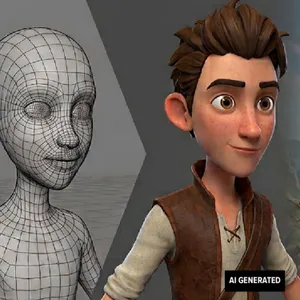
How does a filmmaker who had no interest in computers end up producing the first computer-animated feature film – a movie that would change animation forever? That movie was “Toy Story,” and this is the story of the filmmaker, the technologies, and the people who made this groundbreaking movie possible. Before 1995, every animated feature was drawn by hand, frame by painstaking frame. Then Pixar's “Toy Story” arrived and rewrote the rules. In this episode, we trace that revolution through the eyes of the man who helped build it: Ralph Guggenheim, a Carnegie Mellon alum (Dietrich College '74, Mellon College of Science '79) who co-founded Pixar and co-produced “Toy Story.” Ralph's path to Hollywood started almost by accident. Arriving at CMU in 1969 with zero interest in computers, he self-designed a film major, then stumbled into computer animation through a chance meeting with CMU legend Raj Reddy. That connection eventually led him to the New York Institute of Technology, and — through a remarkable chain of coincidences — to a research group at Lucasfilm that would become Pixar. Ralph shares the inside story of how the "Pixar" name was born from a graphics workstation, how the short animated film “Luxo Jr.” changed the trajectory of computer animation forever, and how an Academy Award for best animated short film, “Tin Toy,” caught Disney's attention. He walks through the making of “Toy Story” itself: pitching Jeffrey Katzenberg, scaling from 25 to 130 people, training animators from scratch, rendering on a room full of Sun Microsystems servers, and the surprisingly tense negotiations to license real-world toys like Mr. Potato Head. It's a story about technology, but even more about curiosity — about how a liberal arts kid with a 16mm camera and no love for computers ended up producing the first fully computer-animated feature film, and what that unconventional path can teach us about turning What If into What Is. Subscribe now on Apple Podcasts, Spotify, or wherever you get your podcasts. For more, info visit: cmu.edu/whatsnextpodcast. Explore more Pixar Animation Studios

55 MIN
SEP 2, 2026
Materials Science: From Silly Putty to Self-Healing Robots
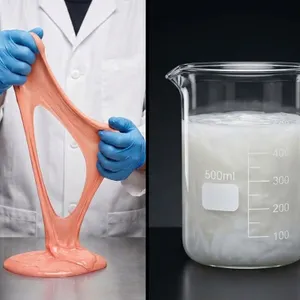
A failed rubber substitute. A cloudy liquid that looked like a mistake. A robot that heals itself. This episode looks at three chapters in Carnegie Mellon University's long history of materials science: two born from happy accidents, and one built entirely on purpose. The first is Silly Putty. In the early 1940s, Carnegie Tech alumni Earl Warrick and Rob Roy McGregor were trying to invent a wartime rubber substitute. What they got instead was a strange, bouncy compound with no obvious purpose. But it made people laugh. At a rival company, James Wright created a similar substance. He had no use for it either. It took a marketing entrepreneur to package Wright's putty in a plastic egg and turn it into one of the best-selling toys in history. Warrick would later claim credit for the invention himself. The second is Kevlar. DuPont chemist and CMU alum Stephanie Kwolek noticed her polymer solution looked thin and cloudy, rather than thick and clear. Instead of dismissing it, she asked what it might be telling her, spun it into fiber, and helped invent Kevlar: a material five times stronger than steel, now used in bulletproof vests, protective clothing for firefighters, and hundreds of other applications. The third is happening now. Professor Carmel Majidi, head of CMU's Soft Machines Lab, is flipping the script — designing "soft" materials for specific purposes rather than waiting for accidents to find them. He joins us to talk about Thubber, a heat-conducting rubber cooling today's consumer electronics, cars and AI data centers; smart fabrics such as Electrodermis, a wearable patch that tracks vital signs; and soft robots that heal their own severed circuits, almost like nerves regenerating. Three stories, one shift: from lucky accidents and failures to deliberate design. And a question for the future — once we can build materials to do almost anything, what will we ask them to do? Subscribe now on Apple Podcasts, Spotify, or wherever you get your podcasts. For more, info visit: cmu.edu/whatsnextpodcast. Explore more: CMU’s Soft Machines Lab
31 MIN
AUG 20, 2026
Imagining the Future: One Story at a Time
What happens when a kid who devours science fiction novels grows up to earn a PhD in robotics — and then writes the books he once dreamed of? Daniel H. Wilson, a Cherokee citizen and Carnegie Mellon University alumnus, has spent his career moving between two worlds: building intelligent machines and imagining what they might become. Wilson earned his master's in machine learning and PhD in robotics at CMU, drawn by the university's curiosity-driven culture. He wrote his first book, How to Survive a Robot Uprising, while still a grad student — defending his thesis one day and leaving on a book tour the next. That launched a career that includes the bestselling Robopocalypse (optioned by Steven Spielberg), The Andromeda Evolution (the authorized sequel to Michael Crichton's classic), and his newest novel, Hole in the Sky, a first-contact story grounded in his Cherokee heritage and the ancient mound-building civilization of Spiro, Oklahoma. In this episode, Wilson traces his path from a used bookstore in North Tulsa to writing best-selling novels and screenplays, reflects on his unusual stint as an Air Force "threat forecaster," and explains why he sees today's AI landscape as both exciting and alarming. He also unpacks a powerful idea from Hole in the Sky: that indigenous technologies — dismissed by colonizers as primitive — were in fact sophisticated systems built for balance rather than exponential growth, and what that contrast might teach us about building technology today. It's a wide-ranging conversation about science fiction as an early-warning system, the difference between technology that exploits us and technology that could make us better, and what it means to keep imagining the future responsibly. Subscribe now on Apple Podcasts, Spotify, or wherever you get your podcasts. For more, info visit: cmu.edu/whatsnextpodcast. Explore more Daniel H. Wilson website
40 MIN